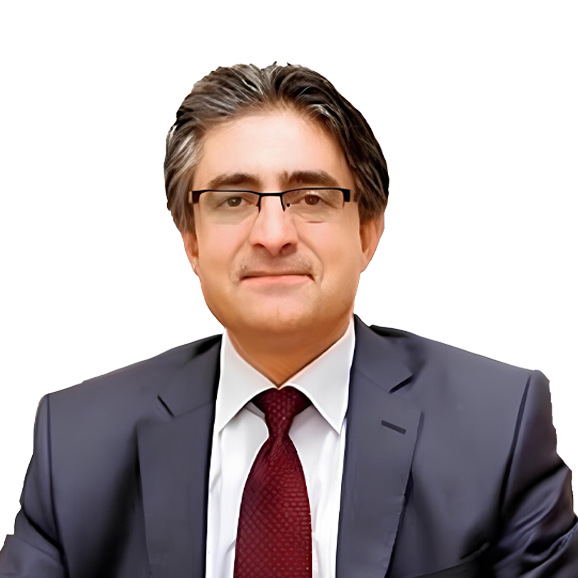
Orhan ALİMOĞLU
Tüm YazılarıEvery profession in the field of service to humanity is valuable. Yet, medicine is truly unique because it touches not only the body but the soul of a person in their pain and vulnerability, seeking to heal and to be a vessel of healing. Especially on the battlefield, at the front lines, at the very eye of conflict, medicine takes on a distinct worth, almost as an extension of military service. Alongside a profession like soldiering, one focused on killing, to be focused instead on keeping people alive and on protecting life in the midst of this heavy assault, is in itself a great value, a risky yet profoundly elevated moral stance. Perhaps for this reason, even if aggressors frequently disregard the rules, international law exempts healthcare workers and their activities from attack.
In the genocide and conflict environment that has persisted in Gaza for over three years, the practice of medicine has been rendered dangerous and deadly at a level far beyond anything seen in other wars and front-line medical settings. As one of the most strategic targets of the Israeli occupation forces, the healthcare sector has consistently been at the center of the catastrophic attacks which destroys all the infrastructure required for a minimally civilized life in Gaza. Nearly all functioning hospitals have been damaged, numerous doctors and healthcare workers have been killed, and the work of medicine has become, in the truest sense, far more dangerous and deadly than soldiering. Throughout this period, there have been many doctor colleagues who practiced their profession at the cost of their lives, who continued to provide healthcare even under the most extreme conditions, and who became symbolic names of what it means to remain human and to resist in Gaza. One of them is the orthopedic surgeon Dr. Fadil Naim.
Dr. Fadil Naim knew since his young age that medicine in Gaza was never an ordinary profession. It was a moral choice made under fire. He grew up watching hospitals becoming the last line of defense for life itself as one Israeli occupation assault followed another. In those moments, medicine was not simply about healing bodies, it was about defying death. That is why he has chosen this path.
Born on October 19, 1965, in Beit Hanoun in the northern Gaza Strip. Fadil Naim learned early in life what it means to live in a place where survival is never guaranteed. With quiet resolve under siege and scarcity, he attended various schools in Gaza: Al-Falah in Al-Zeitoun, Salahuddin Al-Ayyubi in Al-Rimal, and Al-Karmel Secondary School, from which he graduated in 1984. Graduating from secondary school with outstanding results, Fadil Naim was determined to study medicine. For this goal he traveled far from home, all the way to Germany. He completed his medical education at the University of Erlangen-Nuremberg in Germany, receiving his diploma in 1992. He then began a specialization in Orthopedics and Traumatology at Gazi University in Ankara, receiving his specialist certificate from Gazi University in 2002. After completing his training, he worked in Germany for a time, gaining experience and standing. He had many reasons to stay in Germany. His family and career were there, and he could have remained their, but Dr. Fadil Naim's ultimate destination was always the same: Gaza.
He returned not merely as a surgeon, but as a provider of sustainability for Gaza's limited medical infrastructure. He worked with UNRWA and took up posts at clinics in Al-Zeitoun and Beit Hanoun. He pioneered the establishment of an orthopedic surgery clinic at Al-Wafa Rehabilitation Hospital. Later, he served as the Head of the Orthopedics Department at Al-Ahli Arab Hospital (Al-Maamadani).
In 2006, he was involved in the foundation of the Faculty of Medicine at the Islamic University of Gaza. In 2015, he became the dean of this same faculty and held this position for eight years. From his view, medical education in Gaza was a form of quiet resistance: save a life today, train a doctor who will save hundreds of lives tomorrow. During his tenure, he established the "Hayat" Emergency and Disaster Management Training Center which was the first and only center in Gaza dedicated to training for natural and human-made disasters.
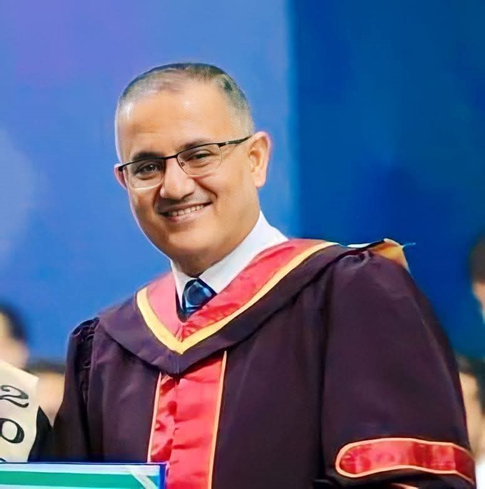
When the genocide war on gaza exploded on Octover 7th, 2023, Dr. Naim, did not consider this as a headline or a statistical exercise, where there were crowded corridors, endless screams, power cuts, and operating rooms stripped of even the most basic instruments. He was no longer simply a surgeon; he had become a field commander within the hospital. Every decision carried out was of an unbearable weight: Who can go to the operating room first? Who can be saved with the limited means at hand? Who needs a miracle?!
When surgical supplies ran out, he refused to simply wait doing nothing. Together with his team, he turned to rudimentary solar-powered 3D printing technology to produce stabilization devices to save limbs rather than amputate them. He knew that every limb preserved was a life rescued from permanent disability.
Since October 2023, Ai Ahli (Al-Maamadani) Hospital became his home during the ongoing war in Gaza. Despite the extreme danger and the gravity of the situation, he never left the hospital. Operating rooms replaced his bedroom; corridors replaced his streets. Sleep, if it came at all, was something fragmented, like a waking nightmare broken by every cry.
When Al Jazeera interviewed him, he had just emerged from surgery, his green surgical gown layered with the blood of patients. His mask and goggles could not conceal the exhaustion etched into his face. But compared to what he had been forced to witness, exhaustion was not his heaviest burden.
Earlier, his close friend Dr. Adnan Al-Bursh had been martyred under torture in an Israeli prison, Dr. Naim, receiving condolences, responded with quiet eyes holding tears. At that moment,he was repeatedly saying about Dr Al-Bursh:
"How can torture destroy such a powerful body?" he asked softly.
"He was an athlete. He swam three hours a day, watched over his health, never complained of any illness."
Then, as if searching for refuge from the unbearable images, he whispered:
"May God have mercy on him, and may he feel no pain just as the fire did not burn Prophet Ibrahim."
But the war continued to take from him — piece by piece — his friends, his patients, many members of his family including his beloved mother who was critically injured and died instantly.
Throughout the Gaza genocide, Dr. Naim made extraordinarily difficult decisions at a deeply personal level, as if setting his heart aside: not to abandon his post at Al-Maamadani Hospital, no matter the circumstances. On this his stance, he maintained with professional stubbornness for twenty-one years, had bound him to the hospital, to his patients, to his duty, as if by unbreakable ties. He could have gone, for instance, to the camp in Al-Nuseirat, the so-called safe zone where his family and beloved mother were sheltering. He had a Turkish passport in his pocket; he could have left. Despite holding Turkish citizenship, he never once attempted to leave Gaza. He never even considered it.
"When Gaza is in a situation that could make it a mandatory destination for international medical teams, how can we, doctors, leave?" he asked. "Having spent years urging my students to stay here and never give up. How could I abandon them?"
The price of staying was devastating. On January 7, 2024, seven members of his family were martyred in an Israeli airstrike on a house in Deir al-Balah including his mother, his brother Dr. Jamal Naim's three daughters, and three grandchildren. He received the news at dawn through a text message sent by his daughter from Turkey. Because he had not witnessed the details firsthand, he could not yet fully grasp the magnitude of what had happened: "When I heard my mother was critically injured, it struck me like a bolt of lightning. How could my mother have fractures when her own son is an orthopedic surgeon and I wasn't there beside her? The lady of the house, now disabled and in pain, far from me. How would she live?"
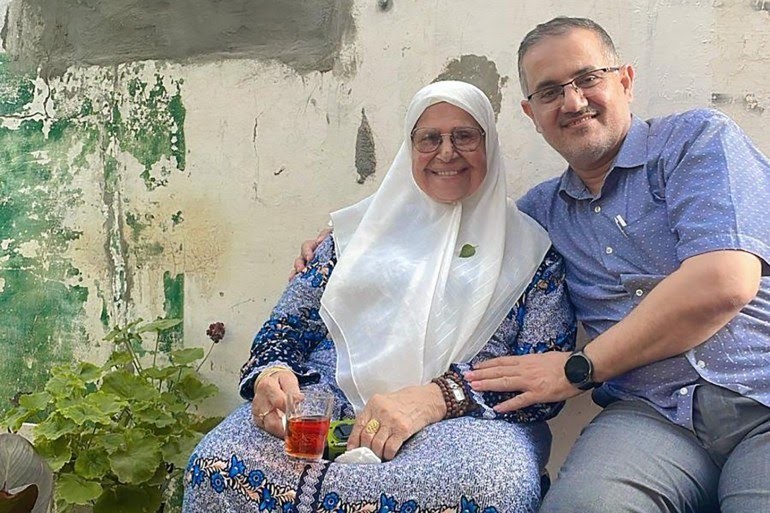
Hours later, news of her death arrived. He saw it as a mercy, a release from suffering. He could not see his mother's body. He could not say goodbye. Despite the short distance between them, an Israeli checkpoint stood between him and his mother's grave. He could neither attend the funeral nor grieve properly. And yet a mother... what else does a child have in this world? The next day, he returned to the operating room. For seventeen hours a day, Dr. Naim worked to surgically remove pain from Palestinian bodies, one patient at a time. He worked for hours without sitting, in a state of complete, total focus. The only breaks in his heavy schedule were the intervals he allowed himself for prayer. He ate one meal a day. Hunger left its marks on his body. He lost approximately 20 kilograms. "We ate barley and soybeans," he told Al Jazeera. "We tasted food we had never known before. We ate things we never imagined we would eat."
Even hunger became another responsibility; as hospital administrator, he searched Gaza's markets for food to keep hospital staff on their feet. They had no luxury of choice. They made food of nearly anything they could find, from herbs they had never tasted before to stale packaged goods.
While politicians plan "the day after the war," orthopedic surgeons like Dr. Naim focus on the problems that the future will accumulate: endless reconstructive surgeries, lifelong patient follow-ups, exhausted teams, missing medications, destroyed buildings, and displaced healthcare personnel. For all this shattered infrastructure, what was needed, was a tremendous amount of human effort, materials, staff, and boundless dedication.
The war took a mother from him, his loved ones, his friends, and his health.
But it gave him something else: the love of people. The love he constantly felt in greetings, in smiles, in the unspoken grateful gazes that shone in people's eyes while walking the streets of Gaza. The love he received as a great honor and carried in his heart. People believe he bears the meaning of his name.
When staying in his country became in itself an act of demanding courage, Dr. Fadil stayed.
I would like to thank Int. Dr. Amro Alsbakhi, Dr. Ayşenur Özcan, Sudenaz Çoşkun and journalist-author Mustafa Ekici for their contributions.
Sources
https://www.aljazeera.net/politics/2024/5/14/أطباء-غزة-تحت-ضغوط-بالجملة-الطبيب-فضل
Prof. Dr. Orhan Alimoğlu
Istanbul Medeniyet University
Güncel Yazıları
A Young Dentist: Dr. Tawfiq Jamal Al-Farra
14 Mayıs 2026
A Doctor of Courage: Fadil Naim
12 Mayıs 2026
Abdul Hamid Mahmoud Qardaya: A Physiotherapist Who Rebuilt Lives in the Midst of Dest..
27 Nisan 2026
Genç Diş Hekimi: Dr. Tawfiq Jamal Al-Farra
27 Nisan 2026
Cesaret Timsali Bir Doktor: Fadil Naim
24 Nisan 2026
Abdul Hamid Mahmoud Qardaya: Yıkımın Ortasında Hayatları Yeniden İnşa Eden Bir Fizyot..
20 Nisan 2026
In Memory of Dr. Razan Barhoum
05 Şubat 2026
Dr. Razan Barhoum'un Anısına
29 Ocak 2026
Devoted Dentist: Mahmoud Fouzi Ismail Al Akkad
26 Ocak 2026
Fedakar Diş Doktoru: Mahmoud Fouzi İsmail Al Akkad
12 Ocak 2026
The Sentinel of Life: Dr. Hussam Abu Safiya
02 Ocak 2026
Yaşam Nöbetçisi: Dr. Hussam Abu Safiya
15 Aralık 2025
A Doctor Symbolizing The Profession of Surgery : Dr. Ahmad Qandeel
14 Kasım 2025
Shattered Hopes: Junior Dr Yara Nader El-Hossari
10 Kasım 2025
Cerrahlık Mesleğinin Sembolü Bir Doktor: Dr. Ahmad Qandeel
05 Kasım 2025