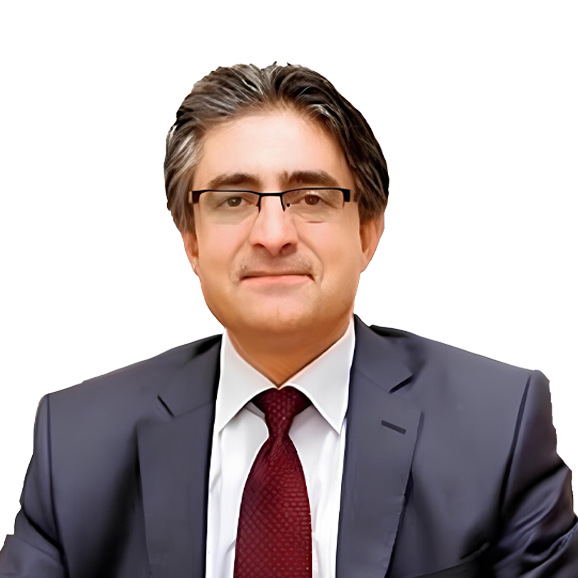
Orhan ALİMOĞLU
Tüm YazılarıWhat unfolds in the narrow streets of Gaza, strewn with ruins and debris, does not merely point to a war. It also draws our attention to a tableau of shame in which not only children and women, but also doctors, nurses, and other healthcare workers who should be protected under international law are being killed. The blood splattered on the white coats of doctors in Gaza stands as evidence of one of the most arduous, honorable, yet simultaneously most shameful acts ever recorded by history with regard to human dignity and professional loyalty. Within this tragic yet honorable picture stands Dr. Mahmoud Fouzi Ismail Al-Aqqad, whose name has been inscribed on the list of fallen healthcare workers and who remains one of Gaza’s silent heroes.
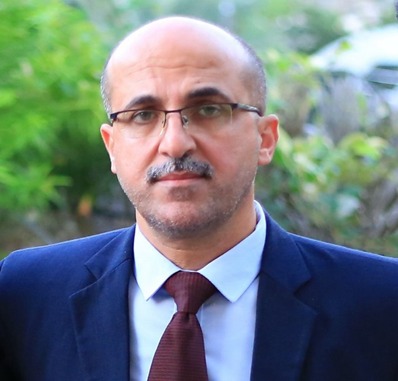
Dr. Mahmoud Fouzi Ismail Al-Aqqad was born on November 7, 1975, in the city of Khan Younis in the southern Gaza Strip. His life took shape at the intersection of traditional values and modern education, as a member of the Al-Aqqad family, one of the region’s oldest and largest families. Traditionally, the Al-Aqqad family, one of Gaza’s prominent notable families, was engaged in agriculture, particularly in the production and trade of the famed citrus fruits of Khan Younis. His father, Mr. Fawzi, was known in Khan Younis for his integrity and his involvement in trade and local administrative affairs. A disciplined figure who firmly believed that “the only true progress for a Palestinian is education,” he placed his children’s education as a priority above all else!
After completing his primary and secondary education in Khan Younis with outstanding success, Mahmoud began his higher education to pursue his dream of becoming a physician. For Palestinian youth, higher education is often a challenging journey that spans multiple countries. Like many physicians of his generation who endured arduous training abroad, Dr. Mahmoud traveled to Pakistan to study medicine. In the late 1990s and early 2000s, he studied Dentistry and Oral and Maxillofacial Surgery at Sindh University in Pakistan. This is a period that played a crucial role in both his professional and personal development. While receiving his education in English, Dr. Mahmoud also became familiar with Urdu in daily life and attained a strong command of the language.
During Mahmoud’s years in Pakistan, the Second Intifada erupted in Palestine in 2000. The distressing news coming from Gaza, severed phone lines, and the anxiety of being unable to reach his family constituted the greatest trial of his student years. His Pakistani friends described his unwavering commitment to his studies during this period, and his determination to become a doctor in order to repay his debt to his homeland, as a reflection of his “unshakable will.”
Despite all the hardship of growing up in Gaza, Mahmoud represented a generation that clung tightly to education. His choice of dentistry, a field requiring great precision and patience, was a reflection of his meticulous character and his desire to directly touch people’s lives. After graduating, Dr. Mahmoud returned to Gaza and worked for a period within the Health Services affiliated with the Palestinian Ministry of Interior, before opening a private clinic in Khan Younis. Being a dentist in Gaza meant not only possessing medical knowledge, but also performing near-miracles with extremely limited medical supplies under continuous blockades. For years, Dr. Mahmoud worked while enduring shortages of everything from sterilization equipment to anesthetic agents, yet he never compromised his professional ethics.
After returning to Gaza, Dr. Mahmoud not only progressed professionally but also built an exemplary family by marrying Heba Al-Aqqad who was his greatest supporter. During the harsh years of blockade in Gaza, she was a devoted mother who maintained peace and stability in both their home and clinic, standing shoulder to shoulder with her husband in their children’s education.
Since his young age, Dr. Mahmoud assumed responsibility towards his family. He supported his siblings’ education and, together with his late father, made great efforts to ensure that every child in the family had access to education. This approach became one of the fundamental principles of his life. As a father, he worked tirelessly to provide his children with the best educational opportunities, encouraging them to pursue solid academic paths. Tragically, despite all his sacrifices, he was never granted the chance to witness the outcomes of his efforts.
Beyond his professional and family life, Dr. Mahmoud had a particular interest in agriculture, in keeping with his family’s traditions. He transformed his land into a fertile, green area filled with fruit trees, generously sharing its produce with his family, neighbors, and friends. His garden became a tangible symbol of his benevolence and culture of sharing. However, during the occupation, the destruction of his land turned this once life-giving and abundant space into ruins!
To expect such tranquil lives in Gaza is naïve and futile especially if you are one of the healthcare workers who are deliberately targeted. For healthcare professionals in Gaza, the Hippocratic Oath is not merely a promise made at a graduation ceremony; it is a lived reality, confronted with death on a daily basis. Patterns of attacks and media reports show that thousands of physicians like Dr. Mahmoud have been deliberately targeted in the assaults since October 7, 2023. What is happening in Gaza is not simply healthcare workers being caught in “crossfire,” but, as reflected in international reports, their systematic targeting. According to data from the World Health Organization (WHO) and various human rights organizations, more than 1,700 healthcare workers, including Dr. Mahmoud, have been killed in Israeli attacks since October 7, 2023.
Under normal circumstances, a dentist would not be expected to be on the front lines of war. Yet when hospitals in Gaza are bombed, surgeons are exhausted, and ambulances are halted, dentists, pharmacists, and medical students are forced to become emergency care providers. Dr. Mahmoud’s colleagues were compelled to perform acts far beyond extracting teeth without anesthesia such as treating children with amputated limbs without anesthesia and conducting surgeries in hospital corridors. The sacrifice in this process was not limited to sleepless nights or hunger. For a doctor in Gaza, the greatest sacrifice is the constant fear of encountering one’s own children among the dead or wounded brought to the hospital, or being unable to leave a patient even as one’s own home is being bombed. Dr. Mahmoud and his colleagues put on their white coats every morning, rushing to clinics and hospitals without knowing whether they would return home. For them, medicine was not a career, but a way of existence!
When the attacks on Gaza began, Dr. Mahmoud, like his colleagues, chose service over personal safety. Despite relentless bombardment, limited resources, and extreme risk, he continued to treat patients in his private clinic and volunteered daily at the Nasser Medical Complex, supporting healthcare teams overwhelmed by the influx of wounded patients. In a striking example of his professional attentiveness and human compassion, he noticed vital signs in a child presumed dead and saved the child’s life through immediate medical intervention.
However, Dr. Mahmoud’s 48-year life defined by professionalism, dedication, and sacrifice was extinguished on December 27, 2023, in a planned attack by Israeli occupation forces. Immediately after completing his volunteer duty at the Red Crescent Hospital in Khan Younis, he was killed while leaving the hospital in an attack that claimed the lives of twenty-five people, including his 18-year-old son Fawzi and his 10-year-old daughter Layan. Fawzi, who bore his grandfather’s name, was a bright young man of university age, dreaming of a future like his father’s. Layan, only ten years old, was the joy of the family, her father’s greatest weakness and cherished dream.
Dr. Mahmoud’s martyrdom is part of the large-scale assault on Gaza’s healthcare sector. In an environment where 155 primary healthcare facilities have been attacked and more than 30 hospitals rendered inoperable, the fact that doctors continue to serve at their posts constitutes a saga of “professional heroism” that will be recorded in the history of medicine.
Dr. Mahmoud’s friends from his years at Sindh University in Pakistan stated that upon receiving news of his death, they had lost not merely a classmate, but a brother. Condolence messages that resonated throughout Pakistan’s medical community and the absentee funeral prayers performed in his honor stand as enduring signs of the profound impact he left behind.
Targeting the healthcare system through Israeli attacks is not limited to bombing hospitals; it also seeks to paralyze Gaza’s future capacity for recovery by eliminating trained, experienced, and trusted individuals like Dr. Mahmoud. The killing of a dentist means depriving thousands of children of oral healthcare and thousands of elderly individuals of their right to treatment.
Those who knew him remember Dr. Mahmoud as a warm, humble, and ever-helpful person. Whether providing medical assistance, educational guidance, or simply a comforting word, he extended his hand to anyone in need. He placed great value on knowledge, contributed to the education of many relatives, and embraced supporting others’ education as a human and value-based responsibility. Throughout his life, he served his people with a strong sense of duty, preserving his faith and loyalty to his profession until his final moment. He left behind a lasting legacy that continues to live on in the lives he touched, the people he helped, the children whose growth he supported, and the principles and values he upheld until his last breath.
Today, beneath the rubble of destroyed clinics in Gaza lie not only medical devices, but also the dreams of doctors like Dr. Mahmoud and the healthy days they promised their patients. His biography is not merely the story of a death; it is the story of a man standing upright in his white coat against the chains imposed on a people’s will to heal, a story of honor.
His name will one day echo once more at the door of his clinic, in the free and healthy mornings of Gaza. Because killing a doctor is never enough to erase the memory of the thousands of lives he healed.
I would like to thank Intern Dr. Raghd S. Alshaikhahmet, Dr. Sümeyye Kesgin, journalist-author Mustafa Ekici and Sudenaz Coskun for their contributions.
Prof. Dr. Orhan Alimoglu,
Istanbul Medeniyet University
Güncel Yazıları
A Young Dentist: Dr. Tawfiq Jamal Al-Farra
14 Mayıs 2026
A Doctor of Courage: Fadil Naim
12 Mayıs 2026
Abdul Hamid Mahmoud Qardaya: A Physiotherapist Who Rebuilt Lives in the Midst of Dest..
27 Nisan 2026
Genç Diş Hekimi: Dr. Tawfiq Jamal Al-Farra
27 Nisan 2026
Cesaret Timsali Bir Doktor: Fadil Naim
24 Nisan 2026
Abdul Hamid Mahmoud Qardaya: Yıkımın Ortasında Hayatları Yeniden İnşa Eden Bir Fizyot..
20 Nisan 2026
In Memory of Dr. Razan Barhoum
05 Şubat 2026
Dr. Razan Barhoum'un Anısına
29 Ocak 2026
Devoted Dentist: Mahmoud Fouzi Ismail Al Akkad
26 Ocak 2026
Fedakar Diş Doktoru: Mahmoud Fouzi İsmail Al Akkad
12 Ocak 2026
The Sentinel of Life: Dr. Hussam Abu Safiya
02 Ocak 2026
Yaşam Nöbetçisi: Dr. Hussam Abu Safiya
15 Aralık 2025
A Doctor Symbolizing The Profession of Surgery : Dr. Ahmad Qandeel
14 Kasım 2025
Shattered Hopes: Junior Dr Yara Nader El-Hossari
10 Kasım 2025
Cerrahlık Mesleğinin Sembolü Bir Doktor: Dr. Ahmad Qandeel
05 Kasım 2025