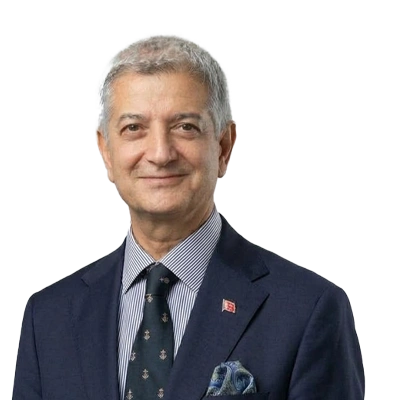
Cemal SANGU
Tüm YazılarıFrance’s Diplomatic and Economic Strategy from Africa to Southeast Asia Through the Phnom Penh Summit
Dr Cemal Sangu
Introduction: From Colonial Empire to Cultural Diplomacy
The 20th Summit of La Francophonie, held in Phnom Penh, the capital of Cambodia, on 15–16 November 2026, attracted attention with a political and economic agenda that extended beyond cultural solidarity among French-speaking countries. At the conclusion of the summit, the Organisation internationale de la Francophonie (OIF) was reported to comprise a total of 92 states and governments, while delegations from 81 states and governments attended the meeting. Held under the theme “Reinvesting in Peace: Shared Prosperity and Lasting Stability,” the summit addressed peace, sustainable development, economic cooperation, digital transformation and international diplomacy.[1]
To assess the developments in Phnom Penh solely through the lens of language and culture, however, would be to overlook the summit’s geopolitical significance. At a time when France’s traditional spheres of influence in Africa are being called into question, the international system is evolving towards a more multipolar structure, and Asia’s weight in the global economy is steadily increasing, France is seeking to reposition La Francophonie.
In this respect, the summit represents an important example of France’s search for ways to sustain its historically rooted postcolonial relationships through new diplomatic and economic instruments. The central question to be addressed is this: Is La Francophonie an international platform for solidarity among equals, built around a shared language and culture, or is it a mechanism that enables France to reproduce, through cultural, economic and diplomatic instruments, the spheres of influence it once established through military and political power?
1. From Colonialism to La Francophonie: The Changing Language of History
France’s colonial past in Asia and Africa constitutes the historical background to today’s Francophonie framework. From the second half of the nineteenth century onwards, the expanding French colonial empire was based not only on control over territory and natural resources; it also left lasting marks on language, education, law, bureaucracy and cultural life.
In Southeast Asia, Cambodia’s entry under French protection in 1863 was one of the major turning points in this process. The French Indochina system, which later encompassed Vietnam and Laos, evolved into an extensive colonial order designed to secure Paris’s economic and political interests in the region.[2]
Under French rule, the organisation of economic production in line with colonial interests, the conversion of agricultural land into commercial plantations, interventions in local legal and administrative systems, and the elevation of French culture to a privileged position were among the defining features of this order. The rubber plantations in Cambodia provide a concrete example of the colonial economy. Expanded with the support of European capital and the colonial administration, these plantations transformed local patterns of land use and social relations, leaving lasting effects on labour mobility, racial categorisation and environmental change.[3]
Law and administrative organisation constituted another important instrument of colonial rule. Rather than eliminating local institutions entirely in Cambodia, the French administration developed a model that integrated them into its own administrative and legal order. Traditional institutions thus continued to exist, while the functioning of the state became increasingly tied to a framework defined by the colonial administration.[4]
The legacy of French Indochina is not merely a past experience of governance. Some contemporary border disputes in the region also have historical roots in arrangements made during the colonial period. The 1907 Franco-Siamese Treaty is one of the historical sources of today’s Cambodia–Thailand border disputes. Although colonial rule ended when Cambodia gained independence in 1953, the influence of the French language in education, law, diplomacy and culture did not disappear entirely.
A similar historical process unfolded in Africa. The administrative and economic structures established in French West Africa and French Equatorial Africa continued to exist in various forms after independence. The historical roots of La Francophonie therefore cannot be assessed independently of this multilayered colonial legacy.
2. La Francophonie: Cultural Solidarity or a Postcolonial Mechanism of Influence?
The Organisation internationale de la Francophonie is an institutional framework intended to promote cultural, educational, economic and political cooperation among states that use French as a common language of communication. Its institutional foundations were laid on 20 March 1970 in Niamey, the capital of Niger. Leaders from different countries played a role in its establishment, including Senegalese President Léopold Sédar Senghor, Tunisian leader Habib Bourguiba, Nigerien President Hamani Diori and Cambodian King Norodom Sihanouk.[5]
This historical fact makes it difficult to regard La Francophonie simply as a unilateral project created by France. In the post-independence period, some African and Asian leaders also considered the use of French as a common means of communication and international cooperation beneficial to their countries’ interests. Nevertheless, the multilateral character of the organisation’s founding does not eliminate France’s historical and institutional weight within it.
This is where the fundamental contradiction of La Francophonie emerges: on the one hand, it claims to build solidarity through a shared language and culture in the aftermath of colonialism; on the other, that very partnership was historically shaped by unequal relationships.
France’s cultural, economic, military and diplomatic relations with its former colonies are frequently examined in academic literature through the concept of “Françafrique.” Douglas A. Yates argues that, although the French colonial empire formally came to an end, privileged relationships in language, law, education, natural resources, aid, trade, finance, security and defence have continued to influence French policy in Africa.[6] This approach is important not because it explains all of France’s relations through a single model of exploitation, but because it allows the power asymmetries that have persisted since independence to be questioned.
Decades after gaining independence, to what extent do countries that were once under colonial rule stand on an equal footing in their economic and institutional relations with former colonial powers? The future of La Francophonie cannot be considered independently of the answer to this question.
3. Changing Balances in Africa: Paris’s Traditional Spheres of Influence under Scrutiny
One of the most consequential developments shaping the future of La Francophonie is taking place in Africa. Political changes in Mali, Niger and Burkina Faso have brought France’s traditional military and diplomatic presence in the Sahel under serious scrutiny. The withdrawal of the three countries from La Francophonie in 2025 also revealed the organisational dimension of this transformation.[7]
It would be insufficient to explain these developments solely in terms of military coups and changes of government. Criticism of France’s historical influence in Africa must also be assessed in relation to security policies, natural resources, economic dependence, monetary arrangements and political sovereignty. China’s economic investments, Russia’s presence in the security field, Türkiye’s diplomatic and economic relations, and the growing interest of Gulf countries are creating new options in Africa’s international relations.
In this environment, France’s assumption that its former privileged position is a natural and immutable entitlement is increasingly being questioned. The contemporary forms of former colonial relationships are not identical in every country; African states have their own preferences, domestic political balances and bargaining power. Nevertheless, developments in the Sahel demonstrate that France’s traditional influence can no longer be expected to continue automatically.
The disagreement between the Democratic Republic of the Congo and Rwanda over the OIF Secretary-Generalship at the Phnom Penh Summit also revealed the organisation’s internal balances. Members were unable to reach agreement on a new Secretary-General. In line with a compromise proposed by the Cambodian presidency, the term of Louise Mushikiwabo was extended by 12 months, and an election is expected to be held in 2027.[8]
This development demonstrates that La Francophonie is not merely a cultural association, but also a matter of political representation and power-sharing. The organisation’s future will also depend on the extent to which its African members feel equal and independent in its decision-making processes.
4. Cambodia and ASEAN: France’s New Economic Opening
One of the most notable aspects of the Phnom Penh Summit was the stronger association of La Francophonie with economic diplomacy. Cambodia’s membership in ASEAN offers France an important opportunity to gain access to Southeast Asian markets and diversify its regional economic relations.
The Francophone Business Forum and FrancoTech events held as part of the summit brought issues such as agriculture, green energy, logistics, digital banking, technology and regional supply chains to the fore. The signing of 29 cooperation documents between Cambodia and France during French President Emmanuel Macron’s visit was another important indication of this economic and diplomatic rapprochement. According to the Cambodian government’s official statement, the documents covered not only trade and investment but also security and defence, energy, education, health, science and technology, artificial intelligence and agriculture.[9]
The Phnom Penh Declaration also explicitly supports strengthening cooperation between the OIF, ASEAN and the Pacific Community. The Declaration emphasises the development of economic opportunities in digital transformation, the green economy, cultural and creative industries, and innovation.[10]
These developments indicate that La Francophonie is moving beyond its role as an organisation promoting cultural solidarity among French-speaking communities and is seeking to create economic connections and investment networks. As Asia becomes one of the centres of gravity of the world economy, France’s efforts to expand its diplomatic and economic room for manoeuvre beyond Europe are gaining importance.
Cambodia, for its part, also seeks to benefit from this relationship. Phnom Penh may use its presidency of La Francophonie to enhance its international visibility, diversify its economic partners and establish a diplomatic link between ASEAN and other regions. What is at stake, therefore, is not simply a unilateral French policy of influence, but a diplomatic space in which different interests intersect.
5. Postcolonial Diplomacy: Historical Reckoning or a New Quest for Influence?
The relationship between France’s colonial past and its contemporary diplomatic discourse is one of the article’s most important areas of debate. The central discourse of La Francophonie is based on the principles of equality, cultural diversity, solidarity, peace and shared development. These principles are indispensable elements of international cooperation. Yet these values cannot be considered independently of historical relationships.
When a state that once established its influence through military occupation, administrative domination and economic exploitation defines its present-day relations with former colonies solely in terms of a shared language and culture, the question of historical responsibility does not automatically disappear. The colonial legacy France left in Africa and Asia consists of more than architectural monuments, educational institutions or French-speaking communities. It also includes economic inequalities, the extraction of resources, the transformation of local political structures and practices that have left deep marks on collective memory.
For this reason, cultural diplomacy cannot substitute for coming to terms with the past. Is La Francophonie a platform that contributes to France’s reckoning with the historical responsibilities arising from its colonial past, or does it serve to re-present that past through a more acceptable cultural and diplomatic discourse? The answer to this question must be sought in the organisation’s actual practices.
The ability of former colonies to make their economic decisions independently, exercise sovereignty over their natural resources, determine their own political and cultural priorities, and enjoy an equal voice in international organisations are fundamental conditions for a genuine partnership. Otherwise, the rhetoric of equality will reinforce criticism that historical power relations are continuing under a new diplomatic guise.
France’s reckoning with its past should not be limited to organising cultural events or restoring monuments dating from the colonial period. Acknowledging historical facts, researching the economic and social consequences of colonial rule, returning cultural assets, and rebuilding relations with former colonies on a genuinely equal footing should also form part of this process.
In this context, the restoration of the eleventh-century West Mebon Temple near Angkor, completed over 14 years through cooperation between Cambodia and France, is a meaningful example of cultural cooperation. The project contributed to the preservation of Cambodia’s cultural heritage. However, projects of this kind cannot replace a comprehensive reckoning with all dimensions of the colonial past.[11] Restoring the historical monuments of the past is important; yet the social and political wounds of history cannot be healed through cultural restoration projects alone.
6. Conclusion: The Future of La Francophonie and the Changing International Order
The 20th Summit of La Francophonie in Phnom Penh reflected not only the French language and a shared cultural heritage, but also the changing balance of power in the international system. The questioning of France’s traditional spheres of influence in Africa, ASEAN’s growing economic weight, China’s increasing regional influence and the search for new diplomatic partnerships are among the principal factors that will shape the role La Francophonie assumes in the period ahead.
For France, the challenge is not to preserve the influence it once possessed through the same instruments, but to develop new relationships suited to changing international conditions. A genuine partnership, however, can be established not by perpetuating historical relations of superiority in different forms, but on the basis of mutual respect and equality.
Cambodia’s hosting of the summit and its assumption of the presidency are significant in terms of increasing Asia’s visibility within La Francophonie. Nevertheless, the success of this new orientation will be determined by whether the decisions taken at the summit and the economic mechanisms established there produce lasting results.
Ultimately, the future of La Francophonie will not be measured solely by the number of countries in which French is spoken. What matters most is the extent to which the countries that speak this language have a meaningful voice in international decision-making processes and the degree to which their partnership is conducted on a fair footing. For history questions not only who governed which territories in the past, but also who is able to determine their own future today.
Colonial empires may have passed into history, but their political, economic and cultural traces remain. No new partnership established without confronting the historical legacy of colonialism can fully escape the shadow of the past.
Endnotes
1. Organisation internationale de la Francophonie (OIF), “Clôture du 20e Sommet de la Francophonie à Phnom Penh,” 16 November 2026; OIF, “Déclaration de Phnom Penh,” 15–16 November 2026. According to the closing statement, the OIF comprises 92 states and governments (53 members, 5 associate members and 34 observers); delegations from 81 states and governments attended the summit.
2. R. Stanley Thomson, “The Establishment of the French Protectorate over Cambodia,” The Journal of Asian Studies, Cambridge University Press, published online 23 March 2011. Cambodia’s establishment as a French protectorate dates to 1863.
3. Michitake Aso, “Rubber and Race in Rural Colonial Cambodia (1920s–1954),” Siksācakr, nos. 12–13 (2010–2011), pp. 127–138.
4. Sally Frances Low, Colonial Law Making: Cambodia under the French (Singapore: NUS Press, 2023).
5. Organisation internationale de la Francophonie, “La Francophonie: une histoire”; Ministère de l’Europe et des Affaires étrangères, “La Francophonie, un espace de coopération multilatérale.” The ACCT was established in Niamey on 20 March 1970.
6. Douglas A. Yates, “Paradoxes of Predation in Francophone Africa,” International Journal of Political Economy, vol. 47, no. 2 (2018), pp. 130–150, https://doi.org/10.1080/08911916.2018.1497505.
7. Agence de Presse Sénégalaise (APS), “Après le Niger, le Mali officialise son retrait de l’OIF,” 18 March 2025; APS, “Le Burkina Faso s’est aussi retiré de l’OIF,” 18 March 2025.
8. OIF, “Clôture du 20e Sommet de la Francophonie à Phnom Penh,” 16 November 2026. Members failed to agree on a new Secretary-General; following a proposal by the Cambodian presidency, the incumbent Secretary-General’s term was extended by 12 months, and an election was scheduled for 2027.
9. Agence Kampuchea Presse / Cambodian Ministry of Information, “Cambodia, France Pledge to Advance Strategic Partnership Across Key Sectors,” 16 November 2026; National Radio of Cambodia, “Cambodian Prime Minister and President of the French Republic Preside over the Signing of 29 Documents,” 15 November 2026.
10. OIF, “Déclaration de Phnom Penh,” 15–16 November 2026, particularly Article 5 on cooperation between the OIF, ASEAN and the Pacific Community, and the provisions concerning digital transformation, the green economy, cultural and creative industries, and innovation.
11. APSARA National Authority, “West Mebon Temple Expected to Stand Firm for Over a Century Following Restoration,” 20 October 2026. The statement notes that the restoration was completed over 14 years through Cambodia–France cooperation, at a cost of USD 12 million.
Bibliography
Academic Works
Aso, Michitake. “Rubber and Race in Rural Colonial Cambodia (1920s–1954).” Siksācakr, nos. 12–13 (2010–2011), pp. 127–138.
Low, Sally Frances. Colonial Law Making: Cambodia under the French. Singapore: NUS Press, 2023.
López Jerez, Montserrat. “Colonial and Indigenous Institutions in the Fiscal Development of French Indochina.” In Fiscal Capacity and the Colonial State in Asia and Africa, c. 1850–1960, edited by Ewout Frankema and Anne Booth, pp. 110–136. Cambridge: Cambridge University Press, 2019. https://doi.org/10.1017/9781108665001.004.
Thomson, R. Stanley. “The Establishment of the French Protectorate over Cambodia.” The Journal of Asian Studies. Cambridge University Press, published online 23 March 2011.
Yates, Douglas A. “Paradoxes of Predation in Francophone Africa.” International Journal of Political Economy, vol. 47, no. 2 (2018), pp. 130–150. https://doi.org/10.1080/08911916.2018.1497505.
Institutional and Official Documents
Agence Kampuchea Presse / Ministry of Information, Kingdom of Cambodia. “Cambodia, France Pledge to Advance Strategic Partnership Across Key Sectors.” 16 November 2026.
APSARA National Authority. “West Mebon Temple Expected to Stand Firm for Over a Century Following Restoration.” 20 October 2026.
Organisation internationale de la Francophonie. “Clôture du 20e Sommet de la Francophonie à Phnom Penh.” 16 November 2026.
Organisation internationale de la Francophonie. “Déclaration de Phnom Penh.” 15–16 November 2026.
Organisation internationale de la Francophonie. “La Francophonie: une histoire.”
Ministère de l’Europe et des Affaires étrangères. “La Francophonie, un espace de coopération multilatérale.”
News Sources
Agence de Presse Sénégalaise. “Après le Niger, le Mali officialise son retrait de l’OIF.” 18 March 2025.
Agence de Presse Sénégalaise. “Le Burkina Faso s’est aussi retiré de l’OIF.” 18 March 2025.
Associated Press. “Macron Leaves Francophonie Summit in Cambodia with Leadership Dispute on Hold.” 16 November 2026.
Anadolu Agency. “France, Cambodia Ink 29 Agreements on Economy, Defense, Other Sectors.” 15 November 2026.
Güncel Yazıları
Frankofoni'nin Yeni Coğrafyası: Sömürgecilik Sonrası Fransız Nüfuz Arayışı ve ASEAN A..
17 Kasım 2026
From Dhaka to Cox’s Bazar: The Silent Cry of Arakan
09 Kasım 2026
Dakka’dan Cox’s Bazar’a: Arakan’ın Sessiz Çığlığı
09 Kasım 2026
The Turkic World after the Ankara Summit: From a Shared History to a Common Strategic..
04 Kasım 2026
Ankara Zirvesi Sonrasında Türk Dünyası: Ortak Tarihten Stratejik Geleceğe
04 Kasım 2026
The Key to Peace in Kashmir: Historical Legacy, the Human Dimension and the Search fo..
27 Ekim 2026
The Voice Rising from Africa: France’s Colonial Shadow and a Changing World
21 Ekim 2026
Afrika’dan Yükselen Ses: Fransa’nın Sömürge Gölgesi ve Değişen Dünya
21 Ekim 2026
What Is Happening in France? Are the Streets Writing History Again?
13 Ekim 2026
Fransa'da Neler Oluyor? Sokaklar Yeniden Tarih mi Yazıyor?
13 Ekim 2026
Haritaların Ötesinde Doğu Timor
06 Ekim 2026
Bearing Witness to History: From Moro to Bangsamoro — The Journey from Arms to Peace..
23 Eylül 2026
Tarihe Tanıklık: Moro’dan Bangsamoro’ya — Silahlardan Barışa Uzanan Yol
23 Eylül 2026
BRICS’ New Delhi Summit: The Changing Global Order and the Search for a New Balance
18 Eylül 2026
BRICS'in Yeni Delhi Zirvesi: Değişen Küresel Düzen ve Yeni Denge Arayışı
18 Eylül 2026