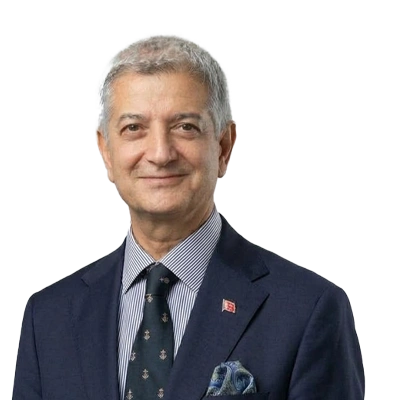
Cemal SANGU
Tüm YazılarıThe 13th Summit of the Organization of Turkic States has reaffirmed the determination to transform a shared historical and cultural heritage into strategic cooperation, while bringing into focus both the significant opportunities and the challenges shaping the future of the Turkic world.
Introduction: A Shared History: A Gateway to the Future
With the dissolution of the Soviet Union in the early 1990s, a new chapter opened in the history of Eurasia. As the Turkic republics gained their independence, a new vision of the future began to take shape between these newly independent states and Türkiye. At the time, a particular aspiration was taking root in my mind: that the Turkic states, having shared the same historical and cultural space for centuries, might develop their political, economic and cultural cooperation under an institutional framework comparable, in its aspirations, to that of the European Union; that, while preserving their sovereignty and distinct national identities, they might establish a common voice and a strong foundation of solidarity within the international system.
This was more than a romantic aspiration. It was rooted in a sincere belief that a shared historical legacy, language and culture could be brought into renewed dialogue with the possibilities of the modern world. For this reason, I followed with great enthusiasm and close attention every stage of this process: from the first summits of Turkic leaders held in Ankara in 1992 to the Nakhchivan Agreement, and from the establishment of the Turkic Council to its transformation into the Organization of Turkic States (OTS) in 2021.
Nor was I content merely to observe this rapprochement from afar. Throughout my professional career, I had the opportunity to witness, first-hand, some of the milestones along this historic journey across different parts of the Turkic world. I took part as a member of official delegations during visits to Azerbaijan and Turkmenistan. In Kazakhstan, meanwhile, I served for nearly two years at the Embassy of Türkiye in Astana. During that period, I also attended Kazakh language classes at Eurasian University, seeking to understand more closely not only the country's political and diplomatic life, but also its language and cultural world.
In the ancient cities of Azerbaijan, amid the distinctive cultural fabric of Turkmenistan and across the boundless steppes of Kazakhstan, one experiences a curious feeling: being both a stranger and, somehow, at home. Each journey to these lands was more than an arrival in another country; it was like turning the pages of a shared history once again. To encounter familiar echoes of a common linguistic heritage, traces of similar traditions and fragments of a collective memory — sometimes in a word, sometimes in a melody, and sometimes in the warmth of people's eyes — was an indescribable experience. Even today, when I try to put into words the joy, excitement and profound sense of belonging I felt while travelling to these countries, I realise that language, with all its richness, is still inadequate to convey the depth of those emotions. Perhaps some feelings are expressed most truthfully not through what is said, but through the lasting impression they leave within us.
More than three decades later, as I reflect on the summit held in Ankara, there is a particular sense of fulfilment in seeing how what once seemed a distant dream has gradually become a tangible diplomatic reality. Of course, today's OTS is not structurally or legally equivalent to the European Union, nor should such a transformation be regarded as an inevitable or imminent objective. Nevertheless, the progress achieved by this platform, established through the sovereign will of the Turkic states themselves, is profoundly meaningful. It demonstrates that aspirations once considered distant can, with patience and determination, be carried into the future.
Geographies may be separated by great distances, yet history has a way of building invisible bridges. The bridge connecting the two shores of the Caspian Sea, the Anatolian landscapes and the boundless steppes of Central Asia continues to live on in the shared memory of the Turkic world.
The Ankara Summit: A New Phase of Cooperation
The 13th Summit of the Council of Heads of State of the Organization of Turkic States was held in Ankara on 29–30 October 2026, under the theme “The Turkic Century: Unity in Language, Thought and Deed.” Coinciding with the celebrations marking the 103rd anniversary of the Republic of Türkiye, the summit carried considerable historical and symbolic significance, while also placing important decisions and future objectives on the agenda.
The Ankara Declaration, comprising 163 articles, reaffirmed the common determination to strengthen the OTS as an increasingly effective and influential platform contributing to regional and international peace, stability and prosperity. Türkiye's assumption of the chairmanship from Azerbaijan also marked a new stage in the organisation's institutional journey.
The summit agenda extended well beyond political consultations, encompassing a broad range of fields, including defence industry, security, cybersecurity, transport, energy, trade, investment, digitalisation, education and culture. Work on the draft Treaty on Strategic Partnership, Eternal Friendship and Brotherhood among Turkic States, together with efforts to complete the OTS Strategy for 2027–2031 as the next phase of the Turkic World Vision 2040, reflected the ambition to take institutional cooperation to a more advanced level. The proposal to explore the establishment of an OTS Defence Industry College hosted by Türkiye was another noteworthy initiative in this context.
The collective determination expressed in Ankara did more than revive the memories of a shared past; it also offered a new perspective on the foundations upon which a common future might be built. Historical affinity acquires its true meaning only when it is accompanied by a shared sense of responsibility for the future.
The Turkic World in a Changing Eurasian Geopolitical Landscape
The significance of the OTS stems, first and foremost, from its strategic position within the Eurasian geography. The vast region extending from Türkiye to Central Asia encompasses a substantial part of the trade, transport and energy routes connecting Europe and Asia. Azerbaijan's position in the South Caucasus, the energy resources of Kazakhstan and Turkmenistan, Uzbekistan's production capacity and demographic potential, and Türkiye's industrial and transport infrastructure together offer considerable opportunities for shared economic development.
At a time when global power competition is intensifying, supply chains are being reshaped and energy security is becoming an increasingly prominent international concern, the capacity of Turkic states to act collectively is gaining greater importance. Nevertheless, the future of the organisation cannot be assessed solely through its geographical position or natural resources. The decisive factor will be its ability to translate these advantages into joint projects and sustainable economic relationships.
Once connected by caravans, silk and ancient trade routes, this vast geography is now being reshaped by railways, ports, energy networks and digital infrastructure. The old routes of history are acquiring new meaning through the technologies of our age. In this respect, the development of the Middle Corridor, extending from China through Central Asia, across the Caspian Sea to Azerbaijan and Türkiye, and onwards to Europe, is of particular importance. Strengthening railway connections, facilitating customs procedures and integrating logistics infrastructure could significantly enhance the position of Turkic states in global trade.
The southern connections of the Turkic world also offer important opportunities in terms of transport and trade networks. Among the projects under consideration is the proposed Trans-Afghan Railway, which could connect Uzbekistan and other Central Asian countries with Pakistan's ports, including Karachi and Gwadar, providing access to the Indian Ocean. The project could enable Uzbekistan to reach Pakistani ports, facilitate Pakistan's economic engagement with Central Asian markets, and provide Afghanistan with potential transit revenues. However, the project's economic potential cannot be fully realised without addressing key challenges, particularly route security, financing and political stability in Afghanistan. The proposed connection should therefore be viewed not merely as a railway investment, but as a broader opportunity for regional integration, linking Central Asia with South Asia and the Indian Ocean.
The institutional dimension of economic cooperation is also becoming increasingly important, particularly through the role of the Turkic Investment Fund. If developed into an effective mechanism capable of financing joint infrastructure, industrial, technological and logistics projects, the Fund could strengthen the economic integration capacity of the organisation. Similarly, expanding academic mobility between universities, establishing joint research centres and promoting cooperation in artificial intelligence, energy, agricultural technologies, healthcare and defence industries could enhance the future competitiveness of the Turkic world.
Türkiye–Azerbaijan Relations: A Diplomatic Test of Brotherhood
One issue that attracted attention following the Ankara Summit was the absence of Azerbaijani President Ilham Aliyev. Azerbaijan was represented at the meeting by its Minister of Foreign Affairs, Jeyhun Bayramov, and the matter prompted various interpretations in diplomatic and political circles. Nevertheless, it would be premature to conclude that a diplomatic crisis exists between the two countries solely on the basis of a leader's absence from the summit.
Relations between Türkiye and Azerbaijan rest upon strong foundations of shared history, language, culture and mutual strategic interests. Their significance extends beyond diplomatic contacts, finding expression in the collective memory and mutual solidarity of both societies. The bridge of brotherhood stretching between Anatolia and the Caucasus is not merely a pillar of a shared past; it is also one of the foundations upon which a common future may be built.
At the same time, differences in national priorities and regional calculations are natural features of relations between sovereign states. The institutional future of the Turkic world will be strengthened not by overlooking such differences, but by managing them through mutual understanding and diplomatic consultation. The solid foundations of Türkiye–Azerbaijan relations provide an important basis for approaching such developments with prudence and constructive dialogue.
The Limits of a Common Vision: Russia, China and Divergent National Interests
Any assessment of the OTS's future in Eurasia must also take into account its members' relations with major regional and global actors such as Russia and China. The geographical positions, economic dependencies, security requirements and foreign policy priorities of OTS member states differ considerably. For the Central Asian republics in particular, historical, economic and security relations with Russia, alongside expanding trade, investment and infrastructure links with China, remain important factors shaping their foreign policy choices.
This reality does not constitute an insurmountable obstacle to cooperation among Turkic states. It does, however, require common objectives to be defined carefully and realistically. Positioning the OTS against any particular country or centre of power could narrow the organisation's inclusive character and diplomatic room for manoeuvre. By contrast, acting on the basis of international law, mutual respect, sovereign equality and multilateral cooperation would be more compatible with the independent foreign policy preferences of member states and would strengthen the organisation's international standing.
The commonality of the Turkic world should not be understood as requiring its members to adopt identical positions on every issue. Its real achievement will lie in creating areas of shared interest while respecting differences. Lasting cooperation requires not only the affinity that comes from similarities, but also the institutional maturity needed to manage diversity.
Türkiye's Chairmanship: From Declarations to Implementation
The transfer of the OTS chairmanship to Türkiye at the Ankara Summit carries the historical responsibility of the process that began in 1992 into a new phase. Türkiye's diplomatic capacity, industrial and technological experience, transport infrastructure and strategic position between Europe, the Caucasus, the Middle East and Central Asia offer significant opportunities to advance the organisation's common objectives.
Yet the success of the chairmanship will be measured not by the number of meetings held or the ambitions expressed in summit declarations, but by the implementation of decisions and the tangible results produced by joint projects. Strengthening the implementation capacity of the Turkic World Vision 2040, enhancing the effectiveness of the Turkic Investment Fund, advancing the Middle Corridor and other transport links, and institutionalising scientific cooperation should therefore be among the principal priorities.
At the same time, an inclusive approach that reinforces the sovereign equality of all member states and their collective decision-making will be essential. Balanced projects, developed with due consideration for differing economic capacities, foreign policy priorities and international relationships, will enhance the institutional resilience of the organisation. Cooperation in areas such as security, defence industry, cybersecurity and disaster management can also contribute to building shared capabilities.
Another important consideration for the future of the OTS is the strengthening of institutional mechanisms responsible for monitoring the implementation of decisions. Defining common objectives is only part of the task; it is equally necessary to establish responsible institutions, financing arrangements and concrete implementation timetables. In this way, political will can move beyond routine diplomatic engagement and produce lasting results.
Conclusion: The Future of the Turkic World Lies in a Common Will
The 13th Summit of the Organization of Turkic States in Ankara represents a new stage in the effort to bring a shared historical and cultural heritage into dialogue with the political, economic, scientific and strategic requirements of the contemporary world. The objectives set out at the summit offer an important opportunity for the Turkic world to become a more visible and influential platform for cooperation within the international system.
Nevertheless, the realisation of these objectives cannot rest solely on historical affinity or a shared sense of identity. Tangible progress is needed in economic integration, transport connectivity, energy security, science and technology, education, digital transformation and institutional cooperation. An inclusive approach based on mutual trust and respectful consideration of the different national priorities of member states must provide the foundation for this process.
Looking at how far this journey, which began as a dream more than three decades ago, has travelled, one is reminded once again that some dreams are not born merely to imagine the future, but to bear witness to its construction and to contribute to it. The common future of the Turkic world lies in transforming the heritage inherited from the past into the achievements of tomorrow through the wisdom and dedication of today.
History has entrusted the Turkic world with a shared memory. The future, in turn, places upon today's generations the responsibility of transforming that memory into a common story of achievement. The true meaning of the Turkic Century for the Turkic world lies precisely in embracing this responsibility and carrying the ideal of unity in language, thought and deed into a tangible future.
Dr. Cemal Sangu
Güncel Yazıları
Ankara Zirvesi Sonrasında Türk Dünyası: Ortak Tarihten Stratejik Geleceğe
04 Kasım 2026
The Key to Peace in Kashmir: Historical Legacy, the Human Dimension and the Search fo..
27 Ekim 2026
The Voice Rising from Africa: France’s Colonial Shadow and a Changing World
21 Ekim 2026
Afrika’dan Yükselen Ses: Fransa’nın Sömürge Gölgesi ve Değişen Dünya
21 Ekim 2026
What Is Happening in France? Are the Streets Writing History Again?
13 Ekim 2026
Fransa'da Neler Oluyor? Sokaklar Yeniden Tarih mi Yazıyor?
13 Ekim 2026
Haritaların Ötesinde Doğu Timor
06 Ekim 2026
Bearing Witness to History: From Moro to Bangsamoro — The Journey from Arms to Peace..
23 Eylül 2026
Tarihe Tanıklık: Moro’dan Bangsamoro’ya — Silahlardan Barışa Uzanan Yol
23 Eylül 2026
BRICS’ New Delhi Summit: The Changing Global Order and the Search for a New Balance
18 Eylül 2026
BRICS'in Yeni Delhi Zirvesi: Değişen Küresel Düzen ve Yeni Denge Arayışı
18 Eylül 2026


