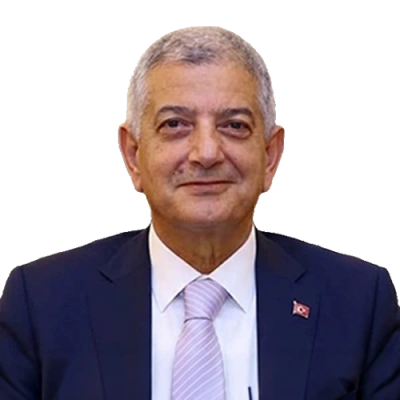
Cemal SANGU
Tüm YazılarıIntroduction: The Road from Conflict to Peace
Some geographies carry borders not only on maps, but also in people's memories. Seas, mountains and islands may separate countries from one another; yet memories, identities and senses of belonging accumulated over the course of history often continue to live far beyond drawn borders. Mindanao and Sulu, in the southern Philippines, are such a geography. For centuries, these lands have borne the imprint of different cultures, faiths and political structures. The story of the Moro Muslims is therefore not merely a story of wars and agreements; it is also a story of preserving identity, remembering the past, and seeking a place for oneself in the future.
This story reaches far beyond the modern Republic of the Philippines. Muslim communities in Mindanao and Sulu developed their own political and social structures before the colonial period. Spanish and American colonial rule, followed by the establishment of the independent Philippine Republic, brought profound political, demographic and social changes. Land arrangements, population movements and the strengthening of central state structures gradually widened the distance between historical memory and the new political reality.
Some conflicts do not begin one morning with the firing of guns. They first accumulate in memory. The grievance of one generation becomes the narrative of the next; narratives gradually become part of identity. As unresolved political questions deepen, words may give way to weapons. The modern history of the Moro question developed to a considerable extent in this way, with Moro movements emerging from the late 1960s and becoming part of one of Southeast Asia's longest and most complex armed conflicts.
Yet what makes the Moro experience particularly significant is not simply the length of the conflict. It is the possibility that a political struggle that began through armed confrontation could, over time, move towards negotiation, accommodation and the construction of new institutions. The journey was neither short nor linear. Ceasefires collapsed, negotiations were interrupted, and hopes repeatedly turned into disappointment; yet the parties continued to search for ways back to the table.
The signing of the Comprehensive Agreement on the Bangsamoro (CAB) on 27 March 2014 marked one of the most important turning points in this long journey. After seventeen years of negotiations, the agreement between the Government of the Philippines and the MILF established a framework for moving from armed conflict to political accommodation and, ultimately, institutional peace. For me, however, this date was more than a diplomatic development to be studied. It was a historic moment to which I personally bore witness.
This article briefly traces the transformation from the historical roots of the Moro question and the emergence of the MNLF and MILF, through the long years of negotiation and the 2012 Framework Agreement and 2014 Comprehensive Agreement, to the establishment of the BARMM. The deeper question is this: under what conditions can people who once pointed weapons at one another begin to discuss a shared future around the same table? Perhaps the most important lesson of the Moro experience lies here: peace is not built by forgetting the past, but by creating a shared will that does not allow the past to hold the future hostage.
I. The Historical Roots of the Moro Question and the Emergence of the MILF
To understand the Moro question, one must begin with the history of Mindanao. The conflict is not simply a confrontation between a modern state and an armed movement. At a deeper level lies the tension between the historical memory of Moro communities, which had developed their own political and social structures before colonial rule, and the modern state structures that evolved over time.
Muslim communities in Mindanao and Sulu developed political structures and regional trading relationships with neighbouring Islamic centres. Spanish and American colonial rule, followed by the establishment of the independent Philippine Republic, transformed this environment. In particular, land arrangements and population movements contributed to the growing vulnerability of Moro communities in areas where they had historically lived. Questions of identity, land, political representation and the right to shape their own future consequently became increasingly prominent.
In this environment, the Moro National Liberation Front (MNLF), under Nur Misuari, emerged. Turning to armed struggle in the early 1970s, the movement sought recognition of the political rights of the Moro people and a greater say over their future. As the conflict intensified, the parties were gradually drawn towards negotiations. Through the initiatives of the Organisation of Islamic Cooperation, the Government of the Philippines and the MNLF signed the Tripoli Agreement on 23 December 1976. It placed the question of autonomy for Moro communities in the southern Philippines at the centre of the search for a political settlement.
Yet disagreements soon emerged over the scope and implementation of the agreement. Following divisions within the MNLF, a new movement associated with Hashim Salamat gradually took shape and became known as the Moro Islamic Liberation Front (MILF), formally established in 1984. The Moro movement had thus developed two major actors with distinct political and ideological approaches.
The central lesson of this early period was becoming clear: armed struggle could make a political demand visible, but the language that would determine its future was increasingly the language of negotiation.
II. The First Search for Peace: From Tripoli to the 1996 Final Peace Agreement
The negotiating table opened in Tripoli in 1976 marked the beginning of a new political language in the Moro question. In a region where weapons had spoken for years, the parties were, for the first time, accepting the possibility that the future could be shaped not only on the battlefield but also at the negotiating table. Yet disagreements over the scope and implementation of the agreement deepened the problem of trust.
The 1987 Philippine Constitution provided for an autonomous region in Muslim Mindanao, and the Autonomous Region in Muslim Mindanao (ARMM) was established in 1989. These developments gave the search for a political settlement an institutional dimension, but they did not satisfy all Moro expectations. The 1980s and 1990s therefore remained a period moving between war and peace.
After this long search, the Government of the Philippines and the MNLF signed the Final Peace Agreement (FPA) on 2 September 1996. The agreement brought together the integration of former combatants into security institutions, transitional arrangements, and peace and development programmes in the southern Philippines. Peace was thus understood as more than the end of armed confrontation; political restructuring, economic development and social normalisation were also made part of the process.
Yet the 1996 agreement did not resolve every dimension of the Moro question. New disagreements emerged over implementation in the years that followed. The experience demonstrated an important truth: the signing of an agreement does not mean that peace is complete; very often, the real test of an agreement begins after the signing.
From 1997 onwards, a separate negotiating track between the Philippine government and the MILF began to develop. The Moro peace process had entered a second and longer phase of negotiations.
The developments after 1996 also showed why the Moro peace process cannot be explained through a single agreement. The settlement with the MNLF represented an important political achievement, but it did not encompass every dimension of the Moro question or every strand of the movement. The MILF negotiations that began in 1997 therefore created a new negotiating space shaped by both the achievements and the limitations of the earlier experience. The renewed fighting in 2000 and the return to negotiations in 2001 demonstrated both the fragility of the process and the fact that the idea of negotiation had not disappeared.
III. From Arms to the Table: A New Era of Negotiations with the MILF
The Government of the Philippines–MILF talks that began in 1997 opened a new phase in the search for a settlement. Yet this phase was again far from linear. The escalation of conflict during the “all-out war” of 2000 demonstrated how fragile the process remained. Nevertheless, negotiations resumed in 2001 within the framework of the Tripoli Agreement on Peace.
During this period, Malaysia's facilitation, the International Monitoring Team (IMT), the Ad Hoc Joint Action Group (AHJAG), and later the International Contact Group (ICG) contributed to confidence-building. Türkiye also became a member of the ICG in 2009, joining the international support mechanism for the peace process.
The crisis surrounding the 2008 Memorandum of Agreement on Ancestral Domain (MOA-AD) again demonstrated the sensitivity of the process. Yet the negotiations did not end permanently. New initiatives in 2009 and the 2010 Declaration of Continuity helped bring the parties back to the negotiating table.
Perhaps the most important lesson of this period is that peace processes are not processes in which crises never occur. The real question is whether communication can be restored after a crisis and whether the table can remain open. In the Moro experience, each rupture also became part of the accumulated experience that shaped the next stage of negotiations.
The role of third parties in the Moro process was also significant. Malaysia’s facilitation, the International Monitoring Team and the diplomatic support provided through the International Contact Group helped keep channels of communication open. Yet peace was not constructed from outside. Ultimately, the decisive factor was the willingness of the Government of the Philippines and the Moro parties to reproduce negotiation over time. The history of peace was therefore not only the history of facilitators, but also of parties willing to return to the table.
IV. From Negotiations to Agreement: The 2012 Framework Agreement and the 2014 Comprehensive Agreement
After years of negotiations, the Framework Agreement on the Bangsamoro (FAB) was signed on 15 October 2012. It established the basic elements of a new political structure for the Bangsamoro and created a framework in which political transformation and normalisation could be addressed together.
The Comprehensive Agreement on the Bangsamoro (CAB), signed in 2014, followed. It brought together political transformation, power-sharing, revenue and resource arrangements, as well as normalisation and decommissioning within a broader framework. For the MILF, after decades of armed struggle, a new path towards political and institutional participation was taking shape.
Yet by this stage it was already clear that peace could not be reduced to a document. For an agreement to endure, it required legal institutions, political structures, public confidence and changes that people could feel in their everyday lives. The subsequent history of the Bangsamoro would therefore become, in large part, a story of moving from agreement to institution.
The 2012 Framework Agreement gave the process a more concrete political architecture, while the 2014 Comprehensive Agreement brought political transformation and normalisation within the same framework. The question at the negotiating table was no longer simply how to end the war; it had become the more difficult question of how to build a political and social order after the war. This shift was one of the most consequential transformations in the Moro experience.
V. 27 March 2014: Bearing Witness to a Historic Moment
The historic moment that took place in Manila on 27 March 2014 became a symbol of this transformation. I was present at the ceremony as Special Secretary to Deputy Minister for Foreign Affairs Ambassador Naci Koru. Ambassador Koru represented the then Foreign Minister Ahmet Davutoğlu. Türkiye's Ambassador in Manila, Esra Cankorur, was also present. Türkiye was, at the time, a member of the International Contact Group supporting the Bangsamoro peace process. Representatives of İHH, Hüseyin Oruç and Ömer Kesmen, were also there.
The heat and humidity of Manila, the extensive security checks, the presence of representatives from different countries and international organisations, and the dignified bearing of the Moro side remain vivid in my memory. A sky-blue backdrop and white doves were part of the setting. They seemed almost like symbols of a new beginning in a land that had lived for years under the shadow of conflict.
The seriousness and hope visible among Al Haj Murad Ebrahim, Mohagher Iqbal and other Moro representatives; the formal atmosphere on the Philippine side; and the presence of the Malaysian facilitators all gave the occasion a distinctive historical weight. President Benigno S. Aquino III combined official formality with a recognisably human warmth.
The signing took place at approximately 5:29 p.m. At that moment, a question that had been shaped for years by weapons was being translated into political will through a document. For me, this was more than the signing of an agreement. It was the moment when an issue I had followed for years through academic and diplomatic work suddenly became history before my eyes.
One of the images that remained most strongly with me was the approaching evening in Manila. The future of a region long associated with the sound of weapons was beginning to speak another language. Perhaps that was the most beautiful description of peace: the silence of a sunset replacing the sound of guns.
To have been there remains one of the unforgettable testimonies of my life. Because peace is sometimes born not at the moment an agreement is signed, but at the moment people begin to believe that war no longer has to be their destiny.
For me, one of the most striking aspects of the Manila ceremony was the coexistence of the weight of the past and the expectation of the future. People who had once stood on different sides of a conflict were now gathered around the same political text. Beyond the formal character of the ceremony, what I sensed was less an ending than the opening of a difficult new chapter. I therefore remember that day not simply as a signing ceremony, but as a symbolic moment in which the language of war began to give way to the language of politics.
VI. From Agreement to Institution: BARMM and the Institutionalisation of Peace
After the CAB, the central challenge became transforming the agreement into a political and legal order. Following the adoption of the Bangsamoro Organic Law (BOL) in 2018 and the plebiscites in 2019, the Bangsamoro Autonomous Region in Muslim Mindanao (BARMM) was established. The Bangsamoro Transition Authority (BTA) was created to govern the transition.
The symbolic significance of this transformation was considerable. People who had spent years in armed struggle were now taking responsibility for public administration, education, health, infrastructure and economic development. The language of armed struggle was gradually giving way to the language of governance.
But political institutions alone could not be sufficient. Normalisation also involved the gradual decommissioning and reintegration of former combatants, support for participation in economic life, and the transformation of former camps into peaceful communities.
Here the meaning of peace changes. During war, success is often measured by holding a position or repelling an attack. In peacetime, success is measured by whether a child can go to school safely, a patient can reach healthcare, a farmer can take produce to market, and young people can see a future in education and employment rather than in weapons.
The Bangsamoro experience therefore demonstrates that peace is not only a security issue. It is also a question of governance, development and public confidence. The fact that parts of the process have continued over many years is itself a reminder that peace is not completed by an agreement; it is built over time.
With the establishment of the BARMM, governance became one of the central tests of the Moro experience. The transition from armed struggle to public administration meant assuming responsibility for budgets, public services, education, health, infrastructure and economic development. The measure of success therefore changed: the question was no longer simply whether a position could be held, but whether ordinary people could experience a safer and more dignified everyday life.
Normalisation therefore cannot be understood simply as a technical process of decommissioning. Economic reintegration, support for families, the transformation of former camps and the ability of communities to live with the social legacy of conflict are equally important. People must be able to see a future for themselves within the new order if a political agreement is to acquire a lasting social meaning.
VII. The Moro Experience and Comparative Observations for Türkiye
The Moro peace process cannot be directly equated with Türkiye, whose historical, political, legal and social conditions are different. The history of Mindanao and Sulu, the Philippine colonial experience, Moro political memory and the Philippine constitutional system have given the Moro question a distinctive character. Türkiye's historical experience and present political and legal framework have developed on a different basis.
The significance of the Moro experience for Türkiye therefore lies not in transferring Philippine methods unchanged, but in understanding the dynamics through which a conflict can move towards peace. Moro is not a direct model for Türkiye; it is a comparative experience through which broader questions can be considered.
Several points stand out. First is the transformation of armed struggle into a political process. Second is the gradual nature of confidence-building: trust was not created by one agreement but through communication rebuilt over years and despite repeated crises. Third is the relationship between normalisation and social and economic reintegration. Fourth is the transition from agreement to institution.
Malaysia's facilitation was central to the Moro negotiations. One important difference for Türkiye is that its current process does not rest on an international third-party facilitator in the same way. This difference itself demonstrates why the two experiences should not be treated as directly interchangeable.
Nevertheless, the questions remain relevant: Under what conditions can negotiations become sustainable? How can trust be rebuilt? How can the political and social participation of former armed actors be organised? How can normalisation become not merely a security process but also an economic and social one? How can agreements become institutions, and institutions become public confidence?
The Moro experience offers no single universal answer to these questions. It does, however, show that after years of conflict, weapons can gradually give way to politics, politics to institutions, and institutions to the routines of everyday life.
Conclusion
The history of the Moro question is not merely the history of a long armed conflict or a succession of peace agreements. It is also the story of memory becoming conflict, conflict becoming negotiation, negotiation becoming agreement, and agreement becoming an effort to build institutional peace.
The search for peace that began with the 1976 Tripoli Agreement, reached an important stage with the 1996 Final Peace Agreement, and was reshaped through the long negotiations with the MILF gradually enabled the parties to replace confrontation with political negotiation. The 2012 Framework Agreement and the 2014 Comprehensive Agreement became major milestones in that transformation. Yet the real test began after the signing.
The establishment of the BARMM, the reintegration of former combatants, the strengthening of political institutions and development efforts all demonstrate that peace is more than the absence of weapons. Laying down arms is a beginning; giving the person who has laid them down a future in which a new life can be built is the deeper test of peace.
As someone who personally witnessed that historic moment in Manila on 27 March 2014, the strongest thought I retain remains this: peace is not the erasure of the past. It is the ability to build a new common life without denying the pain of the past, yet without allowing that pain to hold the future hostage.
For weapons may fall silent on the day a war ends; real peace begins on the day people believe they can live without needing weapons again.
Click here to access the analysis that covers the topic in greater depth.
Dr. Cemal Sangu
Güncel Yazıları