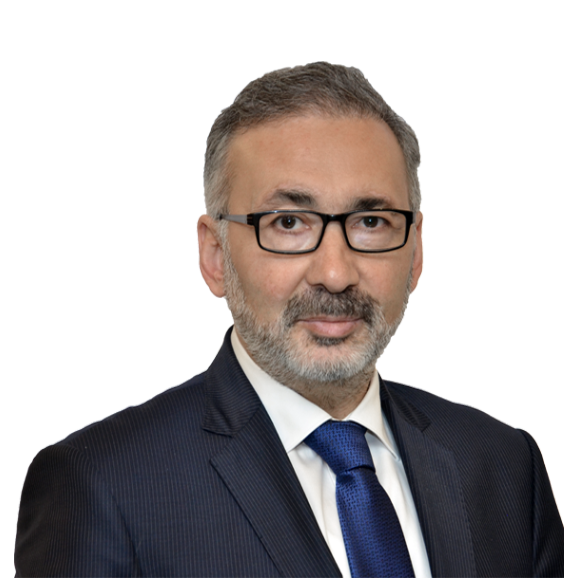
Alper TAN
Tüm YazılarıFollowing European governments’ calls for citizens to stockpile food and water in preparation for emergencies, reports of cyberattacks targeting refrigeration systems in shops and food distribution centres across seven countries have begun emerging one after another. Belgium, Luxembourg, the Netherlands, Sweden, Ireland, Estonia and Finland are among the countries affected. In some cases, the temperature inside freezers reportedly rose as high as +50°C, causing food supplies to spoil.
Similar Calls in More Than 30 Countries Across the World
Newsweek and other similar sources have reported that the governments of approximately 33 countries have advised households to maintain supplies of food, water and essential goods sufficient for 3–7 days (and, in some cases, 10–14 days). These simultaneous announcements are said not to constitute a “call to prepare for war.” So why are so many countries issuing the same warnings at the same time?
According to the published lists, the countries that have called on their populations to prepare for “emergency situations” are distributed across the continents as follows.
Europe – 17 countries: United Kingdom, Ireland, France, Germany, the Netherlands, Denmark, Norway, Sweden, Finland, Estonia, Latvia, Lithuania, Poland, Czechia, Austria, Switzerland and Croatia.
North America: United States, Canada and Mexico.
South America: Chile, Colombia, Argentina and Brazil.
Africa: South Africa.
Asia: Japan, Taiwan, Israel, India, the Philippines and Singapore.
Oceania: Australia and New Zealand.
What Do the Countries Issuing These Warnings Have in Common?
Geographically: They are predominantly concentrated in Europe, North America and the more developed parts of the East Asia-Pacific region.
Socially and culturally: They are largely high-income, urbanised societies with a strong emphasis on individual responsibility and traditions of civil preparedness. They generally have strong state institutions, high levels of media literacy and well-established cultures of self-sufficiency.
In terms of religion: Most are predominantly Christian (Protestant or Catholic) or secular societies, with exceptions such as Japan, Taiwan, Singapore and Israel.
NATO/EU membership: The vast majority of countries on the list are NATO members. Several European countries, along with the United States and Canada, are represented. Approximately 15–20 of NATO’s 32 members appear on the list. EU membership is also heavily represented, with more than 10 of the bloc’s 27 members included. The EU’s preparedness announcement, however, already covers all member states. Neutral countries such as Switzerland, Austria and Ireland are also among those issuing warnings. Japan, Taiwan, Australia and New Zealand, meanwhile, fall outside both NATO and the EU.
It is particularly striking that Mediterranean European countries such as Spain, Portugal and Italy have not issued similar calls. In other words, it is not all of Europe that appears to be on alert, but rather the northern and central parts of the continent. In the Asia-Pacific region, meanwhile, countries that are security partners of the United States have issued similar warnings. This divergence is also noteworthy.
The Bigger Picture
Take a moment to consider the picture before us. The countries widely regarded as the world's most “civilised” are suddenly telling their citizens to keep 3–7 days' worth of canned food and water at home.
The British Prime Minister recommends canned beans. Japan establishes a disaster preparedness agency. Germany extends its recommendations to 10 days. Sweden tells its citizens to be prepared to manage even in the event of war.
Official statements refer to “disasters, cyber threats and climate-related risks”. That is true. But the underlying issue runs much deeper.
These countries have recognised the fragility of the global system. Blood has been spilled in Ukraine, energy supply lines have been disrupted, cyberattacks know no borders, and climate events can no longer be considered “normal”.
Western welfare societies have become so accustomed to comfort that they are now being forced to acknowledge something they once took for granted: a single power outage could empty supermarket shelves, bank cards could stop working, and the state might not be able to reach everyone at the same time.
They have realised that their own security umbrella (NATO) may not be sufficient, and that individual countries and citizens must also be prepared to act almost like “civil defence forces”.
A Deluge Is Approaching
With the reopening of schools in September, mass student protests began in France. As other segments of society joined in, followed most recently by the Yellow Vests, the protests effectively evolved into a popular uprising. Nearly two months have passed, yet the unrest has not been brought under control. On the contrary, it continues to grow.
The events that began in France subsequently spread to countries such as Belgium, Germany, Albania, Spain and Italy. Europe is on edge. The fear of “what might happen next?” has come to dominate the agenda.
European governments seem unable to find solutions to economic, political or social problems. Europe is experiencing a profound state of helplessness and exhaustion.
The West’s Crisis of Leadership
People no longer trust their governments. European politics is suffering from a full-blown crisis of leadership — a kaht-ı rical, or a shortage of capable and qualified statesmen.
European governments are unable to produce solutions to rapidly evolving local, regional and global crises. Across Europe, national governments have effectively surrendered their decision-making authority to bureaucrats serving within the EU institutions in Brussels.
Because of the structural sluggishness of the EU, the Union struggles to make decisions. And even when decisions are eventually made, events have often overtaken them by the time those decisions are implemented.
Serious friction has emerged between the governments of several EU member states and the Union's leadership. The latest example came from Poland. The government's attempt to storm the Constitutional Tribunal with hundreds of police officers and replace its leadership in the middle of the night was interpreted as an “attempted coup by the EU against Poland”.
Europe Is Powerless
During the COVID-19 pandemic, the Russia-Ukraine War, the genocide carried out by Israel in Palestine, and the US-Israeli decision to launch a war against Iran — setting the Gulf ablaze and dragging the world from one crisis into another — Europe's misguided choices and indecision have accelerated the exhaustion of the Western world.
Today, we are confronted with a Europe that cannot accomplish what it sets out to do; that is forced to carry out policies it does not necessarily want to pursue, such as yielding to Trump's demands; that cannot meet the expectations of its own people, yet continues to serve American interests.
The people can see this. Having failed to find solutions at the ballot box, they have begun seeking answers in the streets. This is where the popular uprisings originate.
Once these movements spiral out of control, they will not be easily stopped. They could turn into social hurricanes and floods powerful enough to break through the dams holding entire societies together.
Anti-Western Sentiment at Its Peak
Meanwhile, a global wave of hostility towards Europe and the United States — in other words, the Western world — is gathering strength.
The wars they have waged, the countries they have destabilised through terrorist organisations they have supported, the governments they have shaped through military coups and proxy regimes, the plundering of nations' natural and mineral wealth, and the accumulated grievances of slavery and colonialism are all fuelling this anger.
These are long-standing accounts of injustice that have never been settled. Today, they are coming back to the surface with increasing force.
The Dynamics Behind the Latest Uprisings Are Different
There have been thousands of protests and demonstrations across Europe and America in the past. However, the latest developments have a different dimension and are driven by a distinct dynamic.
One important aspect is the fact that immigrant communities and native populations are taking to the streets together in large-scale, coordinated movements.
But even more significant is the expectation — or fear — of a global DELUGE whose source, origin, scale, power and intensity cannot even be predicted.
There is also the uncertainty surrounding the destruction that such a deluge could unleash if it begins, particularly when combined with the social storms already brewing within individual countries.
This is a matter occupying the attention of critical institutions in Western capitals more than almost anything else. Nights are turning into nightmares.
An Invisible and Unidentifiable Global Force!
For the past two years, mysterious drones that first appeared in the United States and later emerged around strategic locations in Europe have been making headlines. Their origins remain unidentified, and authorities have struggled to intervene.
Then came cyberattacks targeting enormous global institutions — attacks that would once have seemed almost unimaginable. And they continue.
An unknown power is reportedly attempting to send a message to these countries by using cyber interventions to make food supplies stored in European warehouses effectively cook inside their own refrigeration systems, rendering them unusable.
Simultaneous mass protests cannot be brought under control. The United States is abandoning its commitment to stand behind Europe. And Europe has no solution it can deploy quickly enough to fill the security vacuum that this could create.
Europe and the United States are undergoing an extremely serious period of testing and confrontation.
An unidentified force is quite literally playing games with the world.
“Who is this force?” There is no answer.
Yet, through its actions and strategies, its presence is felt more powerfully with every passing day. Many of the major developments taking place around the world seem to originate from this phenomenon.
Some point to China as the perpetrator of these sophisticated operations; others accuse Russia, Iran or Israel. Yet it is difficult to explain the scale and sophistication of these events through such straightforward attributions.
A different dynamic is at work.
This force carries out its operations but leaves the signature field blank. It has no desire for publicity or recognition. Its self-confidence appears extraordinary.
It acts, yet remains uncaught. Through its strategy, it wears down the power of major states and leaves them helpless. It achieves enormous results through seemingly simple methods. It never backs down.
It is a challenge that effectively declares: “I can do whatever I want, wherever I want in the world!”
Many may dismiss this as a conspiracy theory. But the world is facing a situation of this nature.
Could the uprisings that have begun in Europe also have such a dimension? It is possible...
All indications suggest that a great deluge is rapidly approaching the world.
Although the word deluge carries negative connotations, a deluge also cleanses nature and reshapes it anew.
Alper Tan
November 4, 2026
Güncel Yazıları
آیا جهان در انتظار یک طوفان عظیم است؟-Analiz
06 Kasım 2026
خشم عمومی در فرانسه از سال ۱۷۸۹ تا ۲۰۲۶ و آیندهٔ اروپا-Analiz..
06 Kasım 2026
Is a Great Deluge Looming Over the World?
06 Kasım 2026
Popular Anger in France from 1789 to 2026 and the Future of Europe
06 Kasım 2026
Dünyada Büyük Bir Tufan mı Bekleniyor?
04 Kasım 2026
أربعة تنظيمات هزّت النظام العالمي: طالبان، والمجاهدون العراقيون، وحماس، وهيئة تحرير ا..
19 Ekim 2026
طوفان الأقصى الذي غيّر العالم-Analiz
19 Ekim 2026
The Three Years of Al-Aqsa Flood That Transformed the World
09 Ekim 2026
Dünyayı Dönüştüren Aksa Tufanı’nın 3 Yılı
07 Ekim 2026
Four Organizations That Shattered the World Order: The Taliban, the Iraqi Mujahideen,..
01 Ekim 2026
Dünya Düzenini Yıkan Dört Örgüt: Taliban, Iraklı Mücahitler, Hamas ve HTŞ
29 Eylül 2026
Analiz- اتفاق مكة، وقع أقدام الجيوش الإسلامية، وبشارة الوحدة الإسلامية..
12 Ağustos 2026
توافق مکه، طنین گامهای ارتشهای اسلامی و نوید وحدت اسلامیAnaliz-..
11 Ağustos 2026
Mekke Anlaşması, İslam Ordularının Ayak Sesleri ve İslam Birliğinin Muştusu
10 Ağustos 2026
Analiz- معنى الحرب التي بدأت في غزة وأضرمت النار في الشرق الأوسط وغيّرت العالم..
02 Ağustos 2026


