Firdous Syed
Tüm YazılarıGaza is a festering wound that will not heal. The atrocities, the deaths under bombardment, through hunger and for want of medical care, are a blot on a world that calls itself civilized yet still hesitates to name what has happened, and continues to happen, as genocide. This destruction has unfolded with the protection of Western powers, particularly the United States. Whatever those in power decide, or fail to do, Gaza remains a call to conscience: a measure of the distance between justice and injustice, humanity and cruelty, the pursuit of peace and the pursuit of endless war in the name of security. No people can claim an unlimited right to secure its own existence by eroding the existence of another.
How could such destruction of life and property, amounting to mass killing, take place in the twenty-first century before the eyes of the world? Has power become the only principle that matters, while morality, ethics and the supposedly universal idea of human rights count for so little? Addressing the 81st United Nations General Assembly, President Recep Tayyip Erdoğan called Gaza the world’s largest children’s graveyard and said it had the highest rate of child amputations. “No one with humanity, compassion and conscience can close their eyes to this,” he declared.
President Erdoğan’s appeal to conscience did not end with Gaza, he, spoke of the lives lost and people displaced in conflicts stretching from Ukraine and Russia to Myanmar, Darfur, Iran and Lebanon. He also raised Kashmir, called for peace in Sudan and spoke of the need for security and development in Somalia. These crises differ in their causes and circumstances, but each asks whether the international community responds to suffering according to a common principle, or according to the power and interests of the states involved.
At the close of his address, Erdoğan put the choice plainly: either deepen uncertainty through fear, conflict and isolation, or build the future together through justice, solidarity and a common will. “Türkiye has chosen the second path,” he said. But choosing peace requires us to ask why the institution created to preserve it has proved so unable to act.
If ever there was an urgent need to reform the United Nations, it is now. The Security Council remains a relic of the postwar settlement, with permanent seats and vetoes reserved for five powers. As Erdoğan has said, “The world is bigger than five.” The Council has failed to resolve major conflicts and has stood by while mass atrocities unfolded, from Srebrenica and Myanmar to Gaza. Yet the dangers ahead are greater still. Weapons of mass destruction remain a threat, while artificial intelligence and autonomous weapons add new uncertainty to war. Climate change threatens the conditions on which civilizations depend unless states act together. Precious time has already been lost.
Why do Britain and France both hold permanent seats and vetoes? Europe is among the world’s smallest continents, yet these two states retain privileges conferred by the settlement that followed the Second World War. What democratic principle makes those privileges permanent, and how do they reflect the world of the twenty-first century? Russia, a state spanning Europe and Asia, holds a third veto. Türkiye holds none. Nor does any Muslim-majority country hold a permanent seat, although Muslim societies have borne a heavy share of war, dispossession and instability in the postwar order. A council meant to act for the whole world cannot dismiss such questions of representation.
The United States presents another difficulty. Since the Second World War, its forces have been engaged in successive conflicts, while its military presence extends across the globe. Can a state so invested in military power be expected to surrender the ability to block collective action when that action conflicts with its own policy or that of an ally? Its withdrawal from the Paris Agreement in January 2026 exposes a related weakness in international cooperation: a major power can walk away from a shared undertaking vital to humanity’s future when its immediate politics change. In November, Türkiye will host COP31 in Antalya, offering an opportunity to press for the collective action on climate that no country can deliver alone.
Erdoğan’s answer to the Security Council’s unequal power goes beyond admitting a few more countries to the privileged club. “The abolition of the veto privilege should be both the starting point and the fundamental strategic objective of any meaningful reform,” he wrote in Bloomberg. Some powerful states seek permanent seats because they feel excluded from the status enjoyed by the five. But extending that status would satisfy their ambitions without correcting the injustice at the heart of the system. It would enlarge the circle of privilege, not give the world a more democratic voice.
Western powers often speak of the virtues of democracy. Let those principles begin at the United Nations. Abolish the veto and permanent membership. Elect Security Council members through the General Assembly for fixed terms, and require those seeking another term to earn the confidence of member states again. Erdoğan stated the principle plainly: “Let’s recognize that a system in which the will of more than 190 countries is subject to the whims of five countries is neither fair nor capable of fully establishing trust.”
We should harbor no illusion that the permanent five will willingly surrender the privilege on which their power rests. Under the UN Charter, reform of this scale requires the ratification of every permanent member. The states asked to give up the veto can therefore prevent its abolition. This is the contradiction at the heart of the system: the power that needs reform guards the gate through which reform must pass.
The language of universal rights has too often given a civilized appearance to an older practice, the strong decide whose life is protected, whose suffering is recognized and whose claims to justice can be set aside. Gaza has stripped away that appearance. Türkiye is right to raise its voice against this double standard. Yet conscience alone cannot restrain those who possess the power to ignore it. Türkiye must build the diplomatic, economic and defensive strength to make its call for justice consequential. Power in the service of itself reproduces the disorder Erdoğan has condemned, power held to a principle can help protect those whom the present order leaves exposed. Peace with justice requires both the courage to speak and the strength to be heard.
---
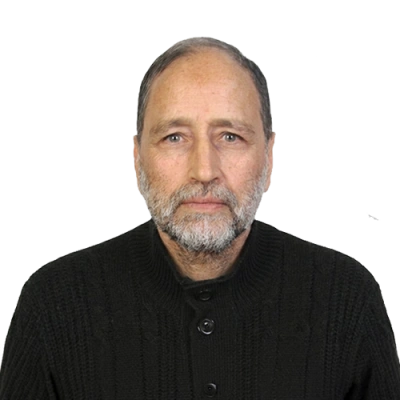
Firdous Syed is a Kashmiri political analyst. Formerly involved in the region’s 1990s resistance movement, he later turned his efforts toward civil society, peacebuilding, and development. Over the years, he has written extensively on Kashmir, South Asian politics, and international affairs for various publications.
Güncel Yazıları