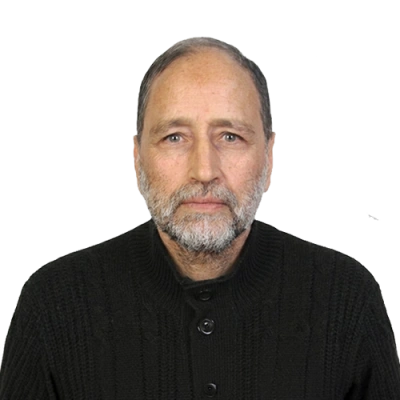
Firdous Syed
Tüm YazılarıModern urban civilization, in pursuing freedom through material mastery has made the conditions of survival increasingly dependent upon uninterrupted technological systems and continuous economic participation. Material achievement has acquired governing authority while the inward world of meaning, sacred obligation and collective responsibility has lost much of its power to determine the purposes and limits of expansion. Organized around accumulation, this order reproduces connected injuries to nature, family and inward life, even as livelihoods become dependent upon its continuation. Humanity consequently commands greater material power while becoming more dependent upon its own arrangements and more capable of destroying the conditions sustaining its existence.
“عقل نے رفتار کو منزل سمجھ لیا،
پر بصیرت کا قطب نما کھو دیا۔”
“Akıl, hızı menzil sandı,
ama basiret pusulasını yitirdi.”
Reason mistook speed for the destination, but lost the compass of discernment.
These lines from the poem مَاخَذِ فساد, Fesadın Kaynağı (The Source of Corruption and Disorder) question the direction of modern progress. Movement accelerates, production expands and technological power multiplies, but towards what end? When advancement is measured solely by the capacity to produce more, consume faster and compress distance, the question of what sustains a meaningful human existence vanishes beneath the celebration of material output.
In invoking corruption on land and sea, Fesadın Kaynağı raises a question about the philosophical foundations of the disorder. Environmental destruction, social disintegration and inward desolation demand an inquiry into what connects them. What happens when human knowledge acquires unprecedented power over physical existence while cutting itself off from the moral and spiritual obligations that ought to give that power direction?
Material ease has attained an extraordinary reach. Yet the conditions sustaining this existence have become so thoroughly mediated by technological systems that life itself depends upon their uninterrupted operation. Water must be pumped, sewage removed, food transported and refrigerated, buildings heated or cooled, and essential services continuously supplied.
In regions dependent upon desalination, artificial cooling or sustained winter heating, this relationship becomes especially stark. The electric current sustains the conditions under which large populations can continue to inhabit their surroundings. Withdraw it for long enough, without an adequate replacement, and the organization of life begins to fail.
Modern urban life has consequently acquired a profound dependence at the very moment it understands itself to have achieved unprecedented freedom. Its inhabitant possesses an abundance of choices within an arrangement upon which continued existence increasingly depends. Freedom of consumption expands while freedom from the conditions imposed by that arrangement contracts. Has life become freer, or more dependent?
Earlier societies also depended upon labor, knowledge, exchange and collective organization. Their members were never universally self-sufficient. But the scale, concentration and reach of contemporary dependence create a different condition. The survival of millions rests upon systems extending far beyond their knowledge or control. Stronger infrastructure can reduce the likelihood of interruption, but it cannot resolve the underlying condition, existence has been organized around its continued operation.
This dependence also changes the practical meaning of dissent. Withdrawal from an established order was never equally available to everyone, yet access to land, commons and local subsistence could sometimes support a measure of distance from dominant institutions. For populations organized around metropolitan life, such withdrawal has become increasingly difficult. Shelter, water, food, transport and communication arrive through arrangements requiring continuous payment. A person may reject the values governing the system while remaining compelled to participate in its reproduction.
Here physical dependence becomes economic subordination. The means of survival require an income, and income ordinarily requires a recognized contribution to economic activity. Human dignity remains inherent, but the material conditions through which it can be lived are made conditional. When a livelihood disappears, access to housing, security and participation becomes precarious. The individual must repeatedly establish economic usefulness to retain a secure place within the arrangements sustaining life.
This principle reaches beyond paid employment. Raising children, caring for the elderly, maintaining a household and preserving communal bonds sustain society across generations. Yet their value is poorly represented by measures centered upon market transactions. A civilization can depend upon an institution while organizing its rewards in ways that weaken it.
The same contradiction governs political life. Rival states and competing parties retain real differences, but across many of these divisions lies a shared dependence upon expanding production, stable supply chains, financial circulation and technological efficiency. The apparent exhaustion of ideology conceals the authority of a governing conviction, economic expansion must continue. Its purposes become so deeply embedded in everyday necessity that they acquire the appearance of natural law. Society increasingly debates how to sustain the engine, while the question of where it should carry human life recedes.
Understanding this condition requires an examination of modernity’s philosophical foundations. The Enlightenment, the French Revolution and nineteenth-century positivism differed in their aims and assumptions. Yet the historical transformation they helped shape progressively weakened the authority of sacred obligations to define the purposes and limits of public and economic life. Autonomous reason, individual rights and scientific explanation increasingly supplied the principles through which society understood itself and organized its institutions.
Within this transformation, individual material self-interest increasingly acquired legitimacy as an organizing principle of economic life. Competition and accumulation gave that principle institutional force, while obligations lacking an immediate economic return struggled to retain authority. Greed could consequently operate through accepted incentives and ordinary necessities, becoming embedded in the arrangements through which society pursued progress.
Empirical inquiry can reveal how a process works and what consequences follow from it. It cannot, through measurement alone, establish what human beings ought ultimately to serve. When measurement becomes the governing standard of collective decisions, whatever cannot be adequately quantified risks losing its standing.
This is where the marginalization of باطن, bâtın, the inward dimension of meaning, conscience and spiritual awareness, acquires its civilizational significance. Love, responsibility and sacred obligation may continue to be professed. Yet their ability to govern conduct diminishes when public life is organized around standards that cannot fully recognize their worth. Meaning survives in private conviction while losing authority over the institutions directing material existence.
Knowledge expands the means of action; بصیرت, basiret, moral and spiritual discernment, must judge its ends. When that relationship breaks, technical possibility begins to supply its own justification. What can be produced invites production; what can be extracted invites extraction. Restraint appears as an impediment because the purposes that might justify restraint have been deprived of governing authority.
Even those who recognize the damage remain dependent upon the activity producing it. This is the growth trap, büyüme kapanı: society must keep expanding to maintain livelihoods organized around expansion, while the consequences erode the conditions sustaining life. Unlimited accumulation becomes a practical imperative within a finite living world.
The first rupture appears in the relationship with nature. Land, forests, rivers and seas are approached primarily through what can be extracted from them or built upon them. Their significance as a living trust, extending beyond present ownership and consumption, weakens. Ecological limits confront an economic order whose stability depends upon pushing further. Resource depletion, environmental degradation and climate disruption become connected expressions of a conflict built into the organization of progress.
The second rupture concerns the bonds through which society renews itself. When personal fulfilment is increasingly expressed through consumption and relationships are subjected to calculations of individual advantage, enduring obligations become harder to sustain. Meanwhile, insecure employment, expensive housing, long working hours and geographical dispersal place material pressures upon family life. Marriage, parenthood and care require time, continuity and responsibilities whose worth exceeds immediate return. An order demanding constant mobility and availability consumes the conditions those commitments need.
The family consequently faces both a crisis of value and a crisis of support. Its obligations can appear burdensome within a culture organized around individual preference, while its practical foundations weaken under economic pressure. Society then confronts a demographic and social difficulty rooted partly in its own failure to honor the work of continuity.
The third rupture develops within the person. Millions may inhabit the same city without belonging to a community of durable mutual responsibility. Physical density cannot supply that belonging. Where neighbors remain strangers, care must be purchased and social recognition depends upon performance, the individual can become surrounded by people while remaining inwardly abandoned. The city gathers human bodies into a common space without necessarily creating a shared life.
This loneliness is connected to the marginalization of bâtın. A person addressed chiefly as a worker, consumer or unit of economic demand struggles to find recognition for dimensions of existence that exceed those roles. Material abundance can accumulate around an inward life deprived of purpose. Ecological injury, weakened social bonds and spiritual isolation converge around the same failure: the inability to place material activity within an authoritative understanding of what life is for.
Premodern societies experienced devastating plagues, droughts and wars, sometimes across vast territories. Modern technological power has introduced an additional danger: human decisions can now unleash destructive processes with consequences extending across the planet.
Nuclear arsenals, engineered biological threats and tightly interconnected systems vulnerable to cascading failures have enlarged the reach of human error, conflict and deliberate violence. A decision taken in one place can threaten lives, food systems and social continuity far beyond its immediate target, creating the possibility of catastrophe on a planetary scale.
Existential peril emerges from this widening distance between destructive capability and moral restraint. The same civilization that concentrates survival within intricate technological arrangements also develops the means to devastate them. Its power over life and its dependence upon uninterrupted systems grow together. Material mastery consequently carries the possibility of a scale of ruin that mastery itself has made available.
Recovering moral limits requires a serious account of the collective good. Sacred obligation cannot become a justification for arbitrary authority, nor can collective purpose erase conscience and human dignity. A defensible moral order must hold power accountable while recognizing duties to other people, future generations and the living world. Its authority rests upon the protection and cultivation of life.
This returns the argument to Fesadın Kaynağı. The origin of disorder lies in a broken relationship between knowledge, purpose and restraint. Reason acquires speed while basiret loses its compass. Material growth becomes the measure of achievement even when existence itself supplies the fuel for its continuation:
“جہاں نمو کی آگ میں وجود ہی ایندھن ہے؟”
“Büyümenin ateşinde
varoluşun kendisi mi yakıt?”
Does existence itself become fuel in the fire of growth?
What meaning can growth retain when it consumes the foundations upon which life depends? A civilization that cannot answer this question remains captive to its own acceleration. It may continue multiplying its powers while weakening its capacity to choose a destination. The restoration of balance begins by making knowledge answerable to life and material achievement answerable to a moral purpose beyond accumulation.
This essay develops the central argument of my Urdu poem, مَاخَذِ فساد, Fesadın Kaynağı (The Source of Corruption and Disorder): that civilizations’ separation of material knowledge from moral and spiritual discernment has turned growth into an overriding purpose, weakening the foundations of the life it claims to advance.
---
Firdous Syed is a Kashmiri political analyst. Formerly involved in the region’s 1990s resistance
movement, he later turned his efforts toward civil society, peacebuilding, and development. Over
the years, he has written extensively on Kashmir, South Asian politics, and international affairs
for various publications.
Güncel Yazıları
The Architecture of Rupture
19 Ekim 2026
Materyalizm ve Medeniyetin Devamlılığı Krizi
13 Ekim 2026
Materialism and the Crisis of Civilizational Continuity
13 Ekim 2026
Demokrasi, İnsanlık Tarihinde Ortaya Çıkmış En İyi Fikir midir?
05 Ekim 2026
Is Democracy the Best Idea Ever to Have Emerged in Human History?
05 Ekim 2026
Iran: Power in the Name of Resistance
30 Eylül 2026
İran: Direniş Adına Güç
30 Eylül 2026
Gazze ve Dünya Düzeni Krizi
23 Eylül 2026
Gaza and the Crisis of World Order
23 Eylül 2026


