Firdous Syed
Tüm Yazıları“Türkiye’s demographic anxiety deepens” is the somber headline of a column published in Daily Sabah. With ageing population and persistently low birth, successive generations become too small to replace those before them, it becomes a matter of national security and generational continuity.
There is some reassurance in the fact that President Erdoğan recognizes the gravity of the problem. Speaking on 2 May 2026, he declared, “The security of the family cannot be considered separately from the security of the nation.” He also warned of weakening family ties, later marriage, and falling fertility. Financial support for young couples and incentives to encourage childbirth have followed. Yet recognizing the danger and offering economic assistance may not be enough. The decline extends far beyond Türkiye. According to the United Nations, global fertility fell from 3.31 children per woman in 1990 to 2.25 in 2024. Across the member states of the Organization for Economic Co-operation and Development (OECD), an international economic forum of developed nations committed to democracy and market economies, average fertility fell from 3.3 in 1960 to just 1.5 in 2022, well below the replacement threshold of approximately 2.1.
These figures show how rapidly Türkiye is moving along this path. Fertility has fallen from 2.38 children per woman in 2001 to 1.51 in 2023, and now to a reported 1.42. Between the second quarters of 2024 and 2026, the population aged under five fell from 5.22 million to 4.77 million, while the population aged 65 and above rose from 8.92 million to 9.79 million. The elderly share increased from 10.4 to 11.3 per cent, while the working-age share declined from 68.5 to 68.1 per cent. The consequences affect the future workforce, social security systems, elderly care, and the country’s capacity to sustain its economic strength.
TurkStat’s figures for 2024 showed a fertility rate of 1.83 children per woman in sparsely populated areas, 1.58 in areas of intermediate density, and just 1.39 in densely populated urban hubs. Even rural fertility was below replacement, but the shortfall was far more pronounced in the cities. Housing costs, job insecurity, and the difficulty of combining careers with parenthood plainly matter. Yet the OECD also identifies changing attitudes toward family life, with men and women increasingly postponing or forgoing children in pursuit of career advancement and personal fulfilment. Across its member countries, the average age of women giving birth rose from 28.6 in 2000 to 30.9 in 2022. Alongside material constraints, raising the next generation increasingly competes with individual aspirations.
The contraction of the household is equally measurable. According to TurkStat, Türkiye’s average household size fell from 4.0 people in 2008 to 3.08 in 2025. Between 2014 and 2025, the proportion of extended-family households declined from 16.7 to 13.5 per cent, while one-person households rose from 13.9 to 20.5 per cent, representing more than one in every five households. By 2025, approximately 5.52 million people were living alone. Türkiye is experiencing two structural shifts simultaneously, fewer children are being born, and fewer people are sharing a home.
Hungary increased family-benefit spending to more than 3 per cent of GDP, yet its fertility rate reached only around the OECD average. Similarly, Nordic countries, despite extensive subsidized childcare and generous parental leave, saw fertility fall toward that same low average by 2022–2023. South Korea increased family-support spending from 1.1 per cent of GDP in 2013 to 1.5 per cent in 2020, but its fertility nevertheless plummeted to 0.72 in 2023. These measures can ease burdens on families, but they have proved insufficient to secure demographic renewal.
Economic pressures are real, but they operate within a changing way of life, one in which households are smaller, more people live alone, and parenthood competes with other ambitions. Financial assistance can ease the financial responsibilities of raising children; it cannot, by itself, determine the value those responsibilities hold in a person’s life.
This predicament provides a concrete starting point for examining the broader ideas that have shaped modern civilization. Since the French Revolution, Western political, social, and economic thought has increasingly set the global standard. It has transformed human society, bringing extraordinary material progress. Its achievements gave it such authority that it came to define how societies understand progress itself. Developed societies are now confronting the limits of this trajectory, while developing nations strive to catch up, fearful of being left behind. Yet the costs are becoming increasingly visible: climate change, the weakening of family structure, and the proliferation of autonomous weapons and artificial intelligence. Meanwhile, economic life remains organized around expanding production and consumption, where even a slowdown in consumption is treated as an existential threat.
The possibility of systemic crisis is no longer confined to philosophical speculation. A recent Lancet commission assessment warns that malicious AI use and nuclear conflict “carry risks of extinction in the next 75 years.” While these are potential outcomes rather than inevitabilities, their severity demands that we ask whether the ideas that brought us this far are adequate to sustain human civilization through the remainder of this century.
After the Second World War, industrial capitalism and Soviet socialism emerged as the principal competing systems shaping the global order. Both arose from European intellectual traditions, and despite their profound differences, both placed material production and economic expansion at the center of human progress. Soviet socialism sought to overcome inequality through central planning, but its materialist outlook subordinated human existence to state machinery, eventually leading to its collapse. That collapse was celebrated as the “end of history”, an apparent vindication of liberal democracy and market capitalism. Yet the failure of one extreme did not resolve the flaws of the other. The prevailing global order has increasingly elevated individual autonomy above the claims of community, family, and natural limits. Individual desire has acquired an authority that inherited values and collective obligations struggle to contest. The question of what an individual wants has increasingly displaced the question of what a society needs to endure.
This broader civilizational crisis brings us back to the demographic decline. Financial incentives may ease the burden of forming a family, but they cannot restore its foundation within a culture that centers everything on individual achievement. At the heart of the demographic crisis lies a fundamental shift in how society values motherhood. Within an increasingly materialist framework, motherhood is too often treated as an interruption to productive life, an obstacle to career advancement, rather than the essential work through which human life continues.
The cost borne by mothers is well documented. The OECD identifies a persistent “motherhood penalty” in earnings and career progression following childbirth. Its 2025 pension modelling estimates that an average-wage mother of two who takes a five-year childcare break receives roughly 5 per cent less in total pension benefits than a woman with an uninterrupted career. In Türkiye, this penalty exceeds 10 per cent, rising to at least 20 per cent for a ten-year break. The imbalance extends to wider caregiving responsibilities. According to the International Labor Organization (ILO), 708 million women worldwide were outside the formal labor force in 2023 due to unpaid care responsibilities, compared with just 40 million men.
Women perform more than three-quarters of unpaid care globally, yet this effort remains largely excluded from standard GDP accounting. Here lies a profound contradiction: society depends entirely on the work of nurturing human life, yet its economic structures leave those who perform this work with less income, weaker career security, and diminished retirement safety. Restoring the dignity of motherhood must mean more than just paying word service to mothers; it requires structural recognition, shared responsibilities, and financial security in old age.
Ultimately, the demographic crisis cannot be resolved by economic incentives alone, precisely because it is not merely an economic problem. It is a crisis of meaning, a reflection of a worldview that has reduced human existence to what can be quantified, produced, and consumed. For centuries, modern intellectual traditions have swung between ideological extremes, yet both side-stepped the inner dimension of human life. By evaluating progress almost exclusively through material output and hyper-individualized fulfillment, modern society has relegated, and in some cases entirely negated, the fundamental truth that human existence extends far beyond what can be measured by balance sheets or standard economic equations.
To navigate this civilizational impasse, we must chart a Middle Path that reconciles material development with the discovery of meaning. Individual autonomy is a genuine achievement of human progress, but it cannot exist in a vacuum; it must be adjudicated against the overarching good of society and the imperative of generational continuity. When individual desires are elevated to the point where they systematically undermine the conditions required for collective survival, society erodes its own future. At the same time, economic security and material advancement ease the burdens of daily life, but they do not, by themselves, provide purpose or belonging. True human development requires balancing material well-being with the restoration of inner meaning, moral responsibility, and institutional reverence for caregiving.
Türkiye’s demographic anxiety, and the parallel decline across the globe, is a vital warning sign.
---
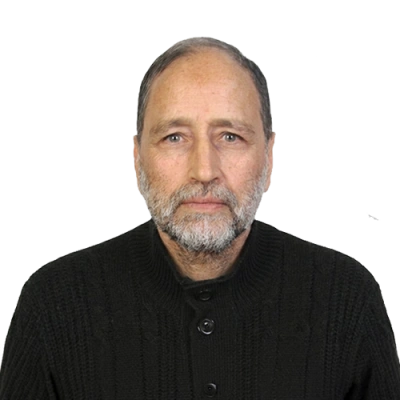
Firdous Syed is a Kashmiri political analyst. Formerly involved in the region’s 1990s resistance
movement, he later turned his efforts toward civil society, peacebuilding, and development. Over
the years, he has written extensively on Kashmir, South Asian politics, and international affairs
for various publications.
Güncel Yazıları
Materyalizm ve Medeniyetin Devamlılığı Krizi
13 Ekim 2026
Demokrasi, İnsanlık Tarihinde Ortaya Çıkmış En İyi Fikir midir?
05 Ekim 2026
Is Democracy the Best Idea Ever to Have Emerged in Human History?
05 Ekim 2026
Iran: Power in the Name of Resistance
30 Eylül 2026
İran: Direniş Adına Güç
30 Eylül 2026
Gazze ve Dünya Düzeni Krizi
23 Eylül 2026
Gaza and the Crisis of World Order
23 Eylül 2026