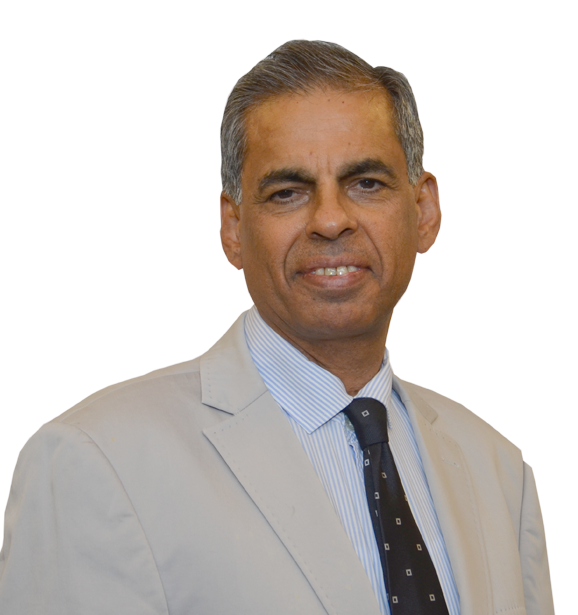
Furkan HAMİT
Tüm YazılarıCertain international gatherings carry significance that extends far beyond their official agendas. While they may ostensibly be convened to address a particular global issue, in reality they also serve as platforms where diplomatic engagement among major powers, economic interests, political priorities and the future direction of the international order are shaped. The 31st United Nations Climate Change Conference, COP31, currently taking place in the Turkish coastal city of Antalya, is an extraordinary international gathering of precisely this kind.
For the first time, Türkiye is hosting this major global conference. Running from 9 to 20 November 2026, its most significant phase is the World Leaders’ Summit, being held on 11 and 12 November under the hosting of President Recep Tayyip Erdoğan. On this occasion, Antalya has become much more than a centre for climate negotiations. It has emerged as an important stage for global diplomacy, bringing together countries from different continents, with diverse political systems and economic interests, to discuss their priorities and strategies for the future.
102 World Leaders, 95 Countries and Seven International Organisations
The exceptional significance of this summit is reflected in the announcement by Türkiye’s Ministry of Environment, which states that a total of 102 world leaders, representing the senior leadership of 95 countries and seven international organisations, are participating. The participants include 37 heads of state, 35 heads of government, eight vice-presidents, seven deputy prime ministers, two crown princes, one prince, one parliamentary speaker and four special representatives.
The seven international organisations represented at the summit are the European Commission, the United Nations, the United Nations General Assembly, the World Bank, the Organisation for Economic Co-operation and Development (OECD), the Organisation of Islamic Cooperation (OIC) and the International Energy Agency (IEA).
These figures demonstrate that Türkiye has achieved considerable success in bringing political leaders from across the world, alongside major international institutions, together at a single venue. The registration of more than 92,000 participants for the conference is further evidence of the extraordinary international attention it has attracted. Those registered include government delegations, diplomats, scientists, climate specialists, business leaders and representatives of civil society.
What Is COP31, and Why Does It Matter to the World?
COP is short for the Conference of the Parties to the United Nations Framework Convention on Climate Change (UNFCCC). These annual global gatherings are convened to develop a collective strategy for addressing the climate crisis, reducing carbon emissions, limiting the rise in global temperatures and providing financial and technical assistance to countries affected by climate change.
The 2015 Paris Agreement marked a major milestone in this global diplomatic process. Under the agreement, countries committed to keeping the rise in global temperatures well below 2 degrees Celsius above pre-industrial levels, while pursuing efforts to limit the increase to 1.5 degrees Celsius.
Yet, a decade after the agreement was reached, the world remains a considerable distance from achieving that goal. Extreme heat, wildfires, floods, droughts, rising sea levels and water scarcity are no longer merely threats looming on the horizon; they have become present-day realities.
That is why the central question facing COP31 is no longer whether the world recognises the severity of the climate crisis, but whether the major powers are prepared to turn their commitments into concrete action.
Türkiye and Australia: A Shared Responsibility
One distinctive feature of COP31 is its administrative and negotiating structure. Türkiye is hosting and presiding over the conference, while Australia's Minister for Climate Change and Energy, Chris Bowen, is leading the negotiation process. Türkiye's Minister of Environment, Urbanisation and Climate Change, Murat Kurum, is serving as President of the Conference.
This arrangement is significant because Türkiye and Australia, despite their different geographical and economic circumstances, are playing complementary roles in advancing the climate negotiations.
Addressing the opening session, President Erdoğan emphasised the need for global solidarity and shared responsibility. Meanwhile, United Nations Secretary-General António Guterres warned that the climate crisis was intensifying rapidly and that the interests of the fossil fuel industry were obstructing global efforts to address it.
Brazilian President Luiz Inácio Lula da Silva also drew attention to the fact that wars, trade disputes and geopolitical tensions were pushing climate change into the background of the international leadership's agenda. Australian Prime Minister Anthony Albanese, for his part, stressed the importance of clean energy, greater electrification and protecting the island nations of the Pacific.
These statements demonstrate that the climate crisis is no longer simply an environmental issue. It has become a central concern of global politics, economic security and international cooperation.
The Summit's Agenda: From Clean Energy to Economic Transformation
Türkiye has identified ten priority areas for COP31. These include the transition to clean energy, greater electrification, zero waste, reducing methane emissions, environmentally sustainable industrial development, climate-resilient cities, food security, the protection of oceans and water resources, youth education and stronger healthcare systems.
Among these priorities, one of the most prominent targets is to increase electricity's share of global final energy consumption to 35 per cent by 2035. Other targets include reducing energy-use intensity in buildings by at least 25 per cent and increasing the proportion of recycled and reused materials in industrial production to at least 15 per cent under the principles of a circular economy.
Türkiye has also included an effort to reduce the projected growth in municipal waste by 50 per cent by 2035 among its global objectives.
On 11 November, the summit is hosting a high-level dialogue on the transition to clean energy and the expansion of electrification, under the title “35 by 35: Powering the Future”. Discussions on environmentally sustainable industrial development, investment and employment are also scheduled for the same day. On 12 November, the agenda will turn to the implementation of the Paris Agreement, climate finance and measures to make cities more resilient to natural disasters.
These targets reflect Türkiye's ambition to ensure that COP31 becomes more than a forum for political declarations and instead serves as a catalyst for tangible transformation of the global economy.
Türkiye's Growing Diplomatic Role on the Global Stage
The significance of Türkiye hosting COP31 cannot be viewed solely through the lens of environmental policy. In fact, the conference represents an important opportunity for President Erdoğan to further consolidate Türkiye's standing in international diplomacy.
Over recent years, Ankara has sought to expand its role in regional conflicts, energy politics, trade relations between Europe and Asia, and international mediation. Hosting leaders from across the world in Antalya now provides a new global platform for advancing that diplomatic strategy.
The gathering of the United Nations Secretary-General and world leaders in the presence of President Erdoğan presents Türkiye as an important centre for international dialogue. Dedicated time has also been set aside during the summit for bilateral meetings, giving Türkiye an opportunity to advance its political, commercial and economic relations.
However, turning this diplomatic achievement into genuine global influence will require Türkiye to succeed in building an acceptable consensus between developed countries and developing economies.
The Absence of Major Powers and the Contradictions of Climate Politics
One significant weakness of the summit is the absence of the highest levels of political leadership from some of the world's largest carbon-emitting countries.
According to recent international media analyses, the heads of state or government of major emitters such as the United States, China, India, Russia and Japan are not attending the summit. China is being represented by Vice-President Han Zheng, while the US government has not even sent a delegation to the conference.
This situation raises a fundamental question: if the top political leaders of the world's largest industrialised and carbon-emitting nations are not directly participating in climate negotiations, how can global targets be translated into practical outcomes?
This is precisely the contradiction that the United Nations climate framework has been grappling with for many years. Developing countries are urged to take measures to protect the environment, yet disagreements persist over the responsibilities and financial contributions of the economies that account for the largest share of global emissions.
Climate Finance: The Central Demand of Developing Countries
Climate finance is the most important and sensitive issue on the COP31 agenda. Pakistan, Bangladesh, the Maldives and numerous countries across Africa and Asia are experiencing the severe consequences of climate change, despite having contributed a relatively small share of historical global carbon emissions.
The devastating floods of 2022 brought home to Pakistan, in the most tangible way, the reality that the climate crisis does not stop at national borders. Millions of people were affected, infrastructure suffered extensive damage, and the country's economy continues to face long-term consequences.
Developing countries maintain that they need more than loans to protect themselves against climate change. They require financial assistance that is accessible, predictable and adequate. Grants, advanced technologies and resources to address loss and damage are particularly important for these countries.
Addressing the opening session on 11 November, United Nations General Assembly President Khalilur Rahman also emphasised that national climate plans must be backed by financial resources and that climate assistance should be accessible, adequate and provided without adding to countries' debt burdens.
His message was clear: promises alone will not lower the Earth's temperature. What matters is their implementation.
Prime Minister Shehbaz Sharif's Visit and Pakistan's Position
Pakistan's participation in COP31 carries particular significance. Prime Minister Shehbaz Sharif arrived in Antalya on 10 November, accompanied by a Pakistani delegation. The delegation includes Senator Sherry Rehman, Federal Minister for Information Attaullah Tarar and Adviser Tariq Fatemi.
According to the Pakistani government, the Prime Minister will address the World Leaders' Summit, highlighting the need for effective global action against climate change, the promotion of solar energy, the expansion of renewable energy capacity and stronger systems for responding to natural disasters.
He will also call for reliable and readily accessible climate finance for developing countries.
During his visit to Antalya, the Prime Minister has held meetings with several prominent figures, including Bangladesh's Prime Minister Tarique Rahman, Palestinian Prime Minister Mohammad Mustafa, Syrian President Ahmed al-Sharaa, Saudi Arabia's Minister of Energy Prince Abdulaziz bin Salman, Saudi Minister of State for Foreign Affairs Adel al-Jubeir and World Bank President Ajay Banga. He has also met Türkiye's First Lady, Emine Erdoğan.
These meetings demonstrate that Pakistan is using the climate conference not only as an opportunity for conventional environmental diplomacy but also as a platform to strengthen its regional and international relationships.
Pakistan has established its national pavilion at the conference venue, with a programme of 54 activities. These cover a range of subjects, including solar energy, water and food security, a just energy transition, climate-resilient healthcare systems, disaster preparedness and international investment.
For Pakistan, it is essential not only to highlight its climate-related challenges on the international stage but also to focus on securing investment and support for practical, implementable projects.
Can Türkiye Turn COP31 into a Global Diplomatic Success?
This is the fundamental question whose full answer will emerge after the conference concludes on 20 November and its final decisions become clear.
By hosting world leaders, bringing together a broad international gathering and presenting measurable environmental targets, Türkiye has demonstrated its diplomatic capabilities. However, the success of an international conference cannot be measured merely by the number of participants, the quality of its organisation or the speeches delivered by heads of state.
The real test will be whether developed countries translate their climate-finance commitments into concrete action. Will developing countries receive access to advanced technology and the financial resources they need? Will the world agree on an acceptable roadmap for reducing dependence on fossil fuels? And will it be possible to protect the economic interests of developing economies throughout the transition to cleaner energy?
Another challenge for Türkiye will be to strike a balance between its industrial development, energy requirements and global environmental objectives. The transition to clean energy demands substantial investment, making cooperation with international financial institutions and investors critically important.
If Antalya succeeds in producing a practical consensus between developed and developing countries on climate finance, clean energy and environmental justice, Türkiye's diplomatic standing could receive a significant boost.
What Message Will Antalya Send to the World?
The global leaders gathered in Antalya are confronting not merely the challenge of climate change, but a question concerning the shared future of humanity. The world must decide whether economic development and environmental protection are to remain conflicting objectives, or whether a path can be forged that allows both to advance together.
By securing the right to host COP31, Türkiye has created a major diplomatic opportunity for itself. For President Erdoğan, the summit represents an important test: an opportunity to strengthen ties with world leaders, raise Türkiye's international profile and assert its leadership in climate diplomacy.
For developing countries such as Pakistan, the conference is far more than an international event. It offers an opportunity to seek global cooperation on climate justice, economic security and the future of generations to come.
History does not remember international conferences simply for their opening speeches, the number of participants they attract or the organisational capabilities of the host country. Their true significance is determined by the tangible changes they bring about in the world afterwards.
The central question in Antalya will be whether world leaders can rise above their political differences and economic interests to adopt a common strategy for confronting the climate crisis. If COP31 succeeds in turning promises into practical measures, diplomacy into consensus, and consensus into measurable results, Antalya will be remembered not merely as the host city of an international conference, but as an important milestone in the history of global climate diplomacy.
Dr. Furkan Hamit
Güncel Yazıları
İklim Diplomasisinin Yeni Merkezi Antalya: COP31, Türkiye’nin Diplomatik Atılımı ve D..
13 Kasım 2026
From the Chains of Subjugation to Strategic Autonomy: Can the Mecca Defence Alliance ..
24 Ekim 2026
Mahkûmiyet Zincirlerinden Savunma Özerkliğine: Mekke Savunma İttifakı ve Bedir Mutaba..
24 Ekim 2026
Erdoğan Yeni Bir Zaferin Eşiğinde
15 Ekim 2026
Erdoğan on the Threshold of a New Victory
15 Ekim 2026
Mekke Savunma İttifakı: Anlaşmadan Ortak Savunma Gücüne
08 Ekim 2026
The Makkah Defence Alliance: From Agreement to Joint Defence Power
08 Ekim 2026
Makkah Defence Pact: Will Pakistan and Türkiye Go to War to Defend Saudi Arabia?
18 Eylül 2026
Mekke Savunma Anlaşması: Pakistan ve Türkiye Suudi Arabistan’ı Savunmak İçin Savaş Al..
18 Eylül 2026
Mekke Savunma İttifakı: Bölgenin Yeni Stratejik Dengesi
01 Eylül 2026
The Mecca Defense Alliance: A New Strategic Equation for the Region
01 Eylül 2026
Türkiye, İsrail için Giderek Bir Kâbusa mı Dönüşüyor?
28 Ağustos 2026
Pakistan-Türkiye Dostluğunun ve Sevgisinin Ebedî Bir Destanı
20 Ağustos 2026
Mekke Savunma Anlaşması: İslam Dünyası İçin Yeni Bir Stratejik Dönemin Başlangıcı mı?..
09 Ağustos 2026
Ortadoğu’nun Değişen Savunma Manzarası: İslam Dünyası Yeni Bir Stratejik İttifaka mı ..
02 Ağustos 2026


