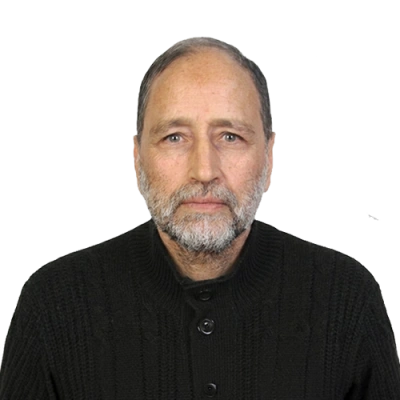
Firdous Syed
Tüm YazılarıIt was an iftar gathering at a local dargah in Istanbul, where we sat together around the yer sofrası, a cloth spread on the floor for the communal meal. Alongside our Turkish hosts were people from Iraq, Egypt, and India—as well as myself, a Kashmiri—and perhaps several other places. The gathering reminded me of Al-Masjid al-Haram in Mecca, where people of many nationalities and ethnicities mingle freely, sitting beside one another, sharing food and standing together in prayer.
At prayer times in the mosques too, it is common to meet someone from Gaza, Alexandria, the West Bank, Damascus, Aleppo, Kabul, Karachi, Amman, Lefkoşa, Khartoum, Mogadishu or Sanaa, and many others to whom we have not been introduced.
These people come from different backgrounds, some have come for political reasons, some have fled repression at home, others are pursuing an education or seeking economic opportunities, and whatever the cause, the rise of Türkiye has become a real magnet for this melting pot of hope. Among them is a well-to-do friend from Saudi Arabia, dressed in his finest robes and wearing exquisite perfume, standing alongside us in worship. Yet amid this vast diversity, even a cursory conversation reveals a shared hope and excitement about Türkiye’s rise. What draws people of such diverse backgrounds to this melting pot of hope? That question has occupied my thoughts for quite some time now.
The phrase “melting pot of hope” borrows from the familiar description of America as a melting pot of cultures. It brings back a conversation at an American university, where I was pursuing a course in peace studies nearly a quarter of a century ago. It was shortly after 9/11, and we were caught up in the discourse of the time. I, too, was still learning the ropes of serious scholarship.
Over breakfast in the university cafeteria, the head of the Islamic Studies department, a gracious lady from Bangladesh who had kindly agreed to review a paper I was writing, asked me “You have written about the American dream and the melting pot of cultures. Are you fully aware of what these expressions imply?”
She explained that, in her view, the melting pot meant leaving behind one’s culture in pursuit of economic well-being and dissolving into an American identity. Yet that promise of belonging was elusive, you might never be fully accepted as American, she argued, because you would always be reminded of your origins. “It is essentially an economic dream,” she said.
What, then, does this “melting pot of hope” signify? For those who have endured oppression and carried the anguish of Muslim dispossession, has Türkiye come to occupy the place America holds in the imagination of those drawn to its promise? What do they see in its rise, and what part of their own unfulfilled history do they hope it might redeem?
Equally vital is the mirror question, are the prevailing intellectual currents in Türkiye prepared to carry the hope so many invest in the country? Is the difference between the weight of history and the burden of history recognized? To see history as a burden is to view one’s civilizational inheritance as an awkward encumbrance, something discarded in the rush to keep pace with Western modernity. To understand the weight of history, by contrast, is to recognize that inherited depth, memory, and moral authority are not obstacles to progress, but the very ballast that grounds a society and propels it forward. To inspire such hope is a rare historical trust; fulfilling it is the measure of true civilizational leadership.
In the immediate context, the ongoing genocidal war in Gaza lays the profound paralysis of collective political action across the Muslim world, societies possessing vital energy resources indispensable to the global economy, yet unable to translate that strategic leverage into effective action when their own kin face destruction.
What we are witnessing, however, is a crisis operating on multiple, converging levels. At one level, the Western security model has failed its stated promise of peace and stability, proving instead to be a selective shield that protects power while leaving West Asia increasingly vulnerable as the threat of a “Greater Israel” takes material shape through occupation, annexation, and territorial expansion. At the same time, it strips away the moral pretensions of what Washington calls the “rules-based international order,” revealing how easily its professed commitments to justice, law, and universal human rights collapse when tested against geopolitical expedience.
Yet at a more profound level, this is a universal civilizational crisis rooted in the ascent of a Western materialist order, a worldview built on instrumental power that treats nature, human beings, and entire nations primarily as resources to be managed or obstacles to be subdued. Severed from moral restraint, this model of development has brought human civilization to the brink of disaster, weapons of mass destruction imperil survival, growing spiritual alienation erodes the bonds of human community, and environmental degradation threatens the very conditions of life on Earth. These planetary crises converge with the systemic failure of the post-Second World War international order to fulfil its promise of a global community founded on sovereign equality and justice.
For the Muslim world, this universal crisis compounds an acute, historic tragedy. In the decades following decolonization, formal independence has too often failed to secure substantive sovereignty. Foreign intervention, political fragmentation, and structures of dependence have constrained the ability of Muslim societies to determine their own futures, leaving generations to endure the corrosive humiliation of diminished political agency, their destinies tethered to decisions made in distant capitals. They have paid a devastating and enduring price in a world governed by might rather than right. Caught between the moral drift of a failing global order and their own unfulfilled history, they are left searching for a horizon where dignity, justice, and sovereignty might finally be redeemed.
What confronts humanity today, therefore, is a deeper reckoning, one for which we now possess overwhelming empirical evidence in the ecological devastation, nuclear peril, and moral hollowness that a purely materialist civilization has inflicted upon the world. A transition shaped by this reality demands two equally vital tasks. The first is geopolitical, entering an emerging multipolar world as an equal pole, widening the space in which long-marginalized nations and peoples exercise genuine agency and shape a fairer international order. The second is civilizational, recovering the deeper moral and spiritual meaning without which human civilization risks crossing a point of no return, ensuring that material progress serves human flourishing rather than propelling humanity towards irreversible ruin.
As the unipolar order gives way to a more contested distribution of power, the central question is whether the emerging world will become genuinely multipolar or merely reorganize supremacy among a few commanding states. Even as America, China, and Russia prepare to convene for a historic tripartite summit in Shenzhen, China, on November 19, any accommodation, and that remains a substantial if, emerging from such a three-cornered meeting would not, by itself, answer humanity’s longing for a more just order. A world divided into three spheres of dominance could leave the underlying relationship between power and powerlessness substantially intact. Multipolarity acquires a larger human purpose only when it widens the agency of nations and peoples, giving them a substantive voice in shaping the conditions of their common existence.
It is within this opening that Türkiye, acting in concert with Muslim nations and in dialogue with the wider world, might emerge as a pole in its own right. Such a role would require more than military capability, economic strength or diplomatic reach, indispensable though these are. It would require the patient construction of shared purpose among societies long divided by borders, rivalries and unequal dependencies. A new pole earns its place through the quality of the order it helps create, its legitimacy resting on the sovereignty it helps secure, the cooperation it makes possible, the injustices it helps redress, and the possibilities of peace it opens. The expectation invested in Türkiye’s rise carries precisely this hope that growing power might turn moral affinity into collective agency for those long compelled to live within decisions made elsewhere.
Restored agency must be accompanied by reflection on the ends it serves. Humanity needs material progress, the means to overcome poverty, cure disease, cultivate knowledge and make daily life more secure. But it also needs an account of what makes that progress worthwhile. When production and consumption become the sole measure of human achievement, the inner life is impoverished even as the external world grows more elaborate. Wealth, technology and power require moral direction; the inner life requires social and material conditions in which it can flourish. Renewal lies in recovering the equilibrium between them, bringing power under ethical judgment so that prosperity sustains human dignity, scientific advance respects the limits of nature, and freedom deepens responsibility towards others.
This is an urge that Türkiye’s historical inheritance and living diversity are uniquely positioned to answer, drawing upon that inheritance as a living source of judgment, openness, and responsibility in the present. Realizing such promise is strengthened by institutions capable of translating ethical aspiration into public life, and by an intellectual culture secure enough to continually renew its own understanding. It flourishes where humility walks alongside political confidence, in a sustained dialogue among civilizations, each bringing its achievements, wounds, and unfinished inquiries to the common work of recovering balance
Ultimately, it is out of this long winter of dispossession that the deeper meaning of the “melting pot of hope” reveals itself in those quiet encounters in Istanbul. People arrive carrying different losses, ambitions and memories, yet they find a common horizon without surrendering the distinct ethnicities, languages and identities through which they approach it. Their particular struggles meet within a shared moral framework, sustained by spiritual memory, ethical conviction and an enduring refusal to accept subjugation as the settled condition of their existence. Diversity becomes a source of solidarity, allowing the suffering of one people to become the concern of others and the possibilities opened by one nation to acquire significance beyond its borders.
There is a profound historical irony in this contrast. America became known as a “melting pot of cultures,” where peoples from across the earth dissolved their ancestral distinctiveness in pursuit of economic welfare and material assimilation. Türkiye, at this defining juncture, is emerging instead as a “melting pot of hope”, drawn together not by the promise of economic absorption, but by a deep human, moral, and philosophical urge to restore balance to a fractured world. It is the search for a new equilibrium: one that affirms the necessity of human endeavor and material progress, yet refuses to forget the richness of inner meaning that gives human life its purpose.
To envision Türkiye in this light is neither poetic indulgence nor rhetorical wishfulness; it is an assessment rooted in the realities of history and geography. Positioned at the crossroads of continents and civilizations, Türkiye carries within its memory centuries of statecraft, governance, and the lived experience of managing vast human diversity. The hope invested in its rise is the expectation that a confident modern republic, conscious of its civilizational inheritance, might stand as an authentic voice for a more just world, at the precise historical juncture when an old economic and geopolitical order is unravelling, and a new one has yet to be born.
In giving voice to the legitimate aspirations of one and a half billion people for dignity, sovereignty, and peace, Türkiye is uniquely placed to act as a bridge, reconciling the demands of material strength with the deeper search for meaning upon which the very survival and renewal of human civilization depend. Before it can fulfil that promise outward, however, a vital reckoning awaits within. While communities across the globe have been inspired by Türkiye’s remarkable rise over the past quarter-century, its own people must settle how they carry their past, refusing to treat history as a burden to be discarded in the pursuit of modernity, and embracing it instead as the weight and momentum that propels a society forward.
Only when fortified by that inward clarity can Türkiye fulfil the role that history and geography have placed before it. To rise to the full measure of this “melting pot of hope” is to shoulder a responsibility that extends beyond its own borders and beyond the Muslim world, serving, at a fractured hour in human affairs, as a quiet anchor for balance, renewal, and a just peace for civilization itself.
---
Firdous Syed is a Kashmiri political analyst. Formerly involved in the region’s 1990s resistance
movement, he later turned his efforts toward civil society, peacebuilding, and development. Over
the years, he has written extensively on Kashmir, South Asian politics, and international affairs
for various publications.
Güncel Yazıları
Türkiye: Umudun Eritme Potası
17 Kasım 2026
Iqbal: Meaning, Power and Heart of Asia
09 Kasım 2026
İkbal: Asya’nın Anlamı, Gücü ve Kalbi
09 Kasım 2026
İsrail’in Genişleyen Savaşları
04 Kasım 2026
Israel’s Expanding Wars
03 Kasım 2026
Imran Khan: The Prisoner of Self? Identity, Ideology, and the Limits of Populism
27 Ekim 2026
İmran Han: Benliğinin Mahkûmu mu? Kimlik, İdeoloji ve Popülizmin Sınırları
27 Ekim 2026
The Architecture of Rupture
19 Ekim 2026
Kopuşun Mimarisi
19 Ekim 2026
Materyalizm ve Medeniyetin Devamlılığı Krizi
13 Ekim 2026
Materialism and the Crisis of Civilizational Continuity
13 Ekim 2026
Demokrasi, İnsanlık Tarihinde Ortaya Çıkmış En İyi Fikir midir?
05 Ekim 2026
Is Democracy the Best Idea Ever to Have Emerged in Human History?
05 Ekim 2026
Iran: Power in the Name of Resistance
30 Eylül 2026
İran: Direniş Adına Güç
30 Eylül 2026


