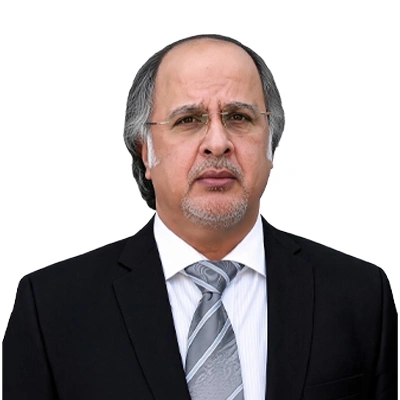
Shafiq Ahmad
Tüm YazılarıThe Pakistani government has been grappling with an array of domestic issues, including terrorism on multiple fronts in the country's southern and northern provinces, as well as political issues, with the main opposition Pakistan Tehreek-e-Insaf (PTI) party's incarcerated founder Imran Khan's recent letter to the judiciary appealing for his constitutional rights in jail raising political temperature in the country. He lamented not only about his solitary confinement at Adyala Jail in Rawalpindi, his deteriorating health, and the lack of proper medical treatment, but also concerning his wife, Bushra Bibi, who is also in the same prison and struggles from health problems. Both suffer from severe eye problems that cause their vision to dim continuously. In the letter, Khan voiced concern that he might not make it out of jail alive.
Pakistan has, however, had several diplomatic successes, including an expanding role as a mediator between the US and Iran, whose conflict since February 28 of this year has had a significant impact on the global economy that disrupted energy markets, pushed up oil prices, and subsequently burdened ordinary people.
With a major diplomatic development, Saudi Arabia, Türkiye, and Pakistan signed the Makkah Defence Alliance on August 7, with the main point being that an armed attack on one would be regarded as an attack on all, strengthening the three countries' bonds despite negative voices from Israel and India, longtime rivals of Türkiye and Pakistan, respectively, with several other Muslim countries reportedly interested in joining it.
But such success for Pakistan on the domestic front is missing, with several militant groups operating in southern Balochistan province, particularly the Balochistan Liberation Army (BLA), and Tehreek-e-Taliban Pakistan (TTP), a conglomeration of several outlawed militant groups, active mainly in northwestern Khyber Pakhtunkhwa province. The TTP, which Pakistan claims is led from Afghanistan, has consistently targeted security forces and law enforcement, creating significant tension between the two neighboring countries for more than four years. With limited independent reporting on terrorism in the two provinces, these militant groups are using social media to fill the information vacuum by providing their narratives and accounts of attacks. This has further complicated efforts to address Pakistan’s longstanding problem of violence and terrorism.
Given the challenges of terrorism, rampant inflation, and weakening confidence in genuine democracy which have remained consistent since the latest general elections of February 8, 2024 in Pakistan and recent polls in Gilgit-Baltistan and Pakistan-administered Kashmir, the thought of carving out more provinces by splitting the current four provinces into more has been reinforced through the recent announcement by Interior Minister Mohsin Naqvi.
Naqvi, who is generally known to be close to the powerful Pakistani army establishment and was elected without much ado to the Senate in March 2024, has reiterated the need for "resetting" Pakistan's governance setup through statements made in September, where he has mentioned that there has been a significant increase in Pakistan's population to over 240 million in 79 years, while the governance setup is unable to cater to the needs of the people.
The Pakistan Muslim League-Nawaz (PML-N), which has ruled the federal government and the eastern Punjab province that accounts for more than half of the country's population and a large share of the seats in the National Assembly, expressed reservations about creating new provinces from Punjab but did not publicly reject the idea. Though some of its leaders argue that new provinces are required to manage the administrative affairs of the world's fifth-largest country, they oppose them due to expected shifts in the country's political dynamics, which could further weaken the party already facing criticism for various reasons, including inflation and joblessness.
The Pakistan People's Party (PPP), the other major political force led by incumbent President Asif Ali Zardari and its Chairman Bilawal Bhutto Zardari, which has been ruling Sindh province since 2008, is vehemently opposed to the idea of splitting Sindh, Pakistan's second-largest province with its major port city and the commercial capital, Karachi. On September 3, the PPP passed a resolution in the provincial assembly strongly opposing the creation of new provinces from Sindh, which has a clear division between its urban and rural populations. Urban Sindh has two major cities, Karachi and Hyderabad, where the PPP has lost popularity in previous elections, with voters divided among several other political parties, including the PTI. Any new province having Karachi, a city of nearly 20 million people that generates a major share of the country's economic activity, will have several advantages.
This would be a significant blow for the PPP, which used to be the leading political force across all four provinces, could see its influence wane even more without a revenue-generating Karachi to manage the administration in rural Sindh, which is the party's key support area.
Conversely, the PTI remains quite popular despite criticisms regarding the economic strategies of the ruling parties and advocates for the establishment of new provinces for improved management. Imran Khan previously declared during his time as prime minister that such an initiative was essential for facilitating effective political and administrative operations in the country.
Nevertheless, the party is now more silent after the last emergency and governor rule in Khyber Pakhtunkhwa province, which the PTI ruled from 2013 until October 11, 2026, but some voices emerge to press for the release of its leader, who has been in jail since August 2023 and faces more than a hundred legal cases ranging from corruption to allegations of inciting violence during protests following his ouster in April 2022. He was sentenced in a case of buying and selling of state gifts he received during his premiership, a case the PTI has described as politically motivated.
Currently, mainstream media, through their talk shows, debate whether new provinces should be created from the existing four, but there are limited discussions about the legal technicalities and the implications for the upper and lower houses. Senate members serve six-year terms, with half of the members elected every three years, and each of the four provinces has an equal distribution of 24 seats. How will the Senate be formed if new provinces are created? Will each province have a chief minister who spends a huge amount of the national exchequer on protocols and security, or will it be a mayoral system? Or will the entire system be changed to a presidential form of government through a constitutional amendment, which appears to be extremely difficult because it requires a two-thirds majority in both houses of parliament?
Altering provincial boundaries also requires a constitutional amendment, which must be approved by both the National Assembly and the Senate, but also by the concerned provincial assemblies with a two-thirds majority. The constitution also called for broader people’s representatives/public consent, with suggestions that the issue could eventually be put to a referendum.
By Shafiq Ahmad
Güncel Yazıları
Diplomatik Başarılar, İç Sıkıntılar: Pakistan Siyasi Sistemi Yeniden mi Yapılandırıyo..
19 Kasım 2026
Pakistan’ın İran Sınırını Kapatması: ABD Baskısı mı Yoksa Güvenlik Endişeleri mi?..
26 Ekim 2026
Pakistan’s Closure of Its Border With Iran: US Pressure Or Security Concerns?
26 Ekim 2026
Modi'nin Yeni Baş Ağrısı: Hint Sokaklarındaki "Hamamböcekleri"
12 Ekim 2026
Modi's New Headache: ‘Cockroaches’ On Indian Streets
12 Ekim 2026
Pakistan-Afganistan Çatışması: Türkiye’nin Barış Diplomasisi Zorlu Bir Sınavla Karşı ..
30 Eylül 2026
Pak-Afghan Conflict: Türkiye’s Peace Diplomacy Faces a Tough Test
30 Eylül 2026
Hasina’nın Devrilmesinden Sonra Hindistan ve Bangladeş Arasında Yakınlaşma Zor Görünü..
08 Eylül 2026
Rapprochement Elusive for India-Bangladesh After Hasina's Ouster
08 Eylül 2026


