Introduction
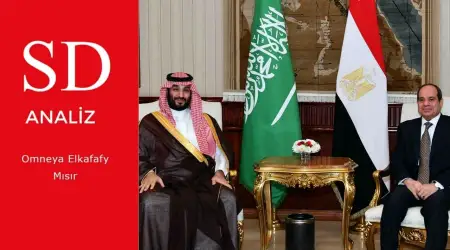
Egypt and Saudi Arabia, as two states holding decisive positions in the geopolitical balance of the Middle East and North Africa, have developed a multilayered relationship grounded in historical, economic, and security considerations. This relationship is not confined to the diplomatic level alone; it has also deepened across various dimensions such as the economy, investment, defense, societal interaction, and public perception. This article examines the nature of relations between the two countries by drawing on up-to-date data from the 2023–2025 period, assessing the limits of cooperation and potential sources of fragility, and offering analytical insights into the sustainability of these relations.
Economy and Investments
Traditionally, Saudi Arabia has supported Egypt during periods of economic turbulence—particularly after 2013—by providing billions of dollars in direct grants and deposits to the Central Bank (interest-free loans), with the aim of bolstering political stability. However, since 2022, Saudi Arabia has shifted away from conventional financial assistance and toward profit-oriented, large-scale investments in Egypt. These investments are primarily channeled through the Saudi Egyptian Investment Company (SEIC), which was established in 2022 by the Saudi Public Investment Fund (PIF) with a specific focus on Egypt. SEIC targets “priority” sectors such as infrastructure, real estate, healthcare, financial services, food and agriculture, manufacturing, telecommunications/technology, and pharmaceuticals. This investment strategy aligns with Egypt’s energy sector—particularly renewable energy—and development projects along the Red Sea coast, as well as with Saudi Arabia’s Vision 2030 objectives. In this way, Saudi Arabia strengthens its economic footprint in Egypt while also contributing to the alleviation of Egypt’s foreign currency needs.
The recent rapprochement in the economic sphere constitutes the strongest dimension of Egypt–Saudi Arabia relations. The “Mutual Investment Protection and Promotion Agreement,” approved by the Egyptian parliament in March 2025, stands as a significant indicator of the institutionalization of economic ties. This agreement is widely regarded as having enhanced investor confidence and facilitated the long-term presence of Saudi capital in Egypt.
At the GAFI–Saudi Investors Forum held in April 2025, representatives of more than 70 companies came together, and numerous memoranda of cooperation were signed covering sectors such as food processing, the metal industry, renewable energy, real estate, and infrastructure. According to GAFI data, Saudi investors have made approximately USD 8.9 billion in investments in Egypt over the past two decades, involving around 8,000 companies.
According to Zawya’s 2025 data, the trade volume between Egypt and Saudi Arabia rose to USD 5.9 billion in the first half of 2025. Arab Finance reports that Egypt’s trade with Arab countries increased by 16 percent in 2024, with Saudi Arabia identified as the central driver of this growth.
Saudi Arabia’s new investment strategy provides Egypt with much-needed foreign currency liquidity, easing the debt crisis while supporting the implementation of the economic reform program and broader economic stability. However, this strategy has also sparked criticism toward the government, with claims that it increases Egypt’s dependence on foreign capital and leads to the sale of national assets to foreign investors.
Diplomatic Coordination
During the 2024–2025 period, diplomatic engagement between the two countries has intensified. Similar positions have been adopted on strategic issues—most notably Gaza, Libya, and Sudan—and joint statements have been issued on regional security matters. This indicates that bilateral relations are progressing on the basis of strong political alignment.
Within platforms such as the Arab League and the Organization of Islamic Cooperation, Egypt and Saudi Arabia frequently act in coordination in shaping regional decisions and defending common Arab interests. Both countries are regarded as cornerstone states of the Sunni Arab axis.
Both countries display a shared and resolute stance on ending the Israeli occupation; opposing the forced displacement of Palestinians in Gaza to Egypt’s Sinai Peninsula; preventing the Israel–Hamas war from escalating into a broader regional conflict; and supporting a two-state solution in Palestine. Saudi Arabia endorsed Egypt’s Gaza reconstruction plan—based on the principle of population remaining in place—at the Cairo Arab Summit on 4 March 2025, and subsequently approved the financing of this plan at the Saudi–Egyptian–Jordanian–UAE meeting held on 12 March 2025. Beyond this, their policies converge on safeguarding Red Sea security and jointly countering the Houthis; curbing the influence of political Islamist movements such as the Muslim Brotherhood and other extremist groups; supporting solutions that strengthen central authority to bring an end to chaos in Libya and Sudan; and promoting Egypt’s emergence as a regional energy hub through its newly discovered natural gas fields and expanding renewable energy capacity.
As two Sunni-majority states, both countries view Iran’s Shiite expansionism—pursued under the banner of the “Axis of Resistance” through proxy forces in Lebanon (Hezbollah), Yemen (the Houthis), and Syria and Iraq—as a threat to regional stability and to their own national security. Saudi Arabia underwent a significant shift in 2023 by restoring diplomatic relations with Tehran through Chinese mediation and entering a normalization process. Egypt, by contrast, has adopted a more cautious approach in its relations with Iran.
Security Cooperation
Emerging security risks along the Red Sea and Mediterranean corridors—such as Houthi attacks, regional conflicts, and threats to maritime trade routes—have prompted Egypt and Saudi Arabia to establish closer coordination in the field of maritime security.
The two countries have intensified joint exercises and intelligence coordination focused on cooperation in areas such as Red Sea security, maritime transportation safety, terrorism, and cross-border threats. While the relationship does not amount to a formal military alliance, there is clear evidence of regular joint exercises, an increase in maritime security coordination meetings, and technical consultations at the command level. The Piercing Arrow 2024 (Al-Sahm Althaqib) exercise held in November 2024 and the Bright Star 2025 exercise conducted in September 2025 stand out as examples of this expanding military cooperation. Collectively, these developments point to a trend toward greater institutionalization in the field of maritime security.
On the other hand, joint intelligence and security coordination against threats in the Sinai Peninsula and along the Libyan border remains at a high level. Military and intelligence cooperation in the Red Sea against the Houthi threat constitutes the most concrete area of joint action in the two countries’ security approach toward Iran.
Strategic Outcome
The growing coordination in maritime security provides Egypt with support in defending the Red Sea, while granting Saudi Arabia greater strategic depth along the Mediterranean corridor.
Societal Interaction, Migration, and Labor Dynamics
Egypt is one of the primary sources of foreign labor for Saudi Arabia. Although there is no precise and up-to-date figure on the number of Egyptians working or residing in Saudi Arabia, the Egyptian population in the Kingdom is generally estimated to range between 1.5 and 3 million. Approximately 850,000 Egyptians are employed across various service sectors, predominantly in construction and engineering, education and healthcare, and tourism.
Saudi Arabia represents one of Egypt’s largest sources of foreign currency. Arab News reported a 69.6 percent year-on-year increase in remittance flows to Egypt in 2025. AGBI has emphasized that remittances sent by Egyptians working in Saudi Arabia constitute a key factor in offsetting Egypt’s foreign trade deficit. This dynamic further strengthens the societal and economic ties between the two countries.
Trading Economics data further indicate that total worker remittances from Saudi Arabia reached a historical peak of USD 13.5 billion in the first quarter of 2025. This figure confirms the strength of migrant labor flows within the broader Gulf context.
While hundreds of thousands of Egyptian migrant workers contribute to the formation of strong economic and social ties between the two countries, challenges such as the social integration of foreign workers, labor rights, and discrimination also emerge as problematic dimensions within the relationship.
Public Opinion and Perception Management
Regardless of how strong relations may be at the official level, societal perceptions remain a decisive factor for the sustainability of bilateral relations.
According to a November 2025 report by Middle East Monitor, following media claims suggesting that “tensions” had emerged between the two countries, the Egyptian side issued a statement rejecting these reports and emphasized that relations were “historic, strong, and unshakable.” This statement highlights two critical points:
1- There are underlying vulnerabilities that make the emergence of a perception of tension in public opinion possible.
2- Both sides feel the need to swiftly correct narratives that could negatively affect bilateral relations.
This demonstrates that political communication strategies and media discourse play a significant role in shaping and sustaining bilateral relations.
Assessment: Cooperation Rather Than Competition, but with Fragilities
The overall picture indicates that Egypt and Saudi Arabia are maintaining their relationship along the axis of strategic cooperation. Flows of economic investment, trade volume, maritime security coordination, and diplomatic alignment collectively generate a strong partnership between the two countries.
Despite this cooperation, the two countries are also competitors. Both states claim to be the natural leader of the Arab and Sunni worlds. Egypt views itself as the natural leader of the Arab world based on its historical depth, strong cultural influence across the Arab region, large military, and population of nearly 100 million. Saudi Arabia, by contrast, seeks to shape regional politics through its financial power, oil wealth, status as the custodian of Mecca and Medina, and its special relationship with the United States. However, Egypt’s financial dependence on Saudi Arabia constrains its capacity to mount an open political challenge.
On the other hand, the two countries also compete in attracting global capital. While Saudi Arabia seeks to draw international investment through its Riyadh-centered Vision 2030 project, Egypt is participating in this competition through platforms such as the Suez Canal Economic Zone.
Cooperation between the two countries remains fragile in the face of external shocks and regional developments. Oil prices, economic fluctuations in the Gulf, conflicts in Yemen and Sudan, Eastern Mediterranean geopolitics, and shifts in public opinion all have the potential to directly shape the future trajectory of the relationship.
Omneya Elkafafy