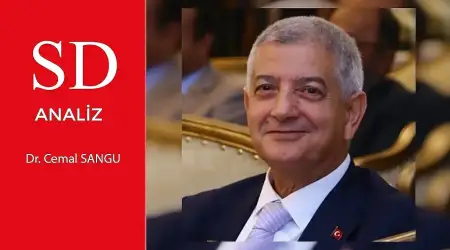
Indonesia, Geopolitics, and Changing International Politics in a Diplomat's Memory
ABSTRACT
This article examines the East Timor issue through the personal observations and assessments of a Turkish diplomat who served in Jakarta between 1992 and 1995. Its central objective is to evaluate the East Timor question not solely through the frameworks of human rights and self-determination, but also in relation to Indonesia's security and territorial integrity concerns, regional stability, the legacy of colonialism, religious and cultural identities, energy resources, and the strategic interests of major powers. In this context, the study considers not only Indonesia's security policies in East Timor but also its substantial investments in infrastructure and public services, while drawing on personal conversations with Indonesian journalists and an artist to illuminate the social and political atmosphere of the period. The article further analyses Australia's changing policy towards East Timor, the Timor Gap Agreement, and the United Nations-backed referendum of 1999. In its final section, East Timor is comparatively examined alongside Cyprus in terms of self-determination and international recognition. The study argues that the international system has not always applied its proclaimed universal principles with the same political weight across different geographical and geopolitical contexts.
Keywords: East Timor, Indonesia, Australia, Self-Determination, Geopolitics
Introduction - A Story That Began in Jakarta
Some postings remain in a person's curriculum vitae as nothing more than a line. Others, however, refuse to fade from memory even after many years; they continue to live on as a city, a geography, a friendship, or even a particular atmosphere left in the soul. For me, Jakarta was such a place.
In 1992, as the second posting of my career, I went to Indonesia at my own request. I had previously served in Dhaka. Jakarta, however, opened the door to an entirely different world. I carried out my duties with great pleasure, formed wonderful friendships, and had the opportunity to see many parts of Indonesia. From the crowded streets of Java to the serenity of Bali, from the endless green of Sumatra to the quiet horizons of distant islands, this geography deeply affected me. In time, I came to call Indonesia, in my own mind, a "paradise on earth."
Yet to the east of that paradise, beyond the Timor Sea, another story was slowly being written.
East Timor.
As a diplomat serving in Jakarta between 1992 and 1995, I naturally followed the issue closely. It was not merely a distant dispute appearing in the foreign-policy pages of newspapers. The weight of the East Timor issue could be felt in Jakarta's diplomatic corridors, in Indonesia's political atmosphere, and in the assessments of foreign missions.
Looking back years later, I can see more clearly that East Timor was never simply about the future of a small island. It was a historical stage on which the legacies of colonialism, state sovereignty, territorial integrity, security, religious identity, human rights, self-determination, energy resources, and the strategic calculations of major powers became intertwined.
More importantly, the East Timor case allows us to question when, and under what conditions, the international system brings forward principles that it presents as universal.
My memory of East Timor from my years in Jakarta took shape around precisely this question.
I. A Small Island on the Frontier of a Large State
The story of East Timor did not begin in the 1990s. The eastern part of the island of Timor remained under Portuguese rule for centuries, while the western part became part of the Dutch colonial system. Thus, two distinct histories emerged on the same island, shaped by different colonial experiences.
When the regime change in Portugal in 1974 altered Lisbon's colonial policy, political life in East Timor also changed rapidly. Political movements such as UDT, APODETI, and FRETILIN emerged. Some advocated maintaining links with Portugal, others integration with Indonesia, and others full independence. The rise of FRETILIN as a major political force in 1975 further increased Indonesia's security concerns under Cold War conditions. Existing studies examine in detail the connection between FRETILIN's Marxist orientation and Indonesia's concerns about the emergence of a communist structure in its immediate surroundings.[1]
From Indonesia's perspective, however, a different history was visible.
It was a vast archipelagic state made up of thousands of islands and numerous ethnic communities, a state that had won independence after a long and arduous struggle against Dutch colonialism. For Indonesia, territorial integrity was not merely a legal concept; it was a security issue deeply rooted in the historical memory of the independence struggle. Moreover, in the mid-1970s the Cold War was still underway, and the possibility of communist movements spreading across the region was being seriously debated.
Following the Indonesian military intervention that began on 7 December 1975, East Timor was declared Indonesia's 27th province in 1976. Armed resistance elements associated with FRETILIN, particularly FALINTIL, continued the struggle for many years.[2]
The historical reality of human rights abuses in East Timor stands before us as a separate issue. Denying this reality does not help us understand Indonesia's perspective; on the contrary, it reduces the matter to a one-sided narrative.
Understanding a country requires more than listening to the story told by others; it also requires looking through that country's own historical and geopolitical window.
The first condition for understanding historical events is the ability to look not only through our own window, but also through the window of the other side.
II. From Jakarta to East Timor: Security, Integration, and Development
A significant part of the international narrative concerning East Timor has been shaped around Indonesia's military and security policies. Yet reading Jakarta's policy solely through the lens of military control leaves an important dimension out of the picture.
The Indonesian government used significant public resources with the aim of integrating East Timor administratively and economically with the country's other regions. Central government funds were allocated for roads, bridges, irrigation systems, schools, health facilities, and other public infrastructure. A comprehensive inquiry later conducted by the Australian Parliament also recorded substantial investment in education, health, transport, and infrastructure in East Timor.[3]
For me, one of the striking aspects of this policy was that it could also be felt in everyday conversations in Jakarta.
My journalist friends Waris Sukiswati and Atie Nitiasmoro, and the visual artist Santu Wirono, were among the friends with whom I sometimes discussed East Timor at length. One point that stood out in their accounts was their belief that Jakarta was investing much more in East Timor than in some other regions, something they occasionally expressed as a grievance from the perspective of their own regions. In their view, the central government was making an exceptional effort in East Timor with roads, schools, health facilities, and other infrastructure investments compared with what was seen in other parts of Indonesia.
These conversations were not merely about economic comparisons. I was also seeing the social reflection of Jakarta's effort to win East Timor over, integrate the region fully into the country, and neutralize the propaganda of separatist movements.
Sometimes state policies described at length in political books are reduced to much shorter sentences in everyday conversations. The gist of what they were saying was roughly this: "Jakarta is making investments in Timor that it does not make in our regions."[4]
That sentence showed me another side of Indonesia's East Timor policy that was not discussed enough.
Jakarta was not merely a center that sent soldiers; it was also a center that built roads, opened schools, established hospitals, improved transportation, and sought to connect the region economically to the rest of the country. It was an effort to connect a remote corner of a vast archipelagic state to its center. On the map, the thousands of kilometers between Jakarta and Timor were being bridged, in the state's understanding, with roads, schools, hospitals, and administrative structures.
Of course, different interpretations can be offered regarding the aims and consequences of this policy. Some studies argue that these investments also strengthened political integration and military control. Yet an important fact should not be overlooked: during the Indonesian period, East Timor was not only a region where security policies were implemented; it was also treated as a province to which significant central-budget resources were directed and where infrastructure was developed.
Yet in the international public narrative, these two realities did not appear with equal weight. While human rights abuses were rightly brought to the forefront, Indonesia's investments for economic and social integration often remained outside the same narrative. From the outside, Indonesia's policy towards East Timor thus increasingly came to be read almost exclusively through military control and coercion.
III. East Timor in Jakarta's Diplomatic Atmosphere
As a diplomat, it was inevitable that I would follow the East Timor issue closely. From time to time, I discussed it with colleagues serving in other diplomatic missions in Jakarta, trying to understand Indonesia's position and the approach of Western states.
Among the Indonesian officials I met, there was often a clearly expressed sense of unease and grievance regarding the approach of Western states to East Timor. Their central objection was the belief that Indonesia's security concerns and its sensitivity about preserving the state's territorial integrity were not sufficiently understood in Western capitals.
The picture I saw in Jakarta was more complex than the picture drawn from the outside.
On one side stood Indonesia's concerns about security and unity. On the other were the political and cultural demands of the people of East Timor. In international debates, these two realities were often turned into mutually exclusive narratives.
In conversations with friends in Jakarta, an even more striking subject would sometimes arise. The capture of Xanana Gusmão, one of the symbolic figures of the armed resistance in East Timor, on 20 November 1992 had a major impact on Indonesian public opinion. Sources from the period confirm that Gusmão was captured in Dili by Indonesian military authorities and was later tried.[5]
I learned the news from the Jakarta newspapers of the time. According to my friends, there was a belief that Gusmão's capture would bring the armed resistance closer to its end, and the development was welcomed with great satisfaction. In their eyes at the time, the matter was approaching the end of a security problem that had continued for a long period.
Looking back today, I see once again that history took a different path.
A leader had been captured.
But the political story of a movement had not yet come to an end.
Even this small detail is enough to show how complex the East Timor issue was. States may sometimes believe that a military success will bring a political problem to an end; yet the course of history often moves beyond military outcomes.
IV. Identity, Religion, and the West's View of East Timor
Another dimension of the East Timor issue was religious and cultural identity.
Indonesia is one of the countries with the world's largest Muslim populations. East Timor, meanwhile, had developed a strong Catholic identity under the influence of its Portuguese colonial legacy. This identity acquired political and social significance, particularly during the Indonesian period. Studies indicate that the Catholic population in East Timor increased significantly from the 1970s to the early 1990s and that the Catholic Church played an important role in social opposition.[6]
It would not be correct to say that this alone explains the independence question. The East Timor issue contained many elements, including the colonial past, identity, security, political representation, and self-determination.
At the same time, it is difficult to argue that religious identity played no role at all in shaping international perceptions.
The contrast between the Portuguese-Catholic historical legacy and predominantly Muslim Indonesia also allowed the East Timor story to be read through a cultural framework in Western public opinion. The growing visibility of the Catholic Church in human rights debates further strengthened this narrative.
This was one of the aspects that struck me during my years in Jakarta. The international narrative surrounding East Timor was not built solely around the future of a piece of territory. History, colonialism, religion, human rights, and even different conceptions of civilization were drawn into the issue. An island that looked small on the map was gradually becoming a much larger symbol in the imagination of international politics.
Perhaps this is precisely where the question should begin: Why did the same international system not approach similar principles in different geographical settings with the same degree of attention?
V. The Reality Beneath the Map: The Timor Gap
To understand the East Timor issue, it is not enough to look only at the political map. One must also look at the map beneath the Timor Sea.
Because beneath the sea were oil and natural gas.
The Timor Gap Treaty, signed between Australia and Indonesia in 1989, was an important agreement regulating the exploitation of oil and hydrocarbon resources in the area lying between the two countries' continental shelf claims. Australian records and subsequent studies examine the Timor Gap policy in detail in the context of natural resources and seabed boundaries.[7]
The legal debate between the right of the people of East Timor to self-determination and the natural resources of the Timor Sea also came clearly to the fore in the 1995 East Timor (Portugal/Australia) case before the International Court of Justice.[8]
Sometimes sovereignty is debated on the map.
Beneath the sea, however, there are other maps.
Oil.
Natural gas.
Continental shelf.
Strategic sea lanes.
Borders were being drawn on maps; beneath the sea, however, there were other maps. While sovereignty was being debated above the surface, deposits of oil and natural gas lay silently beneath the sea.
For this reason, it would be incomplete to read the East Timor issue solely as a story of human rights or self-determination. It is clear that security and economic interests were also part of the same file.
VI. From 1991 to 1999: The World's View of East Timor Changes
The events at the Santa Cruz cemetery on 12 November 1991 brought the East Timor issue powerfully back to the attention of world public opinion. Studies show that many people were killed when fire was opened on unarmed demonstrators and that the incident generated a serious international reaction.[9]
But after Santa Cruz, it was not only East Timor that changed.
The world changed.
The Cold War ended. Indonesia faced economic and political crises. In 1998, Suharto left office and B. J. Habibie became president.
This change was also reflected in Australia's policy towards East Timor.
Australian parliamentary records show that during the 1980s and 1990s Canberra regarded relations with a secure and stable Indonesia as an important foreign-policy priority; by contrast, at the end of 1998, the Howard government began moving towards the idea of self-determination for the future of East Timor.[10]
For a time, stability with Indonesia was the priority.
Then self-determination came to the fore.
So what had changed?
East Timor?
Indonesia?
Or the international system itself?
Probably all of them.
What changed in Australia's policy towards East Timor was not merely the rhetoric; regional conditions had changed as well. Canberra, which had previously prioritized Indonesia's territorial integrity and regional stability, became a leading military actor in securing East Timor's independence only a few years later.[11]
This was not merely a change in rhetoric; it was a documentable historical transformation.
VII. 1999: The Year History Accelerated
On 30 August 1999, a popular consultation was held under United Nations supervision. Approximately 98 percent of registered voters went to the polls, and 78.5 percent rejected the offer of special autonomy within Indonesia.[12]
A people's decision at the ballot box should be respected.
Yet a historian may still ask another question:
Why did this will not emerge with the same weight in 1975?
Because the world of 1975 was not the same as the world of 1999.
After 1999, the Australian-led INTERFET became a multinational force. Its mission was to restore security on the island, protect the UN mission, and enable humanitarian assistance.[13]
Only a few years earlier, maintaining relations with Indonesia had been regarded as one of the key priorities for regional stability; now Australia was leading the international force in East Timor.
One of the ironies of international politics lay precisely here.
The narratives had changed.
Yet it was not moral sensitivity alone that changed the narratives.
The geopolitical context had changed as well.
VIII. From East Timor to Cyprus: A Universal Principle, Different Measures?
When I reconsider the East Timor issue years later, other geographies inevitably come to mind. One of them is Cyprus.
It is important to emphasize that the historical and legal circumstances of East Timor and Cyprus are not the same. Nevertheless, the two cases provide a comparative ground for considering how the international community can approach the concepts of self-determination, sovereignty, territorial integrity, and international recognition in different ways.
Regarding Cyprus, the United Nations Security Council, through Resolution 541, deemed the 1983 declaration of secessionist independence legally invalid and, through Resolution 550, emphasized that the entity should not be recognized. In East Timor, by contrast, the same international system supported a direct popular consultation on the people's future in 1999 and subsequently opened the way to independence.[14]
The point here is not to claim that the two cases are identical.
The real issue is under what circumstances the international community brings forward the principles it itself has proclaimed.
This was also one of the impressions I gained during my years in Jakarta: in international relations, law often does not operate alone; it moves together with history, power, geography, security, and economic interests. Sometimes human rights speak in a loud voice; at other times geopolitics quietly takes over the conversation.
This is precisely where the debate over double standards begins.
While the right to self-determination in East Timor eventually became one of the foundations of international intervention and the process of state-building, the treatment of the same concept within different political frameworks in Cyprus raises legitimate questions about how the international system applies its principles.[15]
Perhaps history should make us ask not only "what happened?" but also the more difficult question:
Why were the same principles felt with different weight in different geographical settings?
Questions that diplomacy sometimes avoids answering can continue to live for a long time in the memory of history.
CONCLUSION - THROUGH WHOSE EYES IS HISTORY WRITTEN?
East Timor is an independent state today.
We cannot change this historical fact.
Nor can we diminish the will expressed by the people in 1999.
Yet history does not merely record outcomes. It also asks how the path to the outcome was shaped, which actors moved under which conditions, and why the same principles were applied differently in different geographical settings.
This is the most important question that has remained in my memory from my years of service in Jakarta.
Indonesia was never, for me, a country that could be remembered only through the East Timor issue. I came to know its people, culture, history, and hospitality closely. In this country, which I went to at my own request, I formed beautiful friendships; I travelled through many of its regions and saw cities and islands that seemed like paradise on earth.
Perhaps this is why, when I look at the East Timor issue today, I see more than an ordinary foreign-policy file.
I see a diplomat trying to understand a country's security concerns and territorial integrity; an observer who does not deny the suffering experienced by a people; but also a person who questions why major powers approach the same principle with different measures in different geographical settings.
For this reason, when I look at the history of East Timor today, I try to read it not only through the window of Dili, but also through the window of Jakarta. Because history is not the view from a single window. Two windows looking onto the same sea can show us two different horizons.[16]
History is sometimes a mirror.
When you look into the mirror, you do not see only East Timor.
You see yourself as well.
And perhaps the most difficult question history leaves us is this:
If a principle is truly universal, why is it spoken in a loud voice in some geographical settings and only in a whisper in others?
The story of East Timor does not provide the complete answer to this question. But it clearly reminds us that international politics consists not only of declarations, legal texts, and principles proclaimed aloud. The interests of states, security concerns, economic calculations, and historical affinities are also silent but powerful actors in this politics.
During my years of service in Jakarta, I witnessed closely how the views of international actors towards East Timor changed. At one point, stability and strategic relations with Indonesia were prioritized; at another, the discourse of self-determination and humanitarian intervention came to the fore. Some actors who had remained silent the day before began to speak loudly the next day. What changed was not only the discourse; the balance of power and political conditions in the world had also changed.[17]
For this reason, looking back today, I see the story of East Timor not merely as a story of independence, but as a historical lesson that invites reflection on sovereignty, justice, geopolitics, and the selective memory of international politics.
Because in international politics, the eyes that look at maps matter as much as the maps themselves.
And perhaps what remains in a diplomat's memory years later is not simply which state took which decision. What remains is under what conditions those decisions were taken, and why the same principles were not applied to everyone by the same measure.
Years after Jakarta, when I look at East Timor, I still see that distant island and the sea surrounding it. But I no longer see only an island. I also see the political calculations of an era, the shadows of major powers, the hopes of people, and the shifting memory of the international system.
History sometimes tells us not who won, but who was remembered, and when.[18]
REFERENCES
ACADEMIC STUDIES
Çınar, Yusuf. “Çatışma Sürecinden Devlet İnşasına: Doğu Timor.” Bilge Strateji 8, no. 15 (Güz 2016): 85–112.
Lyon, Alynna J. “The Activist Catholic Church in Independent East Timor: The Church Is Not a Political Institution.” Paper presented at the World International Studies Committee Annual Conference, Porto, 17 August 2011.
Naidu, G. V. C. “The East Timor Crisis.” Strategic Analysis 23, no. 9 (1999): 1467–1480.
Smith, Anthony L. “The Role of the United Nations in East Timor’s Path to Independence.” Asian Journal of Political Science 9, no. 2 (2001): 25–53.
International Court of Justice. East Timor (Portugal v. Australia), Judgment, I.C.J. Reports 1995, p. 90.
INTERNATIONAL ORGANIZATIONS AND OFFICIAL DOCUMENTS
Amnesty International. East Timor: The Santa Cruz Massacre. AI Index: ASA 21/23/91, 14 November 1991.
Amnesty International. East Timor: Xanana Gusmao and Other Political Prisoners. AI Index: ASA 21/017/1992, 1992.
Parliament of Australia, Senate Foreign Affairs, Defence and Trade References Committee. East Timor: Final Report. Canberra: Parliament of Australia, 1999.
United Nations General Assembly. Question of East Timor. A/48/418, 1993.
United Nations. “People of East Timor Reject Proposed Special Autonomy.” 3 September 1999.
United Nations. Report of the Secretary-General on the Situation in East Timor. A/54/654, 11 December 1999.
United Nations Security Council. Resolution 541 (1983). S/RES/541, 18 November 1983.
United Nations Security Council. Resolution 550 (1984). S/RES/550, 11 May 1984.
United Nations Security Council. Resolution 1264 (1999). S/RES/1264, 15 September 1999.
PERSONAL SOURCE
Sangu, Cemal. Personal diplomatic observations, memory, and conversations and discussions held in Jakarta between 1992 and 1995.
[1] Yusuf Çınar, “Çatışma Sürecinden Devlet İnşasına: Doğu Timor,” Bilge Strateji 8, no. 15 (Fall 2016): 87-90.
[2] G. V. C. Naidu, “The East Timor Crisis,” Strategic Analysis 23, no. 9 (1999): 1467-1480, especially 1468-1469; Anthony L. Smith, “The Role of the United Nations in East Timor’s Path to Independence,” Asian Journal of Political Science 9, no. 2 (2001): 25-53, especially 27-29.
[3] Parliament of Australia, Senate Foreign Affairs, Defence and Trade References Committee, East Timor: Final Report, Chapter 2, “Economic and Social Development,” especially paras. 2.5-2.6 and 2.29-2.33. The report examines in detail investments in education, health, transport, and infrastructure in East Timor financed from central government resources.
[4] Cemal Sangu, personal observations and recollections concerning conversations held between 1992 and 1995 with Indonesian journalist Waris Sukiswati, journalist Atie Nitiasmoro, and visual artist Santu Wirono while serving in Jakarta.
[5] United Nations General Assembly, Question of East Timor, A/48/418, 1993; Amnesty International, East Timor: Xanana Gusmao and Other Political Prisoners, AI Index ASA 21/017/1992. The records establish that Xanana Gusmão was captured on 20 November 1992 and subsequently tried.
[6] Yusuf Çınar, “Çatışma Sürecinden Devlet İnşasına: Doğu Timor,” Bilge Strateji 8, no. 15 (Fall 2016): 103-104; Alynna J. Lyon, “The Activist Catholic Church in Independent East Timor: The Church is not a Political Institution,” World International Studies Committee Annual Conference, Porto, 17 August 2011.
[7] Parliament of Australia, Senate Foreign Affairs, Defence and Trade References Committee, East Timor: Final Report, Chapter 4, “The Timor Gap (Zone of Co-operation) Treaty.” The Timor Gap Treaty was signed on 11 December 1989 and established a zone of cooperation for the exploitation of hydrocarbon resources in the Timor Sea.
[8] East Timor (Portugal v. Australia), Judgment, I.C.J. Reports 1995, p. 90, paras. 29-30. The International Court of Justice recorded the right of the people of East Timor to self-determination as a fundamental principle; however, it did not decide the case on the merits in Indonesia’s absence.
[9] Amnesty International, East Timor: The Santa Cruz Massacre, AI Index ASA 21/23/91, 14 November 1991; Yusuf Çınar, “Çatışma Sürecinden Devlet İnşasına: Doğu Timor,” Bilge Strateji 8, no. 15 (Fall 2016): 102-103.
[10] Parliament of Australia, Senate Foreign Affairs, Defence and Trade References Committee, East Timor: Final Report, Chapter 7, “Australia’s Policy: Late 1975-99,” especially paras. 7.16-7.23. The report documents that Australia regarded its relations with Indonesia as one of the central elements of regional stability for a long period.
[11] Parliament of Australia, East Timor: Final Report, Chapter 7, especially paras. 7.87-7.88. Committee records indicate that the Howard government made a significant policy shift towards self-determination regarding East Timor in late 1998.
[12] United Nations, “People of East Timor Reject Proposed Special Autonomy,” 3 September 1999; United Nations, Report of the Secretary-General on the Situation in East Timor, A/54/654, 11 December 1999. In the 30 August 1999 popular consultation, turnout was 98.6 percent and the share of votes in favor of independence was 78.5 percent.
[13] United Nations Security Council, Resolution 1264 (1999), S/RES/1264, 15 September 1999. The resolution authorized the deployment of the Australian-led multinational force for the restoration of peace and security in East Timor.
[14] United Nations Security Council, Resolution 541 (1983), S/RES/541, 18 November 1983; Resolution 550 (1984), S/RES/550, 11 May 1984. The resolutions rejected recognition of the 1983 declaration of independence in northern Cyprus and called on other states not to recognize it.
[15] This comparison is based not on the claim that East Timor and Cyprus are historically or legally identical, but on a questioning of how the principles of self-determination, sovereignty, and international recognition have been applied in different political contexts.
[16] Cemal Sangu, personal diplomatic observations and recollections relating to his service in Jakarta between 1992 and 1995. The expression “two windows looking onto the same sea” is a literary formulation referring to the possibility of reading historical events from different political and geographical perspectives.
[17] Parliament of Australia, East Timor: Final Report, Chapter 7; United Nations Security Council, Resolution 1264 (1999), S/RES/1264. This transformation is supported by institutional records documenting the change in Australia’s East Timor policy in the late 1990s.
[18] As a historical and analytical synthesis, this assessment is based on a combined reading of sources such as the Parliament of Australia’s East Timor: Final Report, United Nations Security Council resolutions, and the International Court of Justice judgment in East Timor (Portugal v. Australia).
Dr. Cemal Sangu
Advisor, Council for Global Affairs & Policy Alternatives (CGAPA)
Former Turkish Diplomat
Ankara, Türkiye
ORCID: 0009-0005-4402-2097
E-mail: cemalsangu@yahoo.com; cemalsangu@icloud.com