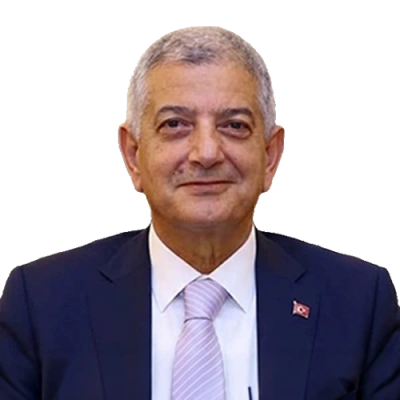
Dr. Cemal SANGU
Tüm YazılarıIntroduction: The Rise of BRICS in a Changing World
World orders do not change overnight. Throughout history, they have been transformed not only by wars and treaties. Sometimes the first signs of change have appeared in a ship being loaded at a port, a newly opened trade route, or countries from different corners of the world gathering around the same table. Major transformations are often felt first in the economy; they then become visible in trade routes, energy flows, financial centres and, ultimately, the distribution of power in international politics. The rise of BRICS today can be understood as part of this broader transformation.
BRICS originated from the acronym BRIC, formed from the initials of the English names of Brazil, Russia, India and China. The term was first coined in 2001 to describe the rising economic weight of these countries. Over time, BRIC evolved beyond an economic classification and, in 2006, began to take shape as a platform for political and economic consultation. The first leaders’ summit was held in Yekaterinburg, Russia, in 2009. With the accession of South Africa in 2011, BRIC became BRICS. The full membership of Egypt, Ethiopia, Iran, Saudi Arabia and the United Arab Emirates in 2024, followed by Indonesia in 2025, brought BRICS to its current membership of 11 countries.
It is not sufficient to understand the evolution of BRICS merely through the growth of its membership. While the initial emphasis was on ensuring that the growing weight of emerging economies was better reflected in the global economic and financial system, the areas of cooperation gradually expanded. Alongside economics and finance, development, science and technology, energy, trade and global governance have become part of the BRICS agenda. In this way, BRICS has evolved from a grouping associated primarily with economic weight into a broader platform through which developing countries can articulate their demands and expectations within the international system. This transformation points to a deeper change: global influence is no longer concentrated in only a few centres; different economic and political centres are strengthening their ties and assuming a more visible role in shaping the international order. As economic power changes, the demand for political representation also begins to change.
This expansion has increased BRICS’ weight while also raising new questions. To what extent can countries with different political and economic priorities develop a common agenda? Will BRICS evolve into a new power bloc, or will it remain a flexible platform for cooperation that brings different actors together within a changing global system?
These questions make the 18th BRICS Summit, held in New Delhi on 12–13 September 2026, more than simply a meeting of leaders; they make it an important point of reference for assessing the grouping’s future direction. Held under India’s 2026 chairship with the theme “Building for Resilience, Innovation, Cooperation and Sustainability,” the summit adopted the New Delhi Declaration, which set out the priorities of an expanding BRICS in the areas of political and security cooperation, economic and financial cooperation, and cultural and people-to-people exchanges. Moreover, 2026 marks two decades since the beginning of BRICS’ institutional cooperation. New Delhi therefore provided a setting not only for discussing the current agenda but also for considering what kind of identity BRICS may acquire in its second twenty-year period.
The 18th BRICS Summit in New Delhi is significant not only because it demonstrated the expanding BRICS agenda in economic cooperation, but also because it revealed the grouping’s approach to a changing international system. Held on 12–13 September 2026, the summit adopted the theme “Building for Resilience, Innovation, Cooperation and Sustainability,” while the New Delhi Declaration set out BRICS’ priorities for the period ahead. The fact that more than 400 meetings and events were held across 30 cities during India’s chairship also underscores that the BRICS agenda extends well beyond the leaders’ summit itself.
The table in New Delhi was, in many ways, a small reflection of today’s world. Countries from different continents, with different political systems and geopolitical priorities, were sitting around the same table. Their differences were substantial, yet the areas of common interest were also expanding. Perhaps the real story of BRICS begins precisely here: not in eliminating differences, but in seeking common ground despite them.
The Declaration highlighted the facilitation of trade and investment, the development of financial cooperation, increased joint work in technology and artificial intelligence, as well as sustainable development, energy, health and food security. This framework shows that, while maintaining its economic cooperation, BRICS is also seeking to expand opportunities for joint action in broader areas such as technology, development and global governance.
Artificial intelligence, in particular, points to a new governance dimension extending beyond BRICS’ economic cooperation. The New Delhi Declaration emphasises broader access to AI resources, while stressing safety, security, inclusiveness and reliability, as well as greater participation by countries of the Global South in AI governance. The central issue is therefore not only access to technology, but also who will shape the rules and standards governing the technologies of the future. BRICS’ approach in this field may thus become an important part of the wider effort to make global technology governance more inclusive.
Another notable aspect of the summit was the emphasis on the demand for greater representation and a stronger voice in global governance. While BRICS countries argued that the weight of developing countries should be increased within international financial and decision-making mechanisms, they reiterated calls for reform of existing international institutions, particularly the United Nations system. The New Delhi Declaration also emphasized the intention to develop BRICS cooperation around three fundamental pillars: political and security, economic and financial, and cultural and people-to-people cooperation. This approach indicates that BRICS is not seeking merely to increase its economic weight, but also to make global decision-making processes more inclusive.
At the same time, one of the most notable aspects of the New Delhi Summit was the ability of countries with different political and geopolitical priorities to come together around a common declaration. In particular, the conflicts in the Middle East and the issue of Iran made the differences within the expanding BRICS structure more visible. The presence of both Iran and the United Arab Emirates on the same platform made the task of developing a common position on regional developments more complex. Nevertheless, the leaders agreed on a common text that emphasized de-escalation, maximum restraint and a diplomatic solution rather than adopting accusatory language directed at individual countries.
The Palestinian issue was also among the prominent political subjects of the New Delhi Declaration. The Declaration called for maintaining the ceasefire in Gaza and ensuring full and unhindered humanitarian access, opposed the forced displacement of Palestinians, and reaffirmed support for a two-state solution and for the full membership of the State of Palestine in the United Nations. This approach indicates that BRICS is seeking to develop common political positions not only on economic and financial cooperation, but also on questions of international security and global governance. At the same time, given the different regional and strategic priorities represented within the expanded membership, the extent to which such political convergence can translate into concrete diplomatic outcomes remains an important question for BRICS’ future effectiveness.
The security agenda of the summit also included nuclear risks and counter-terrorism. The Declaration expressed serious concern over attacks on civilian infrastructure and peaceful nuclear facilities under full IAEA safeguards. It also condemned the terrorist attack in Jammu and Kashmir on 22 April 2025, reaffirming a zero-tolerance approach to terrorism and rejecting double standards in counter-terrorism. These issues further demonstrate that BRICS’ agenda now extends beyond economic cooperation into the fields of security and crisis management.
This points to an important reality concerning the future of BRICS: its strength derives not only from the economic weight of its members, but also from its capacity to create areas of common interest despite their differences. In other words, what makes BRICS meaningful is not simply how many countries sit at the same table, but the common ground that countries with different interests can find around it. Yet these same differences also constitute one of the principal limitations on the grouping’s transformation into a unified political bloc.
It would therefore be incomplete to interpret the New Delhi Summit solely as a search for a “new power centre against the West.” The picture emerging from the summit reflects, rather, the efforts of countries whose economic and political weight is increasing to deepen cooperation among themselves while seeking a greater voice in international decision-making. The approach expressed at the summit—that BRICS is not directed against any particular country and that the Global South should have a greater role in shaping global rules—was also emphasized.
The Strengths and Limitations of BRICS
The growing weight of BRICS cannot be measured solely by the population, economic size or natural resources of its members. What matters most is the ability of countries from different continents and political systems to come together around shared expectations concerning the functioning of the global economic and political order. The New Delhi Summit demonstrated that this capacity remains significant. An expanding BRICS continues to develop a common discourse not only on economic and financial cooperation, but also on global governance, technology, development and multilateralism.
However, in assessing BRICS’ strength, it is important not to overlook the difference between numerical scale and political cohesion. Stretching from Brazil to China, from India to Iran, and from South Africa to the Gulf countries, this broad structure brings together different economic models, security priorities and foreign-policy approaches under one roof. This diversity enhances BRICS’ capacity for global representation while also making it more difficult to formulate a common political position.
The New Delhi Summit clearly revealed this dual character. The members were able to agree on a common text calling for de-escalation, dialogue and diplomacy in response to developments in the Middle East. Yet the language of the declaration also shows that differences among the members were carefully taken into account. The presence of Iran and the United Arab Emirates on the same platform, together with the members’ differing relationships with the United States, Europe and other major powers, makes it difficult for BRICS to formulate a common strategic position on every issue.
For this reason, it would not be sufficient to explain the future of BRICS solely through the concept of a “new power bloc.” The fundamental challenge for BRICS is not to eliminate its differences, but to create areas of common interest within them. The common objectives set out in the New Delhi Declaration in areas such as trade, finance, technology, supply chains, development and global governance indicate where this approach is more feasible. In particular, initiatives concerning cross-border payments, trade in local currencies, digital financial infrastructure, artificial intelligence and technological cooperation demonstrate BRICS’ search for more tangible areas of cooperation beyond political discourse.
One of the most tangible manifestations of this transformation is the development of cross-border payment systems. The BRICS Payment Task Force continues to explore ways of improving the interoperability of member states’ payment and messaging channels and facilitating trade and investment settlements in local currencies. The scale reached by digital payment systems such as India’s UPI and Brazil’s Pix also illustrates the potential for connecting existing national payment infrastructures at the international level. Yet significant obstacles remain, including differences in currency systems, capital controls, technical incompatibilities, and trade imbalances. The New Delhi Declaration accordingly stops short of announcing a specific common payment architecture, instead encouraging continued technical work and the development of practical solutions in this area. The real test for BRICS’ financial cooperation, therefore, lies not in creating a common currency or replacing existing global payment networks, but in establishing reliable, efficient, low-cost, and sustainable links among different national systems.
This also raises a broader question about BRICS’ economic agenda: to what extent can the objectives set out in joint declarations be translated into concrete and sustainable mechanisms? BRICS’ lasting influence will depend not simply on announcing new initiatives, but on turning them into workable, reliable and durable institutional arrangements.
Here, perhaps BRICS’ most important limitation becomes apparent: economic weight does not necessarily translate into political unity. Its members have different priorities, ranging from China–India relations and Gulf security to Russia’s relations with the West and India’s multi-aligned foreign policy. Indeed, while the adoption of a joint declaration in New Delhi represents an important diplomatic achievement, it does not mean that the members share the same strategic outlook on all international issues.
BRICS’ real strength lies less in speaking with one voice than in its capacity to keep different voices at the same table. Rather than being an alliance or an integrated political union in the classical sense, it is a platform through which different actors seek to expand their economic and diplomatic space amid changing global balances.
In this respect, the future of BRICS will be determined less by its size than by its capacity for adaptation. If its members can develop institutional mechanisms for managing their differences within areas of common interest, BRICS may become a more effective actor in global governance. Otherwise, an expanding membership could increase its representational weight while limiting its capacity for decision-making and the formulation of common policies.
Implications for Türkiye
The expansion of BRICS and its growing global economic weight also create new economic and diplomatic opportunities for Türkiye. Türkiye’s existing trade relations, energy links and transport networks with BRICS countries make it necessary to assess relations with the grouping not only from a political perspective, but also in terms of their economic and geoeconomic dimensions.
For Türkiye, BRICS can be viewed not as an alternative to existing external economic relations, but as a complementary sphere for diversifying economic ties and strengthening connections with new markets. In particular, developing trade and economic relations with China, India, the Gulf countries and Russia may enable Türkiye to make fuller use of the connectivity opportunities arising from its position between Asia and Europe. The central issue for Türkiye, therefore, is not to view BRICS as a choice of political alignment, but to turn emerging opportunities in trade, investment, energy, technology and transport into tangible economic value.
The expanding BRICS partner-country mechanism also provides an area that Türkiye can consider beyond the question of full membership. The New Delhi Declaration encourages greater participation by Partner countries in BRICS engagements and practical cooperation in areas of shared interest. This framework could allow Türkiye to diversify its relations with different economic and diplomatic platforms while exploring institutional and sector-specific opportunities for cooperation with BRICS. Such an approach would place BRICS within a broader framework of multidirectional economic and diplomatic engagement rather than treating it as a choice of geopolitical alignment.
At this point, the Middle Corridor is of particular importance. Connecting China and Central Asia to Türkiye and Europe through the Caspian Sea, this route strengthens Türkiye’s capacity to become not merely a transit country but a logistics and trade hub linking different economic centres. Considered alongside the Middle Corridor, energy links and other transport networks, trade and investment relations that can be developed with BRICS countries may add new dimensions to Türkiye’s geoeconomic role in Eurasia.
In this context, the Iraq Development Road Project is also of particular significance for Türkiye. By seeking to connect Iraq with Türkiye and Europe through the Gulf, the Development Road is more than a transport initiative; it has the potential to strengthen regional trade, energy flows and economic connectivity. Considered alongside the Middle Corridor, it could contribute to the emergence of a more diversified Eurasian connectivity architecture based not on a single route, but on multiple and complementary corridors linking Asia with Europe. For Türkiye, therefore, the issue is not simply to diversify its engagement with emerging economic platforms such as BRICS, but also to integrate the evolving economic geography of Eurasia with concrete transport, energy and trade connections.
However, this process does not depend solely on expanding external connections. International platforms can create opportunities; it is a country’s own productive capacity, competitiveness, export capacity and institutional strength that turn those opportunities into lasting economic gains. For Türkiye, therefore, developing relations with BRICS should be considered part of a broader strategy of economic diversification and external openness.
For Türkiye, the issue is not to choose between East and West, but to establish connections among the different centres of power and economic influence in a changing world. Türkiye’s geography is not an advantage in itself; its real value lies in transforming that geography into meaningful connections through diplomacy, trade, energy, technology and transport capacity. From this perspective, BRICS can be regarded not merely as a new diplomatic issue for Türkiye, but also as an opportunity to diversify its existing economic and geopolitical connections.
Conclusion: From Bloc Formation to Balance
World orders do not change overnight. However, changes in the distribution of economic power, the reshaping of trade routes, transformations in energy and technology, and the efforts of rising countries to gain a greater voice in global governance indicate that the international system is entering a search for a new balance. The recent evolution of BRICS and the New Delhi Summit are among the important indicators of this transformation.
The expansion of BRICS demonstrates its growing global economic and political weight. At the same time, it is not easy for a structure bringing together different economic systems, political priorities and geopolitical approaches to become a unified political bloc. The future impact of BRICS will depend on the extent to which its members can transform their differences into areas of common interest. In this respect, BRICS may be regarded not as a bloc positioned wholly against the existing international order, but as an important platform calling for that order to become more inclusive and balanced.
The picture emerging from the New Delhi Summit also supports this approach. The increasing prominence of technology, artificial intelligence, development, energy and global governance alongside economic and financial cooperation shows that the grouping is more than a platform defined by economic weight alone. Yet BRICS’ future influence will depend not simply on its economic and demographic size, but on the extent to which it can turn this diversity into tangible cooperation.
From Türkiye’s perspective, changing global balances make a multi-directional and balanced approach to engagement more important than a new choice of alignment. Relations that can be developed with BRICS countries in trade, investment, energy, transport and technology, when considered together with Türkiye’s geographical position between Europe and Asia, the Middle Corridor and other regional connections, may create new economic opportunities. Yet turning these opportunities into lasting gains depends not only on expanding external connections, but also on Türkiye’s ability to strengthen its productive capacity, export performance, technological capabilities and institutional capacity.
In conclusion, it would be premature to interpret the rise of BRICS either as the beginning of a new bloc formation or as an announcement of the end of the existing global order. A more appropriate approach is to recognize that the global economy and international politics are evolving towards an increasingly multi-centred and multilayered structure. In this new environment, the strength of countries will be measured not only by their proximity to a particular centre of power, but also by their capacity to maintain constructive relations with different centres simultaneously and adapt to changing circumstances. The message of the New Delhi Summit gains meaning precisely here: the future of the global order will be shaped not only by who is stronger, but by how different centres of power relate to one another.
The world needs new bridges, not new walls. The real test for BRICS is not to create a new bloc, but to transform differences into common interests, economic power into shared prosperity, and multipolarity not into conflict but into balance. The world of tomorrow will be shaped not only by the question of which countries are stronger, but by how these centres of power relate to one another. For Türkiye, the key to this new era lies not in choosing between sides, but in becoming a country capable of building connections among the different economic and diplomatic centres of a changing world.
Dr. Cemal Sangu
Güncel Yazıları