Türkiye has travelled far in a quarter-century. Yet the road is neither exhausted, nor were the gains of the past twenty-five years an end in themselves. They established the material, political and strategic foundations for a larger journey that may only now be beginning.
The generation that carried Türkiye through the early decades of this century knew much of what it wanted because it knew what it lacked. Its aspirations were immediate and tangible: economic security, decent housing, roads, accessible healthcare, wider education, employment, mobility and a state capable of delivering them. Scarcity itself generated the desire to overcome scarcity.
But Türkiye entered the century confronting also uncertainty about where the country stood in relation to its own history.
The relationship between Republic and civilization, modernity and tradition, Europe and Türkiye’s wider historical geography remained deeply contested. Modernization had too often been understood as a choice between inheritance and advancement, as though Türkiye could move towards the future only by distancing itself from the civilization from which it had emerged.
Much of that uncertainty has since receded.
Contemporary Türkiye possesses a firmer sense of its historical coordinates. The Republic need not repudiate its civilizational inheritance in order to be modern. Ottoman history need not be treated as incompatible with republican citizenship. Türkiye can engage Europe, Asia and the wider world without intellectually dissolving itself into any of them.
It can belong, first and foremost, to itself.
That recovery of historical confidence may ultimately prove as consequential as the material transformation that accompanied it.
At the turn of the century, Türkiye’s nominal GDP stood at roughly $275 billion and per capita income at around $4,200. By 2025, an economy approaching $1.6 trillion had raised per capita income to roughly $18,600. Adult literacy rose from around 86 per cent to above 97 per cent, while urbanization expanded from roughly three-fifths of the population to close to 90 per cent.
Numbers, however, capture only part of the transformation. Roads, bridges, tunnels and airports compressed distance. Healthcare became substantially more accessible. Universities multiplied. Digital technology transformed communication, finance and access to knowledge. Millions entered patterns of mobility and consumption unavailable to their parents.
Equally important was the movement from technological dependence towards indigenous capability. Türkiye increasingly developed its own aerospace systems, naval platforms, drones, missiles and advanced defense technologies. Strategic autonomy ceased to mean political independence alone; it increasingly required the technological ability to sustain that independence.
The transformation was therefore larger than economic growth. The physical, technological and psychological horizons of ordinary life changed.
Yet success contains a paradox. The more completely a transformation succeeds, the more easily its achievements disappear into normality. The generation that experienced relative scarcity possesses something its children cannot possess: memory of the starting point.
A motorway means something different to someone who remembers travelling without one. A modern hospital carries another meaning for someone who remembers inadequate healthcare. Wider education, mobility, housing and technological access are experienced differently when their absence remains within living memory.
Comparison gives achievement meaning.
For the generation that witnessed the transformation, therefore, there remains a certain satisfaction in seeing aspirations once considered distant become ordinary.
But generations pass.
The young person entering adulthood today did not experience the Türkiye from which contemporary Türkiye emerged. Much of what an earlier generation experienced as transformation was already present when the younger generation became conscious of the world.
What parents remember as achievement, children experience as normality. There is nothing ungrateful or unnatural about this. A generation cannot remember what it never experienced but the political consequences are profound.
Every successful movement of change eventually confronts the same historical paradox: if it succeeds sufficiently, change itself becomes establishment. The transformed Türkiye is not experienced by the emerging generation as a victory over a previous condition. It is simply the country in which life began.
The motorway is not transformation; it is infrastructure. The university is not expansion; it is an expectation. Digital access is not technological progress; it is an assumption of everyday existence.
The emotional economy of politics therefore changes.
The parent can ask:
How much better is Türkiye than the Türkiye I remember?
The child increasingly asks:
Why is Türkiye not yet like the world I see?
These are fundamentally different questions. The first looks backwards for its point of comparison. The second looks outwards.
This helps explain why younger generations can loosen themselves from political loyalties that appeared almost self-evident to their parents. The achievement has not necessarily been denied. Its capacity to generate political attachment has diminished because it has become part of the baseline.
Success changes the constituency to which success once spoke. And something else has changed. For perhaps the first time in human history, an entire generation carries a permanent window onto the rest of the world in its pocket.
A young Turk no longer compares life only with neighboring families, cities or even countries. London, Seoul, Dubai, Singapore and New York enter daily consciousness through a screen. Salaries, houses, universities, technologies, fashions, public spaces, entertainment and lifestyles elsewhere become immediate objects of comparison.
The parent compared substantially with the past. The child compares with the world.
Yet the world encountered digitally is not the world in its completeness. It is disproportionately a world of surfaces: success without struggle, consumption without debt, freedom without loneliness, wealth without inequality, individuality without social fragmentation.
Comparison becomes global while remaining selective and alongside the globalization of aspiration has come the globalization of materialism.
Modern consumer civilization possesses an extraordinary capacity not merely to manufacture goods, but to manufacture wants. Yesterday’s luxury becomes today’s necessity; today’s possession becomes tomorrow’s inadequacy. The horizon of sufficiency continuously recedes.
Societies become richer while individuals can continue feeling poor. This is not a Turkish problem. It is one of the central contradictions of contemporary civilization. Recognizing this changes the nature of Türkiye’s challenge. The task is not to shield the young from modernity, nor to persuade them that their aspirations are illegitimate. It is to recognize that every generation must discover an aspiration of its own.
For aspiration, too, has a historical life.
It emerges from particular conditions. It mobilizes a generation. It transforms reality. And if it succeeds, it eventually exhausts itself by turning its own objectives into normality.
What one generation struggles to achieve, the next inherits as its starting point.
Civilizations endure not because they prevent change, but because they repeatedly find the means to change without ceasing to recognize themselves. Renewal is therefore neither repetition nor rupture. The first merely reproduces inherited forms after the conditions that created them have disappeared. The second mistakes the destruction of continuity for progress.
True renewal does something more difficult, it carries forward what remains enduring while creating forms adequate to a new age.
Every generation must perform this task anew.
The aspiration that mobilized the Türkiye of the early twenty-first century cannot simply be handed intact to those who came of age after its principal achievements had become normal. The new generation requires a horizon corresponding to its own historical circumstances. Those circumstances are extraordinary.
The young generation is inheriting a changing world. The international order within which Türkiye undertook its first transformation is itself entering a period of profound transition. The confidence of the post-Cold War moment has weakened. Power is dispersing. Asia has risen. Technology is redistributing strategic capability. New centers of influence are emerging, while institutions created under an earlier distribution of power struggle to accommodate a different world.
Such periods carry danger, but they also create openings. The first generation had substantially to transform Türkiye within an established international order. The emerging generation may have the opportunity to help determine Türkiye’s place in an order still being formed. That is already an aspiration of considerable magnitude. But the transformation underway is deeper than geopolitics.
The contemporary world is experiencing a crisis of civilization and beneath that lies something more fundamental, a crisis of meaning.
Modern civilization has accomplished things previous generations could scarcely imagine. It has extended life, conquered distance, multiplied wealth, connected continents, expanded knowledge and placed extraordinary technological power in the hands of ordinary individuals.
Yet its triumphs have produced questions its instruments cannot answer.
What happens to society when consumption becomes the principal language of aspiration? What happens to human agency when technology increasingly anticipates desire, shapes attention and mediates reality itself?
Humanity has acquired extraordinary command over means while becoming increasingly uncertain about ends. This is why Türkiye’s next aspiration cannot be merely to become another wealthy and technologically powerful state. It must certainly become wealthier. It must master artificial intelligence, advanced computing, energy, medicine, aerospace and the technologies that will determine sovereignty in the decades ahead. Its universities must produce knowledge rather than merely distribute degrees. Its scientists must discover, its engineers create, its entrepreneurs build.
A civilization incapable of mastering the instruments of its age cannot shape that age.
Türkiye’s first transformation was substantially a movement from scarcity towards capability. The next must be a movement from capability towards contribution, and contribution must be more than manufactured goods, strategic influence or military power. Türkiye should aspire to become a society from which the world also expects ideas.
For two centuries, the psychological relationship between much of the non-Western world and modernity was dominated by comparison. But a civilization cannot indefinitely live through comparison. Eventually it must recover sufficient confidence to move from imitation to creation.
The aspiration of the next generation should therefore not simply be to make Türkiye resemble the most successful societies elsewhere. The young Turk looking at London, Seoul, Singapore or New York should certainly ask what can be learned from them.
The larger question must remain: What can we create that will make others also look towards Türkiye?
That is the psychological passage from catching up to contributing. Imagine the consequences of that shift.
Universities cease to be merely pathways to employment and become places from which consequential knowledge emerges. Technology ceases to be something imported, adapted or consumed and becomes something created. History ceases to be merely a source of pride and becomes a reservoir from which contemporary thought draws confidence. Civilizational identity ceases to be defensive and becomes creative. And power itself acquires purpose. For the emerging international order does not merely require new poles.
If multipolarity merely produces more states capable of imposing their interests upon weaker ones, humanity will have redistributed power without transcending the logic of the old order. Türkiye’s historical opportunity is therefore not simply to secure a seat at a larger table. It is to arrive there with something to say. A rising civilization should ask not only how much power it can accumulate, but what conception of justice, human flourishing and international coexistence that power is intended to serve.
This is where national aspiration becomes civilizational responsibility.
None of this is possible without rootedness. Roads can be inherited. Factories can be inherited. Wealth can be transferred. Technology can be taught. Civilizational consciousness must be renewed by every generation.
Earlier generations received much of their understanding of themselves vertically: through family, neighborhood, faith, language, history, collective memory and nation. The digital generation increasingly receives identity horizontally: through algorithms, influencers, entertainment, online communities and global cultural currents. A generation can consequently become more connected to the world than any before it while becoming less certain of where it stands within history.
Rootedness doesn’t mean enclosing young people within inherited forms or demanding loyalty to the political arguments of their parents. To root a generation is to give it coordinates, not chains. It is to enable young people to encounter the world confidently because they know from where they encounter it.
Rootedness without aspiration becomes nostalgia. Aspiration without rootedness becomes imitation. Türkiye requires both. Roots provide continuity. Aspiration provides movement. The coming quarter-century must therefore belong increasingly to those who will live through it. Young Turks cannot merely be beneficiaries of a transformation completed by others. Nor can they be asked simply to defend what they inherited.
They must become authors of the next transformation.
Scientists, engineers, entrepreneurs, teachers, philosophers, artists, architects, writers and technologists all belong within that authorship.
The task is not merely to produce more wealth but greater capability; not merely greater capability but contribution; not merely contribution but meaning.
This is an aspiration large enough for a generation because it joins personal possibility to national purpose and national purpose to a larger human question. The previous generation inherited scarcity and struggled to overcome it. The emerging generation inherits capability at a moment when the world itself is searching for direction. Its responsibility is therefore different. It must take what has been built and surpass it. It must master the future without becoming uprooted from the past. It must seek prosperity without surrendering to the tyranny of endless desire. It must acquire power without forgetting purpose.
And it must find Türkiye’s place in an emerging world while asking what Türkiye can contribute to a civilization increasingly uncertain about where it is going. It is the permanent work through which a living civilization carries itself from one generation into another. Continuity without stagnation. Change without rupture.
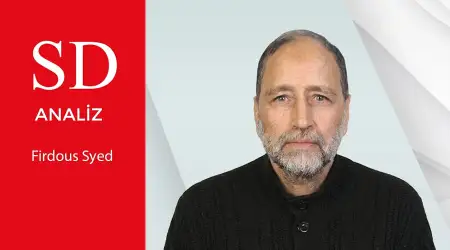
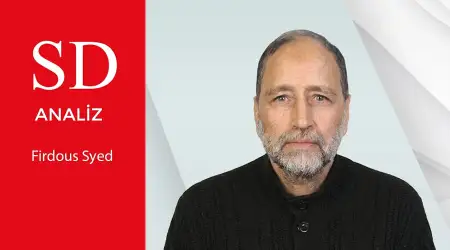
Firdous Syed is a Kashmiri political analyst. Formerly involved in the region’s 1990s resistance movement, he later turned his efforts toward civil society, peacebuilding, and development. Over the years, he has written extensively on Kashmir, South Asian politics, and international affairs for various publications.
Diğer İçerikler