Introduction: The Road from Conflict to Peace
Some geographies carry borders not only on maps, but also in people's memories.
Seas, mountains and islands may separate countries from one another; yet memories, identities and senses of belonging accumulated over the course of history often continue to live far beyond drawn borders. Mindanao and Sulu, in the southern Philippines, are such a geography. For centuries, these lands have borne the imprint of different cultures, faiths and political structures. The story of the Moro Muslims is therefore not merely a story of wars and agreements; it is also a story of preserving identity, remembering the past, and seeking a place for oneself in the future.
This story reaches far beyond the modern Republic of the Philippines. Before the colonial period, Muslim communities in Mindanao and Sulu had developed their own political and social orders, while the sultanates established in the region maintained relations with the wider Islamic and commercial world of Southeast Asia. The Spanish and American colonial periods, followed by the establishment of the independent Republic of the Philippines, brought profound changes to the political, demographic and social fabric of the region. Land arrangements, population movements and the strengthening of central state structures gradually widened the distance between historical memory and new political realities.
For some conflicts do not begin one morning with the firing of guns. They accumulate first in memory. The grievance experienced by one generation becomes part of the narrative of another; narratives, in time, become part of identity. As issues that politics cannot resolve grow deeper, words begin to give way to weapons. The modern history of the Moro question developed to a considerable extent in this way; from the late 1960s onwards, Moro movements became central to one of the longest and most complex armed conflicts in Southeast Asia.
Yet what makes Moro history particularly significant is not merely the length of the conflict. Perhaps more importantly, a political struggle that began with weapons was, over time, able to turn towards negotiation, accommodation and the construction of new institutions. This transformation was neither short nor linear. Ceasefires were broken, negotiations interrupted and hopes at times turned into disappointment; yet despite these ruptures, the parties continued to search for ways to return to the same table.
The emergence of the Moro National Liberation Front (MNLF), the formation of the Moro Islamic Liberation Front (MILF) following divisions within the movement, the long period of conflict with the Philippine government, and various mediation initiatives constitute important stages in this historical journey. Over time, the language of the conflict also began to change. Alongside demands centred on independence and armed struggle, questions of political representation, governance and social development increasingly moved to the centre of the negotiating table.
This long and painful journey reached a historic turning point on 27 March 2014 with the signing of the Comprehensive Agreement on the Bangsamoro (CAB). After seventeen years of negotiations, the agreement between the Philippine government and the MILF demonstrated not only a determination to end armed conflict, but also an effort to address the political and social issues underlying the conflict through negotiation and institutional arrangements. In the years that followed, as the new political and administrative structure in Bangsamoro began to take shape, a struggle conducted for decades under the shadow of weapons gradually moved into the realm of politics and institutions.
There are some matters that one does not merely research; in time, they become part of one's own memory. The Moro question has become such a story for me. After years of academic and diplomatic interest in South and Southeast Asia, witnessing in person, in Manila on 27 March 2014, a historic moment that reached from arms to peace transformed the pain, hope and search for peace of this region from a subject I studied into a deeply felt human experience.
My interest in the Moro question deepened over time not only through academic curiosity about the region, but also through the observations I acquired during my diplomatic assignments in South and Southeast Asia. During my posting in Bangladesh, I had the opportunity to become more closely acquainted with South Asia, and later, during my assignment in Indonesia, with Southeast Asia. I had long followed the history of Muslim communities in the Philippines and the Moro question as part of this broader regional interest. For this reason, the prospect that, after a conflict lasting years and exacting a heavy human cost, the parties would sit at the same table and sign a peace agreement was not an ordinary diplomatic development for me. To witness that historic moment in Manila on 27 March 2014 was like watching an issue I had followed from afar for years suddenly become history before my eyes.
The atmosphere of the ceremony, the intensity of the security checks, Manila's hot and humid air, the presence of representatives from different countries and international organisations, the dignified and self-assured bearing of the Moro side, the combination of official formality and human warmth displayed by Philippine President Benigno S. Aquino III, and the moment when peace was signed remain in my memory not as separate images, but as parts of the same historical tableau. Seeing people who had lived for years under the shadow of weapons finally gain the possibility of shaping their future not on battlefields but through politics and institutions moved me deeply. To have been there that day was, because of my closeness to the region and its people, not merely a diplomatic assignment but one of the most unforgettable experiences of my life.
Yet peace agreements are not the final sentence of history; more often, they are the first sentence of a new and more difficult paragraph. The silencing of weapons is an indispensable beginning for peace, but lasting peace requires rebuilding trust, reintegrating former combatants into society, strengthening political representation, reducing economic and social inequalities, and enabling new institutions to gain legitimacy in the eyes of society. The Bangsamoro experience should therefore be understood not merely as the ending of a conflict in the southern Philippines, but as a long process of transformation from armed struggle to political accommodation and, from there, to institutional peace.
Perhaps behind the need to write this study anew today lies not only an academic curiosity about the past, but also the spirit of a time that urges us to reconsider the possibility of peace in different geographies. The questions of how conflicts end, how the burdens of the past are carried into the future, and how societies can rebuild a common life do not belong to any single geography or period. Viewed in this light, the long journey from Moro to Bangsamoro ceases to be merely a sum of events left behind and becomes a memory capable of shedding light on the search for peace in today's world.
This study traces precisely that memory. It follows the transformation from the historical roots of the Moro question to the emergence of the MNLF and MILF; from armed struggle to years of negotiations; and from the 2014 Comprehensive Agreement on the Bangsamoro to the new political and administrative order that took shape in its aftermath. The purpose is not merely to recount the history of a movement or an agreement. The deeper question is this: Under what circumstances can people who have pointed guns at one another for years begin to sit around the same table and discuss a common future?
In this framework, the Moro experience will be examined not merely as a historical case, but as an experience that deserves close attention in terms of ending conflicts, making negotiations durable, rebuilding mutual trust, and transforming peace over time into an institutional order.
Perhaps the most important reminder contained in the Moro experience lies here: Peace is built not by forgetting the past, but by creating a shared will that refuses to allow the past to hold the future hostage. For while silencing weapons may sometimes be enough to end a conflict, lasting peace requires people, institutions and even words to change.
And perhaps this is why the historic moment I witnessed in Manila on 27 March 2014 still echoes in my mind, years later, with a single thought: Peace is sometimes born not at the moment an agreement is signed, but at the moment people begin to believe that war no longer has to be their destiny.
I. The Historical Roots of the Moro Question and the Emergence of the MILF
To understand the Moro question, one must first look at the history of Mindanao. What is at stake here is not merely a conflict between a modern state and an armed movement. At a deeper level lies a tension between the historical memory of Moro communities, which had developed their own political and social orders from the pre-colonial period onwards, and the modern state structure that took shape over time. Muslim communities in Mindanao and Sulu established their own political structures throughout history and developed relations with regional trade networks and neighbouring Islamic centres.
The Spanish and American colonial periods, followed later by the establishment of the independent Republic of the Philippines, brought significant transformations to the political, demographic and social fabric of the region. In particular, land arrangements and population movements contributed to the growing vulnerability of Moro communities in areas where they had historically lived. Identity, land, political representation and demands for determining their own future therefore gradually became more pronounced political questions.
For some conflicts do not begin one morning with the firing of guns. They accumulate first in memory. The grievance experienced by one generation becomes part of the narrative of another, and narratives in time become part of identity. As unresolved political issues deepen, words begin to give way to weapons. The modern history of the Moro question developed to a considerable extent in this way; from the late 1960s onwards, Moro movements became central to one of the longest and most complex armed conflicts in Southeast Asia.
In this environment, the Moro National Liberation Front (MNLF) emerged under the leadership of Nur Misuari. Official Philippine sources date the establishment of the MNLF to 1969 and indicate that the movement turned to armed struggle in the early 1970s. In its initial period, the central issue was the recognition of the Moro people's political rights and their right to have a voice in determining their own future.[1]
As the conflict intensified, the parties were gradually driven towards a search for negotiations. Through the initiatives of the Organisation of the Islamic Conference, talks began between the Philippine Government and the MNLF, and the Tripoli Agreement was signed on 23 December 1976. The agreement was an important turning point that placed the idea of autonomy for Moro communities in the southern Philippines at the centre of the search for a political solution.
The historical significance of the Tripoli Agreement lay not only in its provisions. The fact that parties that had spent years pointing weapons at one another accepted the idea that the future of the conflict could be determined through negotiation was significant in itself. Yet disagreements over the scope and implementation of the agreement soon emerged. The idea of peace had reached the table, but trust had not yet been fully built.
At precisely this time, differences within the Moro movement itself became more pronounced. A movement may unite around a shared grievance, but its members do not necessarily have to agree on how the future should be built. Following divisions within the MNLF, a new structure that took shape around Hashim Salamat gradually came to be known as the Moro Islamic Liberation Front (MILF), which was formally established in 1984.
The emergence of the MILF was not merely an organisational split; it also expressed different political and ideological approaches to the future of the Moro struggle. Under Salamat's leadership, the movement carried a more pronounced Islamic agenda than the MNLF. Thus, two separate movements emerged from the same historical memory but with different visions of the future.
This division made the resolution of the Moro question more complex, while at the same time raising a new political question: How could different Moro movements envisage a political future within the sovereignty and territorial integrity of the Philippine state?
This question would become one of the central issues on the negotiating table in the years that followed. For one reality had become increasingly clear during this early period of Moro history: armed struggle could make a political demand visible, but it was increasingly the language of negotiation that would determine its future.
II. The First Search for Peace: From Tripoli to the 1996 Final Peace Agreement
The negotiating table opened in Tripoli in 1976 marked not merely the beginning of a diplomatic exchange, but the beginning of a new political language in the Moro question. In a geography where weapons had spoken for years, the parties were accepting for the first time the idea that the future could be shaped not only on battlefields, but also at the negotiating table. Signed on 23 December 1976 between the Philippine Government and the Moro National Liberation Front (MNLF) through the initiatives of the Organisation of the Islamic Conference, the Tripoli Agreement opened the way for the political demands of the Moro people in the southern Philippines to be addressed on the basis of autonomy.
This was a significant transformation in itself. The establishment of a negotiating table did not eliminate all the differences between the parties, but it introduced a new possibility concerning how the future of the conflict might be determined. A bridge was beginning to emerge between the silencing of weapons and political resolution.
Yet peace processes are often tested not by the signing of an agreement, but by questions of how that agreement will be interpreted and implemented. Following the Tripoli Agreement, differences again emerged between the parties over its scope and manner of implementation. Divergent approaches to how autonomy arrangements should be structured, which areas they should cover, and how the provisions of the agreement could be reconciled with the constitutional and administrative system of the Philippines deepened the problem of trust once again.
The 1987 Philippine Constitution's provision for the creation of an autonomous region in Muslim Mindanao, followed by arrangements for the establishment of the Autonomous Region in Muslim Mindanao (ARMM) in 1989, brought the search for a political solution onto a more concrete institutional footing. Yet this structure did not meet all the expectations of the Moro movements. While the MNLF argued that some key provisions of the agreement had not been adequately implemented, the MILF continued to demand a more comprehensive political arrangement.
Thus, the 1980s and 1990s became a period oscillating between war and peace. The idea of peace was now on the table, but peace had not yet entered everyday life. The continuation of conflict made it difficult to overcome the problem of trust and repeatedly tested efforts to find a political solution.
Nevertheless, the idea of negotiation did not disappear altogether. On the contrary, the experience left by earlier initiatives showed the parties that the conflict could not be resolved solely through military means and that the search for a political settlement was unavoidable. During this period, diplomatic initiatives by international and regional actors also contributed to keeping the search for peace alive.
At the end of this long search, the Philippine Government and the MNLF signed the Final Peace Agreement (FPA) on 2 September 1996. The agreement provided a more comprehensive framework for implementing the 1976 Tripoli Agreement and brought together elements including the integration of MNLF members into security institutions, the establishment of transition mechanisms, and the implementation of peace and development programmes in the southern Philippines. A second phase envisaged arrangements for the creation of a new autonomous regional government.[2]
One of the important aspects of the 1996 agreement was that it did not limit the meaning of peace to the termination of armed conflict. The participation of former combatants in new institutions, political arrangements and economic development were treated as parts of the same peace process. An attempt was thus made to establish a connection between ending the war and rebuilding life after the war.
Yet the FPA did not bring all dimensions of the Moro question to an end. New disagreements emerged in the following years over its implementation. While the OIC initiated the Tripartite Review Process in 2007, negotiations between the MILF and the Philippine Government had also begun to develop along a separate track from 1997 onwards.
Thus, 1996 was not the end of the story, but the beginning of a new phase. A historic accommodation had been reached with the MNLF; yet the broader political foundations of the Moro question still awaited resolution. Moreover, another actor—the MILF—was moving towards the centre of the future peace process.
Perhaps the most important lesson of this period was this: The road to peace does not pass through a single agreement. Every agreement opens the door to a new table together with the questions left behind by the previous one. The process that began in Tripoli became an important political achievement in 1996, but it also demonstrated the need for a more comprehensive approach to negotiation if a lasting settlement was to be achieved.
Thus the Moro peace process reached a new threshold. A first major accommodation had been achieved, but peace was not yet complete. The limits of the framework established with the MNLF and the rise of the MILF as a separate negotiating actor opened the door to a longer and more complex period of negotiations in the search for a solution to the Moro question.
III. From Arms to the Table: A New Era of Negotiations with the MILF
The fact that the MNLF continued to exist as a political actor showed that a more comprehensive solution to the Moro question had not yet been found. For this reason, a new negotiation process between the Philippine Government and the MILF began in 1997. During its initial phase, the talks focused primarily on ceasefire arrangements, security and the control of hostilities. Ceasefire mechanisms were established and confidence-building arrangements were developed.
But the road to peace was again far from straight. The negotiating table had been established, yet the shadow of war had not disappeared from above it. In 2000, negotiations were suspended when the administration of President Joseph Estrada declared an “all-out war” against the MILF, and fighting intensified once again.
This period was a painful reminder of how fragile peace processes can be. Ceasefire and confidence-building mechanisms developed over several years became largely ineffective when political will again turned towards conflict. Once more, the parties confronted the same reality: a problem that could not be solved by weapons would not disappear simply because the guns began speaking again.
A new page opened in 2001. On 24 March 2001, the parties agreed on a general framework for the resumption of peace talks; on 22 June 2001, they signed the Tripoli Agreement on Peace. One of the most important differences in this second phase of negotiations was the more pronounced involvement of third-party facilitation. Malaysia assumed a facilitating role in the talks between the parties and would become one of the most important external actors in the peace process in the years that followed.[3]
Malaysia's role was not limited to bringing the parties to the same table. An International Monitoring Team (IMT) was established to monitor the ceasefire and help preserve confidence; mechanisms were also developed to enable the parties to address problems in the field jointly. The Ad Hoc Joint Action Group (AHJAG), established in 2002, became another important mechanism for maintaining the ceasefire environment and addressing common security concerns.
The nature of the negotiations therefore also began to change. In the early years, the dominant question had been, “How can we stop the conflict?” During the second phase, the question increasingly became, “How can we resolve the political issue underlying the conflict?” Talks between the Philippine Government and the MILF moved beyond security and rehabilitation towards political settlement, autonomy and arrangements for self-government.
Yet this road too would pass through new crises. In 2008, reaching agreement on the Memorandum of Agreement on Ancestral Domain (MOA-AD) appeared to represent an important stage, but on the very day on which the agreement was due to be signed, the Philippine Supreme Court prevented its execution. Fighting subsequently escalated again in some areas, displacing large numbers of people. Thus, after years of negotiations, the expectations that had been created suddenly turned into a serious political and security crisis.
The significance of the MOA-AD crisis lay partly in the fact that it demonstrated that peace processes must be accepted not only at the negotiating table but also within the broader political and legal environment. Even a text agreed upon by the parties could face constitutional and political objections. A lasting settlement therefore required society, institutions and the legal order themselves to become part of the process.
Yet perhaps the most striking aspect of the process was that this rupture could become a new beginning. From 2009 onwards, efforts were made to restore the ceasefire; the International Contact Group (ICG) was established, strengthening the contribution of international actors to an environment of trust and communication. The Declaration of Continuity, signed in 2010, sought to ensure the continuity of the negotiations and to build a new political framework upon points of agreement reached previously.
Thus, the approximately seventeen-year negotiating journey became a search for trust rebuilt after every rupture. Leaving the table was easy; the truly difficult task was returning to it. Perhaps the most important story of the Moro peace process lies here: despite all their disagreements, the parties did not abandon negotiation itself.
After 2010, the process began to focus not only on preserving the ceasefire but also on how the political future of Bangsamoro would be shaped. Questions of autonomy, governance, resource sharing, transitional arrangements and normalisation became increasingly prominent on the negotiating agenda. A direct link was therefore beginning to emerge between ending the conflict and establishing the political order that would follow it.
This new phase would acquire a concrete political framework with the Framework Agreement on the Bangsamoro (FAB) in 2012. Talks that had for years been shaped around security and ceasefire issues had now developed into a more comprehensive negotiating process addressing the future political and administrative structure of Bangsamoro.
And this change represented perhaps the most important transformation in Moro history: armed struggle had made a political demand visible, but it was no longer weapons that would determine the future of that demand. It was the language of negotiation.
IV. From Negotiations to Agreement: The 2012 Framework Agreement and the 2014 Comprehensive Agreement
After 2010, the Moro peace process began to focus not merely on stopping the conflict but on what kind of political order should be established in its place. Years of negotiations had led the parties beyond security questions towards more fundamental issues such as autonomy, governance, resource sharing and normalisation.
The most important outcome of this transformation was the signing of the Framework Agreement on the Bangsamoro (FAB) on 15 October 2012. The agreement established the fundamental political framework for reconciling the Moro people's demand for self-government with the creation of a new Bangsamoro political structure within the sovereignty and constitutional framework of the Philippines.[4]
With the FAB, the language of negotiation changed markedly. The central question was no longer only, “How will the conflict end?” The question, “What kind of government will be established after peace?” also moved to the centre of the table. This was an important threshold in the transition from armed struggle to political institutionalisation.
Yet the FAB was not, by itself, a final settlement. For the political framework envisaged by the agreement to be implemented, detailed arrangements were needed in complementary areas such as power sharing, wealth sharing, transitional arrangements and normalisation. Negotiations in 2013 and 2014 therefore focused on supplementary agreements concerning the implementation of the FAB.
Four principal annexes emerged in this process: Power Sharing, Wealth Sharing, Transitional Arrangements and Modalities, and Normalization. These headings demonstrated that peace was not merely a question of political representation; how government would be shared, how economic resources would be regulated, how the transition would be administered, and how an armed structure would move into peacetime were all integral parts of the solution.
With the signing of the Normalization Annex and the Bangsamoro Waters and Zones of Joint Cooperation Addendum on 25 January 2014, the principal annexes to the FAB were completed. The negotiating process had thus acquired a comprehensive structure that brought political arrangements together with security and normalisation.[5]
The transformation here is important. During wartime, parties often perceive one another's demands as threats. In peace negotiations, however, those same demands begin to become political questions that can be discussed. Autonomy, resource sharing, political representation and normalisation were no longer treated merely as causes of conflict, but as elements of the order to be established in the future.
Finally, on 27 March 2014, the Comprehensive Agreement on the Bangsamoro (CAB) was signed in Manila. The CAB brought together the accumulated results of years of negotiations between the Philippine Government and the MILF within a comprehensive framework and established the foundation for creating a new political structure in Bangsamoro and implementing the normalisation and transition processes. Philippine official documents describe the CAB as the consolidation and reaffirmation of the understandings reached throughout the process, particularly those embodied in the FAB and its annexes.[6]
For this reason, it is not sufficient to view the 2014 agreement simply as a peace document. The CAB was the institutional expression of the transition from the language of war to the language of politics. Parties that had confronted one another for years in the mountains and conflict zones were now negotiating, within the same text, the future governance structure, resources and political order.
One of the important elements of the agreement was the normalisation process. It provided mechanisms for maintaining the ceasefire, progressively decommissioning armed elements, and reintegrating former combatants into society. At the same time, separate arrangements were developed for political transition and the creation of new institutions.
The peace process thus began to move along two distinct but complementary tracks: on one side, political transition and the establishment of new Bangsamoro institutions; on the other, normalisation and preparing former combatants for life outside conflict. Addressing these two areas together strengthened the link between ending the war and building a sustainable life after the war.
The deeper historical meaning of the CAB emerges here. The parties were no longer discussing only when the guns would fall silent; they were discussing how people would live together in a society in which the guns had fallen silent.
This represented an important intellectual transformation in the history of the Moro question. Peace was beginning to be understood not merely as the absence of conflict, but as a shared vision of a political future. The ability of two sides that had fought one another for years to negotiate the political and institutional framework of the same future was, in itself, a historic change.
Nevertheless, 27 March 2014 was not the end of a long journey. The signing of an agreement did not mean that it would automatically find a place in the life of society. Ahead lay the difficult tasks of completing the political transition, establishing new institutions, implementing normalisation and rebuilding trust.
2014 should therefore be seen not as an endpoint, but as a new beginning in which politics was being placed in the position of war, and institutions in the position of weapons.
Türkiye also took part in this historic process as a member of the International Contact Group, supporting the negotiations. The Turkish Ministry of Foreign Affairs described the 2014 agreement as a historic opportunity to end the decades-long conflict in Bangsamoro and particularly appreciated Malaysia's facilitating role. Türkiye's support for the process reflected not only diplomatic engagement but also its interest in the peace and development of Bangsamoro.[7]
Yet the meaning of all these developments was contained not only in the lines of the agreement, but also in the historic moment when it was signed. In a geography that had remained under the shadow of conflict for years, the fact that hands once accustomed to carrying weapons were now signing the same document of agreement seemed to remind us that peace can sometimes be the shortest word in the longest sentence of history.
The historic moment that took place in Manila on 27 March 2014 would become a symbol of this transformation.
V. 27 March 2014: Bearing Witness to a Historic Moment
On 27 March 2014, at the ceremony held at the Kalayaan Grounds of Malacañang Palace, the official residence of the President of the Philippines, the signing of the Comprehensive Agreement on the Bangsamoro (CAB) was, for me, far more than a formal ceremony attended as part of a diplomatic assignment. I was witnessing in person the evolution towards peace of a long and bloody conflict that I had followed closely for years and that had touched the lives of thousands of people. I was there not merely as a diplomat, but as someone who had developed a particular interest in South and Southeast Asia, had served in Bangladesh and Indonesia, and had long tried to understand the people and history of the region.[8]
I attended the ceremony in my capacity as Special Secretary to the Deputy Minister for Foreign Affairs, Ambassador Naci Koru. Ambassador Koru was there on behalf of Türkiye, representing the then Minister of Foreign Affairs, Ahmet Davutoğlu, who was unable to attend because of his demanding schedule. Our Ambassador in Manila, Ambassador Esra Cankorur, was also present. Since Türkiye was among the countries supporting the process within the International Contact Group, our presence that day represented more than diplomatic participation; it was also a reflection of Türkiye's support for a peace effort that had continued for many years.[9]
When we arrived at Malacañang Palace, we passed through intensive security checks. As we moved through the security points, I sensed from the very beginning that this was not an ordinary state ceremony. Every checkpoint, every gate and every identity check reflected the customary seriousness of a state occasion, while at the same time reminding us of the sensitivity of gathering for peace in a region that had been associated with conflict for decades. It was as though the harshness of the past still stood silently along the road to the ceremony, while that day we were entering through the door of another future.
When we emerged into the gardens of Malacañang, the atmosphere changed at once. Manila's hot and humid air could be felt on the skin. The heavy yet vibrant character of the tropical climate, the greenery of the gardens and the breadth of the sky gave a different colour to the formal gravity of the ceremony. On one side stood the entire protocol, security arrangements and historical responsibility of the state; on the other, the light, greenery and vitality of a tropical country.
Looking up at the sky that day, it was impossible not to think about the story of Mindanao, a story that had remained under the shadow of conflict for years. We knew how heavily the boundaries, maps and political disputes that shape people's lives can weigh upon them. Yet under that same sky, people from different sides were, for the first time, discussing another future together. Perhaps this was the most beautiful aspect of peace: the emergence of the possibility that people sharing the same sky might finally share the same future.
The ceremony was held outdoors, beneath a large tent in the gardens of Malacañang. The stage of this historic gathering, which brought together more than a thousand people, featured a sky-blue backdrop, white doves flying towards it, and the large seal of the Philippine Presidency at the centre. The image seemed to express far more than the official decoration of the day. In a geography that had remained under the shadow of war and weapons for years, the white doves had been placed on the stage as one of the oldest symbols of peace.
The Kalayaan Grounds brought together not only representatives of the Philippine Government and the MILF. A broad community of diplomats, international organisations, religious leaders, civil society, indigenous communities and people affected by the conflict had gathered to witness the moment. The crowd of more than a thousand people demonstrated that the document being signed that day concerned not only the two parties but the future of a much wider society.
Among those present was Al Haj Murad Ebrahim, one of the leading figures on the Moro side. To see the leader of a movement long associated with armed struggle taking part in a ceremony where the subject was no longer the battlefield but a peace agreement and a new political order made the historical transformation visible. The principal signatory of the CAB on behalf of the MILF was Mohagher Iqbal. Miriam Coronel-Ferrer signed on behalf of the Philippine Government, while Malaysia's facilitator, Tengku Dato’ Ab Ghafar Tengku Mohamed, also took part in the signing.
What remains especially vivid in my memory is the bearing of the representative of the Moro side. Wearing a traditional black songkok, he appeared dignified, self-assured and calm. There was neither a confrontational harshness nor an excessive or overbearing political manner in his bearing. Instead, there was restraint, composure and respect. I was particularly struck by seeing such a balanced demeanour in a representative of a movement that had spent years engaged in armed struggle. At that moment, I thought that a person's true strength sometimes lies not in the weapon in his hand, but in the will to put down the weapon and speak about the future.
Another aspect that drew my attention was the manner of Philippine President Benigno S. Aquino III. In his speech, he combined the seriousness of a head of state with a warm, human tone. He engaged closely with guests, occasionally used humorous expressions, and balanced the heavy historical atmosphere of the ceremony with a human warmth. He emphasised that the peace process would not end with a single agreement and that much work still lay ahead.
Towards the end of Aquino's speech, one expression he used seemed to gather the entire meaning of the day into a single image. He said that one day he, Al Haj Murad Ebrahim and Mohagher Iqbal might sit together in Mindanao and watch a “quiet sunset”; when that day came, they could look back on 27 March 2014 with a little pride.
These words prompted both applause and laughter in the hall. The thought that people who had emerged from war might one day sit beneath the same sky and speak about the memory of peace rather than the memory of conflict was deeply meaningful to me.
Perhaps this was indeed the most beautiful description of peace: the day when the sound of gunfire is replaced by the silence of a sunset.
As the historical weight of the ceremony increased, so did the excitement I felt. I was not seeing the Moro question for the first time that day. My interest in the region went back much further. During my assignment in Bangladesh, I had the opportunity to become more closely acquainted with South Asia, and later, during my assignment in Indonesia, with Southeast Asia. I had long followed the history of Muslim communities in the Philippines and the Moro question as part of this regional interest. For this reason, the prospect that the parties would sign a peace agreement after years of conflict and immense human suffering was not an ordinary diplomatic development for me.
After a while, attention turned to the formal flow of the ceremony, ears to the speeches and the signing itself. Finally, when the agreement was signed, the seventeen-year negotiating process was symbolically compressed into a single moment. The signing took place at approximately 5:29 p.m. The meaning of that moment extended far beyond hours and minutes. Years of negotiations, failures, ruptures, renewed talks and searches for trust seemed to converge in a single signature.
What I felt at that moment was not simply happiness. There was also deep relief, hope and pride. I knew that peace agreements are not merely texts. Behind every line were people who had waited for years, displaced families, lives lost, interrupted education and futures postponed. The signing of an agreement could not erase all that suffering at once; but it opened a door through which people could begin to move towards another future.
Türkiye's presence that day was also meaningful to me. The presence of Ambassador Naci Koru representing Türkiye, our Ambassador in Manila Esra Cankorur, and representatives of the Turkish civil society organisation İHH demonstrated that humanitarian ties, alongside diplomatic efforts, were also part of this process. Hüseyin Oruç, Vice President of İHH and a member of the Independent Monitoring Team for the Bangsamoro Peace Process, and Ömer Kesmen also attended the ceremony.
Seeing the İHH representative there moved me as well. It was meaningful to see diplomacy and humanitarian assistance, states and societies, official channels and civil initiatives arriving at the same historic moment by different paths. Peace sometimes reveals itself not only in documents signed by states, but also in the hands people extend to one another.
After the ceremony, when we moved to the dining hall, another image remained in my memory. The hall had been carefully arranged with flowers and plants. The vitality of the tropical climate seemed to have entered the room, and the colours and greenery softened the formality of an official state ceremony. The lively atmosphere created by the flowers, plants and light brought me a strange sense of peace after the historic signing we had just witnessed.
Perhaps what has affected me most when I remember those images years later is the coexistence of all these contrasts: security checks and peace; the memory of war and the hope of the future; official protocol and human warmth; the hot Manila sun and the coolness of the flowers inside the hall; the weight of a conflict lasting years and the lightness carried by a peace document.
Years later, when I think of 27 March 2014, I remember myself first not as a diplomat, but as a person who witnessed a historic moment. To have been there that day was a great privilege for me. My closeness to the region and its people made the meaning of the moment even deeper. Seeing people who had lived for years under the shadow of weapons finally gain the possibility of shaping their future through politics and institutions rather than battlefields brought me profound joy.
And when I look back today, I feel that the strongest thought that day left with me was this:
Peace is sometimes born not at the moment an agreement is signed, but at the moment people begin to believe that war no longer has to be their destiny.
The document signed in the gardens of Malacañang on 27 March 2014 did not heal all the wounds of the past in a single moment. But it demonstrated that another future was possible. The sky was the same sky; the tropical gardens were still green; Manila was still hot and humid. Yet that day, the words in the story of a geography long associated with conflict had begun to change.
Weapons were beginning to give way to signatures, fear to hope, and war to the idea of a future.
Perhaps this is why, when I think of that day years later, I still feel both happy and proud. There are moments in human life that remain in a corner of memory without losing their light, no matter how many years pass. For me, 27 March 2014 is such a day.
VI. From Agreement to Institution: BARMM and the Institutionalisation of Peace
With the Comprehensive Agreement on the Bangsamoro signed on 27 March 2014, the Moro peace process entered a new phase. The central task was no longer merely to end armed conflict, but to transform the agreement into a political and institutional order. The signatures placed on a document in Manila would acquire meaning only insofar as they could be transformed, in Mindanao after years of conflict, into a new form of governance, new institutions and a peace that could be felt in people's daily lives.
This transformation proceeded along two principal tracks: political transition and normalisation. One of the most important steps in implementing the political provisions of the CAB was the adoption of the Bangsamoro Organic Law (BOL) in 2018 and its submission to the people through plebiscites in 2019. Following the plebiscite of 21 January 2019, the former Autonomous Region in Muslim Mindanao (ARMM) was brought to an end and the transition towards the establishment of the Bangsamoro Autonomous Region in Muslim Mindanao (BARMM) began; the second plebiscite on 6 February 2019 also determined the inclusion of certain additional areas in Bangsamoro. Thus, autonomy, which had been the subject of political and armed struggle for decades, acquired a comprehensive legal and institutional structure for the first time.
The transitional governing mechanism for this transformation was the Bangsamoro Transition Authority (BTA). Under the BOL, the BTA was designed as the interim government exercising legislative and executive authority in Bangsamoro during the transition period. Its task was not simply to maintain the existing administration; it was also to prepare the institutions, legislation and administrative mechanisms of the new Bangsamoro government. In this way, a movement that had previously been organised in the mountains and on battlefields gradually became a political actor responsible for public administration, budgeting, education and health services, infrastructure and institutional decision-making.[10]
The formal inauguration of the BARMM on 29 March 2019 was one of the symbolic moments of this transformation. At the ceremony in Cotabato City, the institutions of the new regional government were presented to the public, while Al Haj Murad Ebrahim, a former MILF leader, assumed leadership of the new administration as interim Chief Minister. Among the priorities he announced were education, health, economic development, strategic infrastructure and ethical governance. The fact that leaders of a movement that had once spoken in the language of armed struggle were now speaking about schools, hospitals, roads, the economy and public services was perhaps the most visible indication of the transformation in the Moro experience.
Here, the meaning of peace also began to change. During wartime, success is often measured by holding a position or repelling an attack. In peacetime, success is measured by whether a child can attend school, a patient can reach healthcare, a farmer can take produce to market, and young people can see a future through education and employment rather than weapons. The Moro question was thus gradually moving beyond a security issue towards a question of governance, development and social justice.
Yet the establishment of political institutions alone was not enough. For people who had lived for years within armed struggle to enter peacetime, the social and economic legacy of war also had to be transformed. The normalisation dimension of the CAB therefore included the gradual decommissioning and reintegration of MILF members, support for former combatants to enter economic life, social and economic programmes for families and conflict-affected communities, and the transformation of former MILF camps into peaceful and productive communities. Normalisation was designed as a multidimensional process bringing together security measures with socio-economic development, livelihood opportunities, political participation, confidence-building and transitional justice.
The central issue here was not merely the laying down of weapons. The question of what would be placed in the hands of the person who had laid down a weapon was at least as important as how the weapon would be surrendered. How a person who had spent years at war could build a future for himself, his family and his children in peacetime; how former battlefields could become part of economic and social life; and how the fear and mistrust generated by war could be overcome constituted the real test of peace.
The transformation of former MILF camps therefore carried a symbolic meaning as well. The conversion of places that had once organised war and carried the memory of weapons and conflict into communities with roads, bridges, health centres, water systems and economic activities meant that the memory of the landscape itself was changing. Peace was becoming visible not only in people's minds but also in the geography in which they lived. According to Philippine government data, billions of pesos' worth of infrastructure and socio-economic projects have been implemented in six former MILF camps since 2015 together with various national and international partners.
Yet this process is not complete. Some stages of decommissioning and normalisation are still ongoing. In 2025, the Philippine government stated that 26,145 MILF members had previously undergone decommissioning, while also reporting new delays and disagreements concerning the implementation of the final stage. The same statement emphasised that normalisation encompasses programmes not only for the economic needs of former combatants, but also for their families, former camps and the wider Bangsamoro community.
This demonstrates that the Bangsamoro experience should be understood as an ongoing peace-building process rather than a completed one. Indeed, in 2025 and 2026, GPH–MILF mechanisms continued to work on decommissioning, transitional justice and reconciliation, security mechanisms, the reintegration of former combatants and the institutional future of the BARMM.[11]
Nevertheless, despite all its shortcomings and continuing challenges, the period after 2014 has changed the fundamental character of Moro history. Actors who were once engaged in armed struggle are now required to prepare budgets, deliver public services, develop education policies, plan infrastructure investments and seek ways for different parts of society to live together. In other words, the test facing a revolutionary movement is no longer how to win power, but how to govern successfully.
This may be the most difficult stage of peace processes. In armed struggle, the enemy is clear; in peacetime, problems are far more dispersed and complex. Poverty, unemployment, inadequate education, insufficient infrastructure, local disputes, social mistrust and the wounds of the past must be addressed one by one. The real meaning of peace emerges precisely here.
For people want to see peace not merely in an agreement, but in their own lives. A mother being able to send her child safely to school, a father being able to provide for his family without carrying a weapon, and a young person determining his or her future through education and work rather than war are among the most concrete expressions of peace in everyday life.
Perhaps the most important aspect of the Bangsamoro experience emerges here: peace becomes lasting not when conflict ends, but when people begin to see that peace offers them a new future.
For this reason, the story of the BARMM is not yet complete. Important challenges remain, including deepening political institutionalisation, expanding economic development, fully reintegrating former combatants into society, and addressing historical injustices and social wounds. Yet from a historical perspective, an important threshold has been crossed in Mindanao: in the geography of war, the institutions of peace are now rising.
And perhaps no more meaningful change can be imagined for the future of the mountains and valleys where the sound of weapons once echoed. For lasting peace finds its true meaning not merely on the day the guns fall silent, but on the day people believe they no longer need guns.
VII. The Moro Experience and Comparative Observations for Türkiye
The Moro peace process cannot be directly equated with Türkiye, which has different historical, political, legal and social conditions. The historical experience of Mindanao and Sulu, the Philippines' colonial history, the political memory of Moro communities, the demographic structure of the region and the constitutional system of the Philippines have given the Moro question a distinctive character. Türkiye's historical experience and its present political and legal structure have developed on a different basis.
For this reason, the significance of the Moro experience for Türkiye should not be sought in transferring the methods applied in the Philippines unchanged, but in understanding the dynamics through which a transition from conflict to peace can become possible. In other words, Moro is not a direct model for Türkiye, but a comparative experience worthy of reflection.
The first point that draws attention in this comparison is the transformation of armed struggle into a political process. In the Moro experience, sustained progress became possible when the parties moved beyond a purely security-oriented perspective and brought political demands onto a negotiable ground. Yet this transformation did not occur through a single agreement; it emerged through years of ceasefires, interruptions, renewed talks and confidence-building mechanisms.
The comparative observation that can be drawn from this is that, in peace processes, the silencing of weapons is not only an endpoint but also a threshold necessary for politics to begin. In Moro, the transformation of conflict into political negotiation became possible when the parties began to discuss one another's existence and demands within a new political framework rather than rejecting them altogether.
The second important point is that confidence is built over time and incrementally. The interruption of talks that began in 1997 in 2000, their resumption in 2001, the MOA-AD crisis in 2008 and the subsequent return to the negotiating table demonstrate that trust cannot be established through a single agreement. The ability of the parties to re-establish communication after each crisis was decisive for the continuity of the process.
The role of third parties in the Moro experience is also important here. Malaysia played a facilitating role in talks between the parties for many years; the International Monitoring Team contributed to the ceasefire and security dimensions on the ground; and the International Contact Group functioned as a mechanism supporting trust between the parties and contributing international support to the negotiating process. Türkiye has also been a member of the ICG since 2009.
At this point, however, an important difference between Türkiye and the Moro experience also emerges. In the Moro negotiations, Malaysia's third-party facilitation was a central element. The process currently being pursued in Türkiye, by contrast, proceeds within its own political and institutional structure rather than relying on a third-party mediator or international facilitation mechanism. At present, the National Solidarity, Brotherhood and Democracy Commission within the Grand National Assembly of Türkiye, together with related legislative work, constitutes one of the important elements of the institutional dimension of the process.
Therefore, it would not be appropriate to establish the similarity between the two processes in terms of “applying the same methods”. Comparison is more meaningful at the level of broader themes such as confidence-building, political participation, disarmament, normalisation and institutionalisation.
The third point concerns the relationship between disarmament and political and social integration. In the Moro experience, normalisation was not treated merely as the surrender of weapons or the departure of combatants from an organisation. The participation of former combatants in economic life, support for families and conflict-affected communities, the transformation of former camps and participation in new political institutions were considered parts of the same process.
Underlying this approach is an important reality: laying down weapons and ending a war are not the same thing. For a war to end, people must be able to see a future for themselves in peacetime. Normalisation is therefore not only a security policy, but also a social, economic and political transformation.
Another notable element of the Moro experience is the transition from agreement to institution. The adoption of the Bangsamoro Organic Law after the CAB, the establishment of the BARMM and the creation of transitional institutions enabled political gains achieved at the negotiating table to be translated into legal and administrative structures. Peace was thus being moved beyond a document agreed by the parties and into the daily functioning of public administration.
For Türkiye, the issue worthy of reflection here is not the transfer of any foreign institution or constitutional arrangement. The broader question is this: Through what legal and institutional mechanisms can political will aimed at ending a conflict or security problem be transformed into a durable social order?
The answer will differ from one country to another. Yet the Moro experience demonstrates that agreements can live only through the institutions that carry them, and institutions can live only through the trust of society.
The fourth point is the relationship between peace, development and everyday life. In Bangsamoro, the durability of peace has been linked not only to a reduction in armed conflict but also to whether people can perceive tangible changes in their living conditions. Education, health, infrastructure, employment and economic development have therefore been treated not as matters outside the peace process, but as part of the process itself.
In this respect, the Moro experience offers an important reminder: People often experience peace not through the language of diplomatic documents, but through their children's future, their families' security and changes in their daily lives. The political legitimacy of peace is also strengthened or weakened through everyday experience.
At the same time, an important limitation must be observed when reading the Moro experience in relation to Türkiye. Every peace process is a product of its own history, society and legal order. The autonomy model in Mindanao cannot be regarded as a political formula that can be directly transferred to Türkiye. Likewise, the historical development of Moro movements and the nature of security and political issues in Türkiye are different from one another.
For this reason, the purpose of a comparative approach is not to conclude, “This is what was done in Moro, therefore Türkiye should do the same,” but to reflect on more fundamental questions: Under what conditions can negotiation become sustainable? How can trust be rebuilt? How can the political and social participation of armed actors be organised? How can normalisation become not merely a security process but also an economic and social one? How can agreements become institutions, and institutions become public trust?
The Moro experience provides no single or universal answer to any of these questions. Yet it offers an important historical experience demonstrating that, after years of conflict, weapons can give way to politics, politics to institutions, and institutions gradually to everyday life.
Perhaps this is where the most meaningful aspect of the Moro experience for Türkiye emerges. Peace processes exist not only to end conflicts of the past, but to make it possible to discuss how the future can be built together. The central issue, therefore, is not simply which institutions will be established after the war ends, but how people can rebuild trust in the idea that they belong to the same future.
Every peace process follows its own path. In some, third-party facilitators become involved; in others, the process unfolds entirely through the country's own political and institutional mechanisms. In some, autonomy is central; in others, different political and legal arrangements come to the fore. Yet beneath all these differences lies a common human reality: when the weapons fall silent, the real question is how people will learn once again to live together.
The Moro experience is not a prescription for Türkiye; it is a mirror worthy of careful reflection. What appears in this mirror is not only the history of the Philippines. It also brings into view the questions of how peace can be preserved after conflicts end, how trust can be rebuilt, and how differences can be carried within a shared future.
Perhaps the most important reminder of the Moro story for Türkiye is this: lasting peace is possible not by forgetting the past, but by transforming the pain of the past into a shared memory that does not prevent the will to build the future together.
Conclusion
The history of the Moro question is not merely the history of an armed conflict that continued for many years or of successive peace agreements. It is also the story of memory turning into conflict, conflict into negotiation, negotiation into agreement, and agreement into a search for institutional peace. In this respect, the Moro experience demonstrates that peace is not a result achieved in a single moment, but a long process built over time, often through ruptures and disappointments.
At the beginning of this process stood questions of historical memory, identity, land and political representation. The emergence of the MNLF and later the MILF was an expression, through armed struggle, of these historical and political tensions. Yet the experience accumulated over the years demonstrated that although armed struggle could make political demands visible, it could not produce a lasting solution. The search for peace that began with the 1976 Tripoli Agreement, reached an important stage with the 1996 Final Peace Agreement, and was subsequently reshaped through the long negotiating process with the MILF enabled the parties gradually to replace conflict with political negotiation.
One of the most important characteristics of this transformation was the ability of the parties to return to the table after every rupture. The renewed intensity of fighting in 2000, the MOA-AD crisis in 2008 and interruptions in negotiations at various stages demonstrated how fragile the peace process was. Nevertheless, the process was never abandoned altogether. Over time, the parties had learned an important truth through experience: leaving the table does not end conflict; the real transformation begins with the ability to sit at the same table again despite all the difficulties.
The 2012 Framework Agreement on the Bangsamoro and the 2014 Comprehensive Agreement on the Bangsamoro constituted the most important political milestones in this long transformation. With the signing of the CAB on 27 March 2014, a struggle conducted for years under the shadow of weapons turned towards the construction of a political and institutional future. Yet the signing of the agreement was not the end of the story. The real test began with the question of how the agreement would be reflected in people's daily lives and how peace would be made durable.
The establishment of the BARMM demonstrates the institutional dimension of the peace process. The disarmament of former combatants, their reintegration into political and social life, the development of economic opportunities and the strengthening of public institutions demonstrate that peace is more than the absence of conflict. Laying down a weapon is a beginning; offering the person who lays it down a future in which a new life can be built is the real test of peace. The future of the Moro process will therefore be assessed not only through security indicators, but also through the extent to which people can make progress in education, health, employment, justice, governance and a life of dignity.
As someone who personally witnessed the agreement signed in Manila on 27 March 2014, I believe it is important to emphasise that this process was not merely a distant diplomatic event that can be read about in history books. After a conflict followed for years, the moment when different sides reached agreement on the same document was one of those moments when peace ceased to be an abstract concept and became a concrete political will. To have been there that day meant seeing not only how conflict can become memory, but also how a determination can emerge not to allow that memory to determine the future.
The significance of the Moro experience for Türkiye also emerges here. Türkiye's own historical, political, legal and social circumstances differ substantially from those of Moro; therefore, it would neither be accurate to equate the two processes directly nor to regard one as a model for the other. Nevertheless, the Moro experience offers a comparative case worthy of reflection in areas such as the transition from armed conflict to political dialogue, confidence-building, normalisation, the reintegration of former combatants and the transformation of political accommodation into institutional structures. In particular, recognising the difference between the role played by third-party facilitation in the Moro process and the dynamics of the current process in Türkiye also makes the limits of the comparison clear.
In conclusion, the Moro story demonstrates that peace is not completed on the day an agreement is signed; on the contrary, that signature marks the beginning of a longer and more difficult period. The road from memory to conflict, from conflict to negotiation, from negotiation to agreement, and from agreement to institution reminds us that peace is not simply the silencing of weapons, but the will of societies to build their future together.
Perhaps this is the most powerful message the Moro experience leaves to humanity: Peace is not the erasure of the past. It is the ability to build a new common life without denying the pain of the past, yet without allowing that past to hold the future hostage. For war may end on the day the weapons fall silent; but true peace begins on the day people believe they can live without needing weapons.
Bibliography
Government of the Philippines and Moro Islamic Liberation Front. “Comprehensive Agreement on the Bangsamoro.” 27 March 2014.
Government of the Philippines and Moro Islamic Liberation Front. “Framework Agreement on the Bangsamoro.” 15 October 2012.
Government of the Philippines and Moro Islamic Liberation Front. “Tripoli Agreement on Peace.” 22 June 2001.
Government of the Philippines and Moro National Liberation Front. “Final Peace Agreement on the Implementation of the 1976 Tripoli Agreement.” 2 September 1996.
Government of the Philippines and Moro Islamic Liberation Front. “Annex on Normalization.” 25 January 2014.
Office of the Presidential Adviser on Peace, Reconciliation and Unity (OPAPRU). “Introduction: MILF Peace Process.” PeaceGovPH.
Office of the Presidential Adviser on Peace, Reconciliation and Unity (OPAPRU). “Introduction: MNLF Peace Process.” PeaceGovPH.
Office of the Presidential Adviser on Peace, Reconciliation and Unity (OPAPRU). The Philippine Comprehensive Peace Process: FY 2025 Third Quarter Accomplishment Report. 2025.
Office for Bangsamoro Transformation, OPAPRU. “Statement … on MILF Decision to Defer the Decommissioning of Their Combatants.” July 2025.
PeaceGovPH. “GPH, MILF Peace Implementing Panels reconvene, announce resumption of Normalization activities.” August 2026.
Republic of the Philippines. Republic Act No. 11054: Organic Law for the Bangsamoro Autonomous Region in Muslim Mindanao. 2018.
T.C. Dışişleri Bakanlığı. “No: 97, 26 March 2014, Bangsamoro Kapsamlı Barış Anlaşması’nın İmzalanması Hk.” 26 March 2014.
T.C. Dışişleri Bakanlığı. “Bakan Yardımcısı Koru Filipinler Hükümeti ile MILF arasındaki Kapsamlı Barış Anlaşmasının imza törenine katıldı.” 27 March 2014.
T.C. Dışişleri Bakanlığı. “No: 28, 25 January 2014, Güney Filipinler Barış Süreci Hk.” 25 January 2014.
T.C. Dışişleri Bakanlığı Manila Büyükelçiliği. “Visit of the Turkish Vice Minister for Foreign Affairs to the Philippines on the Occasion of the Signing of the Comprehensive Agreement on Bangsamoro.” 29 March 2014.
Bibliographic note: The bibliography retains several institutional sources from the original Turkish article that are not directly cited in the numbered footnotes. They are preserved here for source continuity; they may be removed or cited explicitly in a later journal-formatting pass.
Author’s Personal Testimony
The author’s personal observations, recollections and reflections concerning the ceremony of 27 March 2014 are based on his first-hand presence at the event. They are included not as substitutes for external sources, but to preserve the article’s distinctive first-person testimony.
[1]Office of the Presidential Adviser on Peace, Reconciliation and Unity (OPAPRU), “Introduction: MILF Peace Process,” PeaceGovPH, accessed 19 September 2026.
[2]Government of the Philippines and Moro National Liberation Front, “Final Peace Agreement on the Implementation of the 1976 Tripoli Agreement,” 2 September 1996.
[3]Government of the Philippines and Moro Islamic Liberation Front, “Tripoli Agreement on Peace,” 22 June 2001.
[4]Government of the Philippines and Moro Islamic Liberation Front, “Framework Agreement on the Bangsamoro,” 15 October 2012.
[5]Government of the Philippines and Moro Islamic Liberation Front, “Annex on Normalization,” 25 January 2014.
[6]Government of the Philippines and Moro Islamic Liberation Front, “Comprehensive Agreement on the Bangsamoro,” 27 March 2014.
[7]Republic of Türkiye, Ministry of Foreign Affairs, “No: 97, 26 March 2014, Bangsamoro Kapsamlı Barış Anlaşması’nın İmzalanması Hk.,” 26 March 2014.
[8]Republic of Türkiye, Ministry of Foreign Affairs, “Bakan Yardımcısı Koru Filipinler Hükümeti ile MILF arasındaki Kapsamlı Barış Anlaşmasının imza törenine katıldı,” 27 March 2014.
[9]Embassy of the Republic of Türkiye in Manila, “Visit of the Turkish Vice Minister for Foreign Affairs to the Philippines on the Occasion of the Signing of the Comprehensive Agreement on Bangsamoro,” 29 March 2014.
[10]Republic of the Philippines, Republic Act No. 11054, “Organic Law for the Bangsamoro Autonomous Region in Muslim Mindanao,” 26 July 2018.
[11]PeaceGovPH, “GPH, MILF Peace Implementing Panels reconvene, announce resumption of Normalization activities,” August 2026.
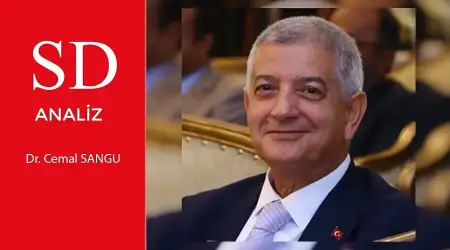
Dr. Cemal Sangu
Diğer İçerikler