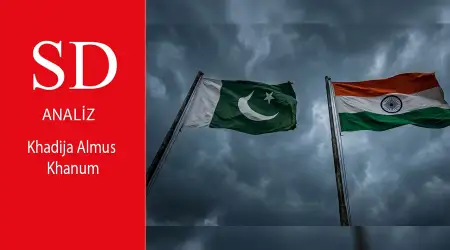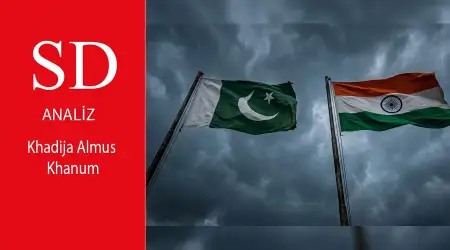
Only a few months had passed since the birth of Pakistan. In November 1947, in Lahore, the founder of Pakistan, Quaid-e-Azam Muhammad Ali Jinnah, recorded these historic words: "Kashmir is the jugular vein of Pakistan. No self-respecting nation can tolerate its jugular vein being under enemy occupation or control. The geographical, economic, and military significance of Kashmir is a matter of life and death for Pakistan."
The true meaning of Jinnah’s prophetic words is understood with much greater clarity today.
Kashmir: The Oldest Unresolved File on the UN Table
The oldest and as yet unresolved issue remaining on the table of the United Nations Security Council is the Kashmir Dispute between Pakistan and India. Although the UN Security Council passed 19 official resolutions through direct votes, the conflict has remained deadlocked, and the situation has been pushed even further into an impasse as both parties transformed into nuclear-armed states
Reluctant to abide by the resolutions of the UN Security Council and demanding a strictly bilateral approach to the conflict, India has steered the matter into an impasse.
The Sharing of the Indus Waters: Partition Divided the Waters Too
The water dispute between Pakistan and India also constitutes a major source of enduring tension. Following the withdrawal of the British colonial administration from the region in 1947, the geography was divided into Pakistan and India, and with this partition, the water resources were divided as well.
Beyond the geostrategic position of Kashmir, it held another vital significance: the water sources that gave life to the Subcontinent originated from or flowed through Kashmir, making this territory of vital importance to both nations. Pakistan’s founder, Muhammad Ali Jinnah, had not called Kashmir "our jugular vein" in vain. The profound meaning of this statement is grasped much better today. Kashmir, defined nowadays as a "Nuclear Flashpoint," has recently triggered a severe water crisis as well.
The Sharing of the Indus Waters
With the division of the geography, a water crisis also reared its head. India, positioned as the upper riparian country from the very beginning, has used water as an instrument of pressure since 1948 and continues to do so.
In the ensuing period, following the intervention of the World Bank and ten years of grueling negotiations lasting from 1950 to 1960, the two countries finally signed the "Indus Waters Treaty."
The First True Reconciliation After a Bloody "Partition"
Hailed as one of the finest water-sharing agreements in the world, this pact marked the first true reconciliation between the two sides following a bloody "partition".
When speaking of a "bloody" partition here, we refer to the demographic displacements during the division of the two nations, where, according to many sources, between 500,000 and one million souls lost their lives.
How the Waters Were Shared
Per the agreement, the control of the eastern rivers—the Beas, Ravi, and Sutlej—was ceded entirely to India, while the western Indus River and its two tributaries, the Chenab and Jhelum, were allocated to Pakistan, though India was granted limited water usage rights for non-consumptive purposes, hydroelectricity generation, and agriculture.
India Grew Stronger, The Agreement Weakened
Had it been sustained in good faith, the Indus Waters Treaty could have served as a foundation for resolving other disputes. Despite the ongoing tensions and wars between India and Pakistan, the agreement managed to survive until 1999. The spell was broken in the 1990s when India, brushing aside Pakistan's objections, began constructing dams on the rivers allocated to Pakistan.
In the ensuing years, India also began demanding a revision of the treaty.
The Pahalgam Attack as a Turning Point
The armed attack in 2025 in the Pahalgam region of Indian-administered Kashmir, which claimed the lives of 26 people, also triggered a critical fracture in the water dispute between the two nations. Even as Pakistan refuted any involvement and advocated for an independent international inquiry, India leveled accusations against Pakistan, announcing that the Indus Waters Treaty was placed “in abeyance”. Building on this allegation, Hindistan launched an attack against Pakistan in May, yet suffered a significant defeat in this limited war. Despite India’s insistence on resolving the dispute through bilateral means, US President Donald Trump intervened, warning of the looming threat of the conflict escalating into 'nuclear war,' and successfully brokered a ceasefire. Trump repeatedly brought this matter to the forefront, asserting that Pakistan had shot down eleven Indian jets."
Blocking Water is a "Casus Belli"
The suspension of the agreement provoked a sharp reaction from Pakistan; threatening to suspend the Simla Agreement between the two countries, Pakistan declared, "Obstructing the flow of water is an act of war," and carried the dispute to the Permanent Court of Arbitration in The Hague. The reaction of Pakistan Peoples Party leader Bilawal Bhutto was even sterner: "Either our water flows, or their blood!"
The Arbitration Process and India's Indifference
Ruling in favor of Pakistan at the end of August 2026, the Permanent Court of Arbitration in The Hague found India’s decision unlawful and imposed restrictions on India’s projects on the rivers until the report to be issued by the World Bank expert in July 2027.
Arguing that the court lacked jurisdiction over the matter, New Delhi rejected the ruling. Pakistan, meanwhile, is awaiting the opinion of the World Bank expert, likely to be delivered in July 2027, though this waiting period does not diminish the likelihood of war.
Indus Waters Should Unite, Not Divide
At this juncture, we can state that while Pakistan keeps every option on the table and will pursue its water claims through international law, India may evolve toward a more impositional stance by leveraging its upper riparian advantage.
Given changing global conditions, as both nations acknowledge, the treaty is in need of revision. However, this revision must be carried out through negotiations rather than under duress, and contemporary issues that have emerged since must be addressed and resolved.
Taking exemplary precedents into account, cooperation and solidarity—rather than a dispute that inflicts harm on all parties—appear to be the most fitting path for both sides in resolving their problems.
The waters of the Indus should not divide; on the contrary, they should unite.